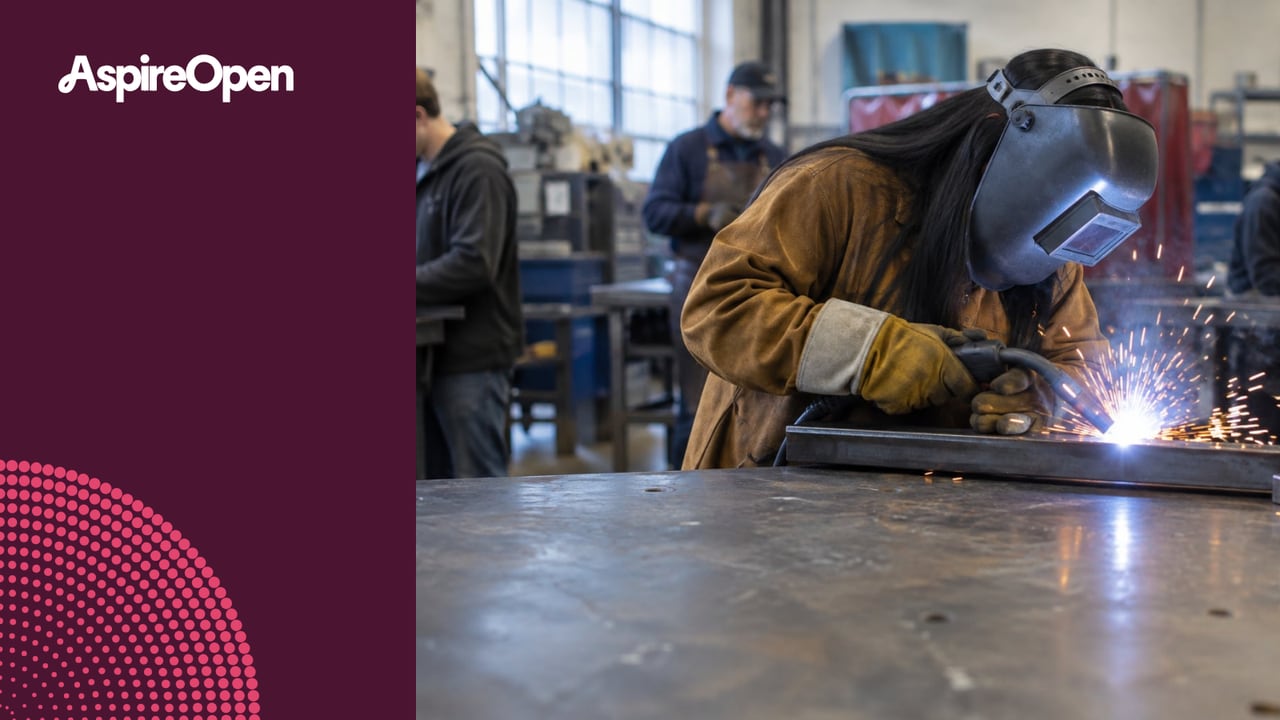
Welding scholarships distinguish short training from college degrees and apprenticeship. Start with the course length, credential and location. An award for a degree program may not fund a short class, while a workforce award may exclude a longer degree.
The selected programs below make those distinctions visible. They are not guarantees that every welding student receives support.
Compare verified routes
Checked October 14, 2026. Full individual criteria apply.
| Program | Intended applicant | Support/status |
|---|---|---|
| AWS national scholarships | Eligible U.S./Canadian students in welding-related certificate/associate/bachelor’s study | Individual amount varies; priority cycle through March 1, 2027 |
| AWS Welder Training Scholarship | Eligible short-program students at U.S. training providers | Up to $1,000; program limited to two years or less; 2027 details anticipated December 1, 2026 |
| CWB Foundation awards | Eligible Canadian postsecondary students, apprentices and others under named awards | Individual amounts/criteria vary; current page says closed |
AWS’s foundation summary says March 1, 2027 for the national cycle, while a general student page still references March 1, 2026. Use the actual current national application, not an old summary. Foundation update · Older overview.
Short training and a degree are different applications
AWS’s national FAQ excludes students in training shorter than a year and directs them to Welder Training Scholarships. That program instead excludes four-year and graduate study and requires an approved U.S. provider and minimum age 18. National FAQ · Training rules.
Write down the actual start/end dates and credential. If the course title differs from the sponsor’s categories, ask how it is classified before applying.
An academic-year label does not settle the deadline. Check which term your award can fund and whether you will still be enrolled when payment occurs.
Canadian awards have their own audiences
CWB’s page includes postsecondary and apprenticeship bursaries, an apprenticeship-support fund and a separate award for eligible female Canadian welding/inspection students. Do not merge those conditions into one assumed scholarship. CWB categories.
Read the individual form for program, stage, residence, references and dates. A Canadian opportunity should not be presented as portable U.S. funding without an explicit rule.
Build a complete training budget
Ask the school for tuition, fees, tools, protective equipment, materials and examination costs relevant to the program. Then mark which expenses the scholarship permits. A maximum tuition award does not automatically pay every required purchase.
Confirm payment recipient, reimbursement timing, supported term and what happens if you withdraw, defer or change providers. Keep pending applications separate from confirmed funds.
Ask your financial-aid/workforce office how an outside award affects other support. Read employer-sponsored training agreements separately; a work commitment is not the same as an unrestricted scholarship.
Show real preparation safely
Describe a supervised class, job responsibility or project and what you learned. Do not invent professional qualifications, inspection authority or test results.
A hypothetical applicant could explain improving preparation or measurement consistency after feedback. Do not attempt unsafe work or a new process solely to create an application video. Protect client and employer information and follow the sponsor’s actual media requirements.
Next step
Choose short training, degree or apprenticeship, verify the current category and prepare its exact materials. Ask the provider about any uncertain cost or timeline before spending money.






