Virtual volunteering means contributing remotely to an organization’s work, not simply attending an online event. Start by deciding whether you need flexible tasks, a selected assignment, or documented service hours. These three official programs offer different kinds of participation; none guarantees school credit, scholarship eligibility, or admission benefits.
Compare real remote options
| Program and official starting point | Work you can investigate | Entry rule | Documentation caution |
|---|---|---|---|
| Smithsonian Transcription Center | Transcribe historical material; account holders can review others’ work | Anonymous transcription is available; creating an account requires age 14+ | Ask how your school accepts activity records; do not assume a page count equals hours |
| National Archives Citizen Archivist | Transcription, tagging, and contextual comments on archival records | Free catalog account using Login.gov | NARA says it does not track or provide reports documenting volunteer hours |
| UNV Online Volunteering | Apply for advertised remote assignments with task-specific requirements | Applicants must be at least 18 | Read the individual assignment and confirm supervision or completion evidence |
Flexible tasks: Smithsonian and National Archives
Smithsonian’s process separates transcription from review: after a page is submitted, a different volunteer reviews it. Transcription preserves the source text rather than translating it. If you know another language, look for material you can actually read rather than translating an unfamiliar document into English. Smithsonian FAQ; How to begin.
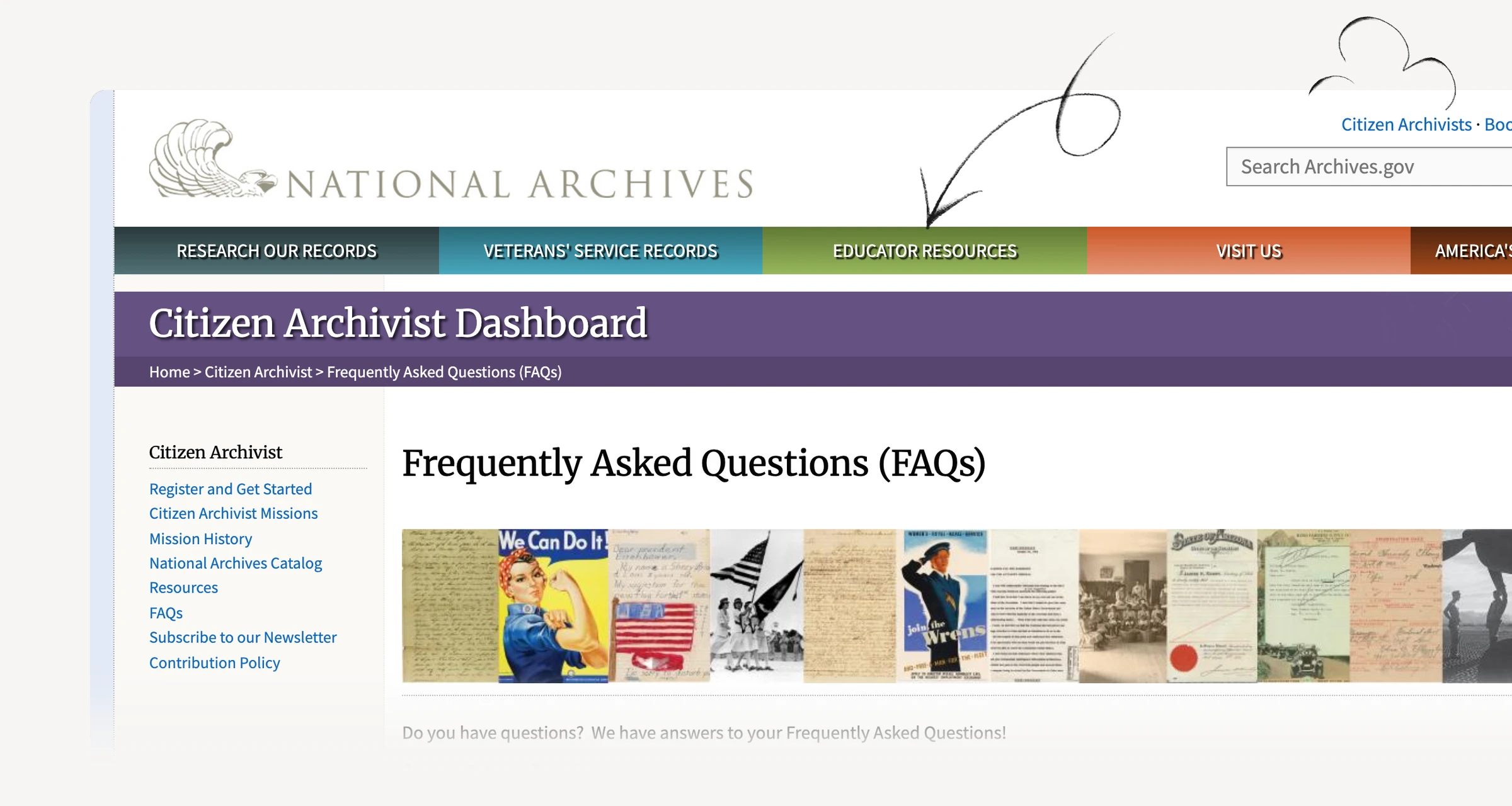
The National Archives offers curated missions to help beginners find records. You can choose tagging or transcription rather than assuming every task involves difficult handwriting. Follow the instructions for the specific collection and make accurate contributions instead of chasing a large page count. Citizen Archivist missions.
If your school requires signed hours, settle that issue before you start. NARA’s FAQ explicitly says it does not track hours or create a report for them. A useful contribution can still be the wrong match for a particular service requirement. NARA service-hour FAQ.
Selected assignments: UNV Online Volunteering
UNV’s online route lets adults apply for advertised assignments through its Unified Volunteering Platform. Being old enough is not proof that you meet a particular role’s language, skill, or experience requirements. Compare the deliverable with what you can do now; an application is not an automatic placement. UNV’s official online-volunteer guidance.
Before committing, ask who reviews your work, how communication happens, what deadline applies, and what completion evidence the host organization can provide. Keep online assignments distinct from other UN Volunteer categories; their policies are not automatically interchangeable. UNV conditions-of-service distinction.
A practical first-session plan
- Choose one official program and read its instructions and privacy policy.
- Check age/account requirements and any school-credit rules.
- Complete a small task carefully, then review the feedback or submission process.
- Log your actual time, task, and contribution privately; do not claim independently unverified hours.
- Decide whether you can sustain the commitment before adding another platform.
Illustrative example: A student whose counselor accepts self-recorded service starts with one archive tagging mission, records the time actually spent, and saves the task reference. A student needing a supervisor’s signature first asks the program whether anyone can sign. These examples show a decision process, not guaranteed credit.
Protect privacy and describe your contribution honestly
Smithsonian warns that material entered in transcription and notes fields is publicly visible. Keep personal information out of public contribution fields. Never upload an ID or school record simply to prove enthusiasm. Smithsonian community agreement.
For an activities description, name the task: “transcribed and reviewed archival pages using the project’s guidelines” is more concrete than “worked with a famous institution.” Do not imply employment, an internship, selection, or authorship that did not occur.
Next step: Pick the program whose participation and documentation rules fit your situation, complete one accurate contribution, and confirm your school’s requirements before accumulating hours.