A STEM label is not enough to establish scholarship eligibility. The programs below distinguish research careers, approved engineering/computing study, and NOAA-related disciplines. Your degree stage and application route matter as much as your major.
A verified shortlist
| Program and official provider | Published support | Key fit | Timing checked October 13, 2026 |
|---|---|---|---|
| Barry Goldwater Scholarship | Up to $7,500 per academic year | College sophomores/juniors committed to research in natural sciences, engineering, or mathematics | Institutional nomination; campus deadlines earlier than national deadline |
| SWE Collegiate/Graduate scholarships | Varies by named fund | Eligible engineering, technology, and computing students; program-specific accreditation and GPA conditions | Opens December 1, 2026; official pages disagree on closing date |
| SWE Emerging First Year scholarships | Varies by named fund | Incoming first-year students intending approved study | February 8–March 31, 2027 listed |
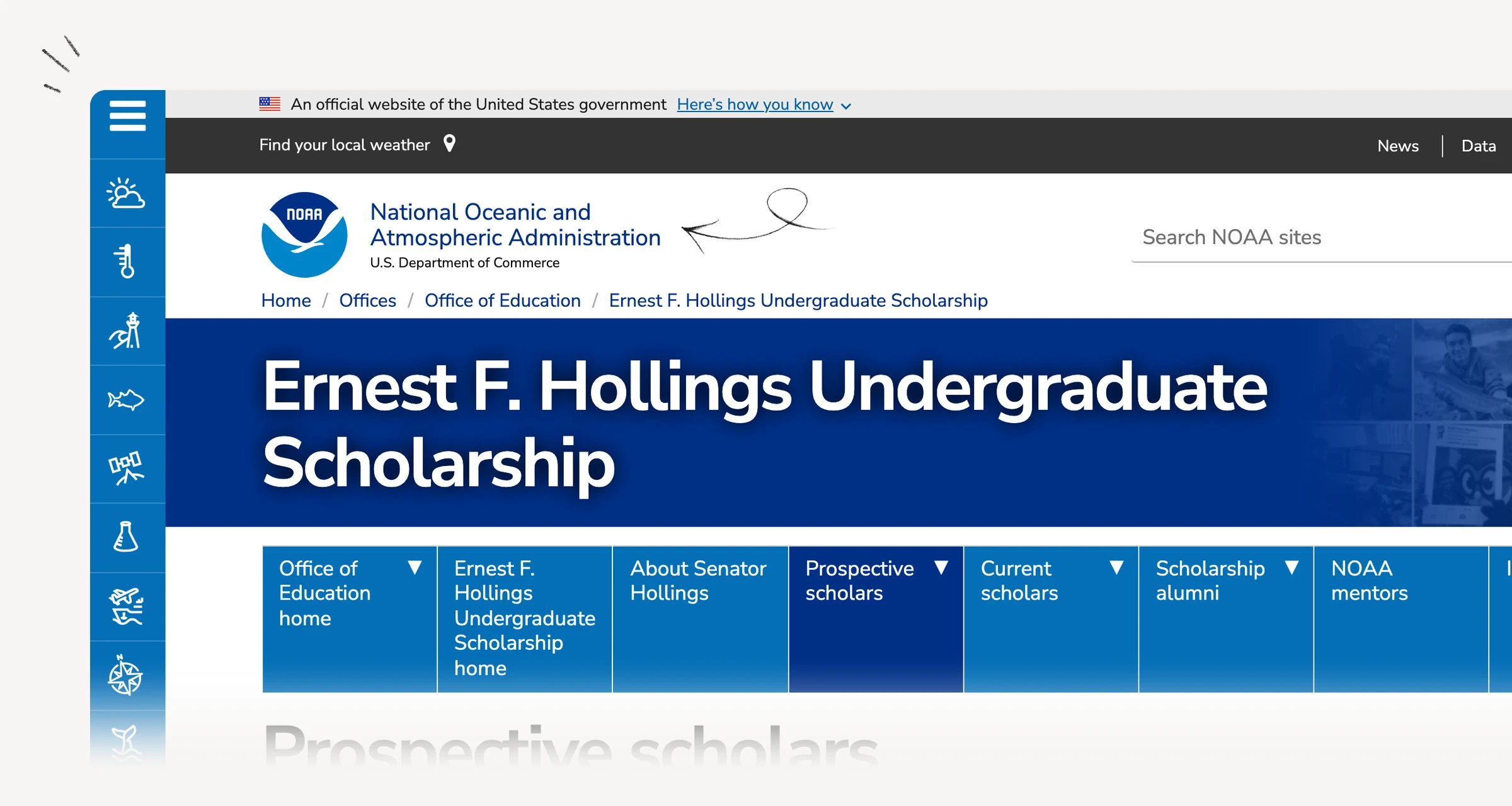
| NOAA Ernest F. Hollings Undergraduate Scholarship | Up to $9,500 per academic year plus a paid summer internship | Eligible U.S. citizens at specified undergraduate stages in NOAA mission fields | Open through January 31, 2027, 11:59 p.m. Eastern |
SWE rows are two pathways within one scholarship program, not two independent national sponsors. They are split to prevent first-year students using the wrong application.
Goldwater: research goals and campus nomination
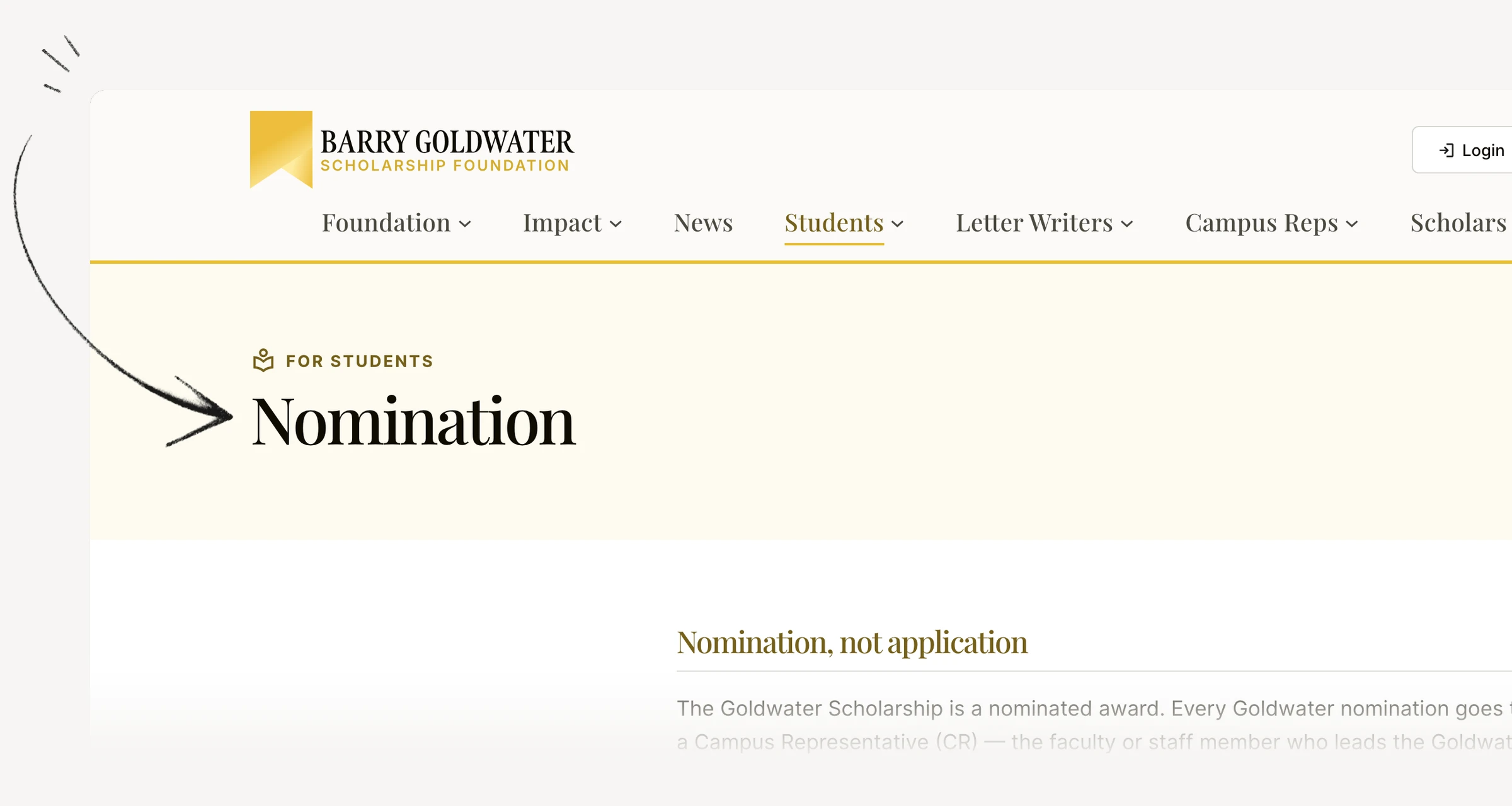
Goldwater’s process starts with your Campus Representative. You cannot bypass the institution and apply directly to the Foundation. The nomination includes a questionnaire, research essay, three recommendations, and transcripts.
The national schedule lists the last Friday in January at 5 p.m. Central; your campus sets earlier deadlines. Ask the representative for the current competition’s dates and eligibility review. Goldwater’s definitions use remaining semesters in September 2027 to classify sophomore and junior applicants; ordinary credit-based class standing may not tell the whole story.
A strong preparation question is: “What was my actual contribution to the research?” For an illustrative laboratory project, separate designing an analysis, collecting data, interpreting uncertainty, and work performed by the mentor. Do not claim a discovery simply because you joined the research team.
SWE: academic stage changes the requirements
The application page lists a 3.0 GPA for Collegiate/Graduate and a 3.5 GPA for Emerging First Year applicants. Undergraduate pathways reference ABET-accredited programs; graduate applicants should use the provider’s eligible-major list. One recommendation is required.
There is a material date conflict: the application page lists January 31, 2027 for Collegiate/Graduate, while the overview lists February 8, 2027. Request clarification and prepare for the earlier date rather than publishing either as an undisputed deadline. First-year dates agree across these pages.
Check each named fund for additional conditions and amount. SWE’s fund list contains varying awards; membership, identity, geography, renewal, and sponsor restrictions should be verified in the live application rather than assumed from the organization’s name. Local SWE section awards use separate applications.
NOAA Hollings: STEM work connected to a mission
NOAA accepts eligible second-year students in four-year degrees, third-year students in five-year programs, and qualifying community-college/transfer applicants. It requires U.S. citizenship, full-time study, and a 3.0 cumulative GPA. Listed fields include sciences, mathematics, engineering, remote sensing, computing, and related education disciplines supporting NOAA’s mission.
Transfer applicants must provide proof of applying to a four-year institution and later meet the acceptance requirement. An interest in the ocean does not replace these rules. Use the applicant FAQ to check your specific academic path and reference-letter requirements.
Prepare for the right application, not every application
Suggested folder:
- Research summary identifying your contribution and uncertainty.
- Transcript and current degree plan.
- List of mentors who know different parts of your work.
- Evidence of an approved program or intended transfer when relevant.
- Calendar separating student, recommender, campus, and national deadlines.
An incoming engineering student may prepare for SWE’s first-year cycle; that student should not assume eligibility for Goldwater’s sophomore/junior route. A second-year biology student might investigate both research-focused Goldwater and mission-focused Hollings, but adapt the explanation of fit rather than submit identical essays.
Before adding an award to your budget
Ask how it is paid, whether it renews, what GPA/enrollment conditions apply, and how other aid changes the amount. Goldwater’s Scholar FAQ says covered educational expenses can reduce actual financial support even when the student retains Scholar recognition.
Your next action is to choose one degree-stage match, identify its required submission route, and obtain the actual current form before drafting.






