Start with the verified programs below. You can also apply for ordinary academic, local, and major-based awards; disability-specific funding need not be your only route.
Compare official programs
| Program and provider | Published amount | Best-fit applicant | Cycle status checked October 13, 2026 |
|---|---|---|---|
| Allegra Ford Thomas — NCLD | $5,000 over two years | Graduating high school senior with a documented learning disability planning eligible two-year, technical/vocational, or specialized study | Displayed May 10, 2026 deadline has passed; next cycle not confirmed |
| Lime Connect Pathways | Amount not verified on the official index | High school seniors with disabilities pursuing a four-year college/university degree in the U.S. or Canada | 2026 applications closed |
| Johnson & Johnson Access-Ability Lime Scholarship | Amount not verified on the official index | Current U.S. four-year college students with disabilities pursuing healthcare or STEM | 2026 applications closed |
| 180 Medical College Scholarship | Seven awards of $1,000 | Eligible full-time students with one of the listed conditions, under physician care | 2027 applications January 1–June 1, 2027 |
The closed entries remain useful for a watchlist, not an “apply today” list. Follow each provider for the next dated announcement.
NCLD: a learning disability is required
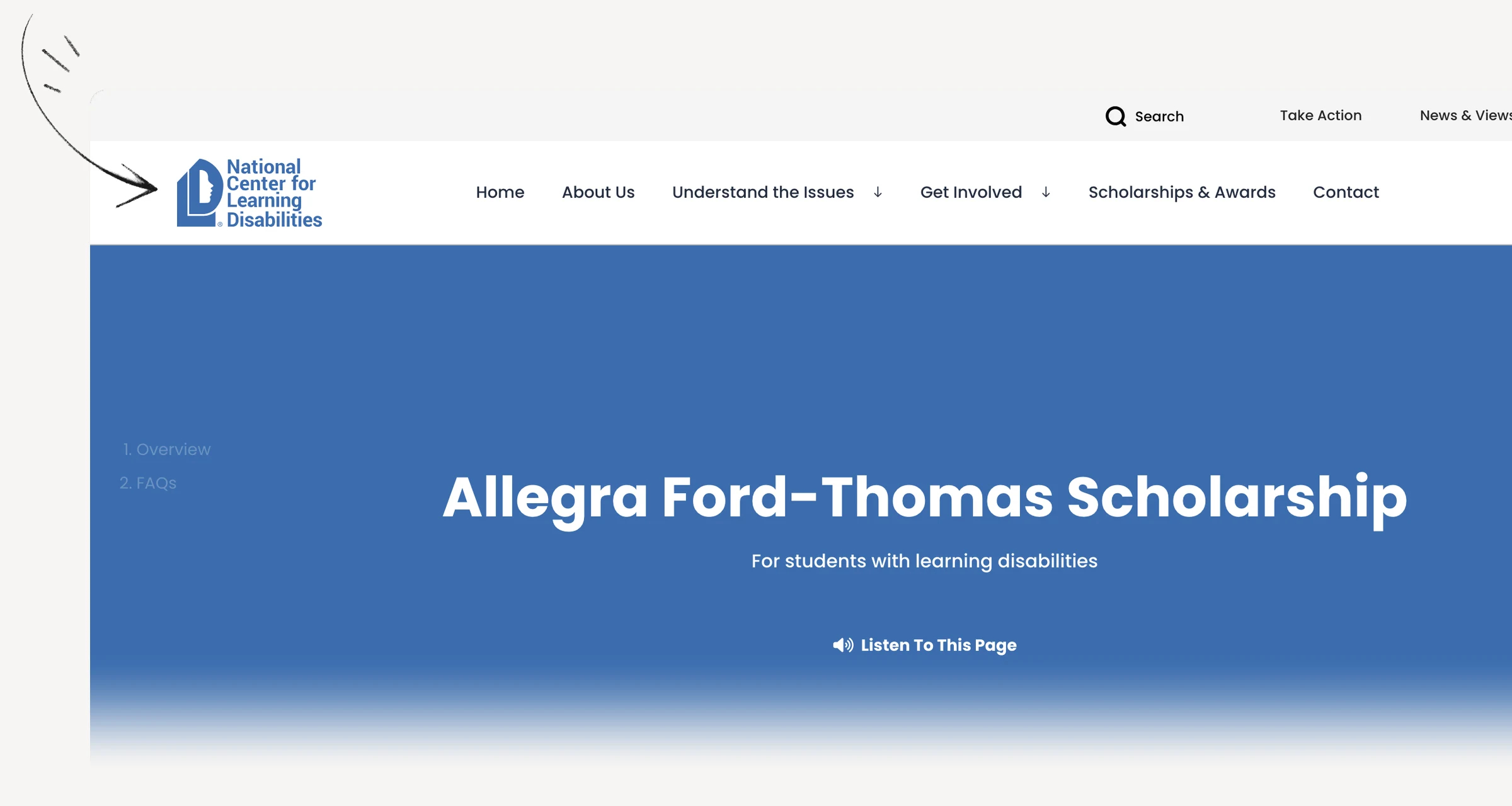
Source: Allegra Ford Thomas Scholarship
The Allegra Ford Thomas page says students with ADHD or other disabilities are eligible only if they also have a documented learning disability. It lists acceptable school or professional documentation and requires PDF uploads rather than photos.
Choose the education route carefully: this award supports specified alternatives to a four-year degree; NCLD’s Anne Ford award serves the four-year pathway. Ask the provider if your plans change rather than treating the programs as interchangeable.
The page contains mixed-year FAQ wording and an older EFC reference. Do not assume that an apparently live Apply button means a new competition is open. Ask for current dates and the exact financial-information requirement before sending records.
Lime Connect: stage and field separate the scholarships
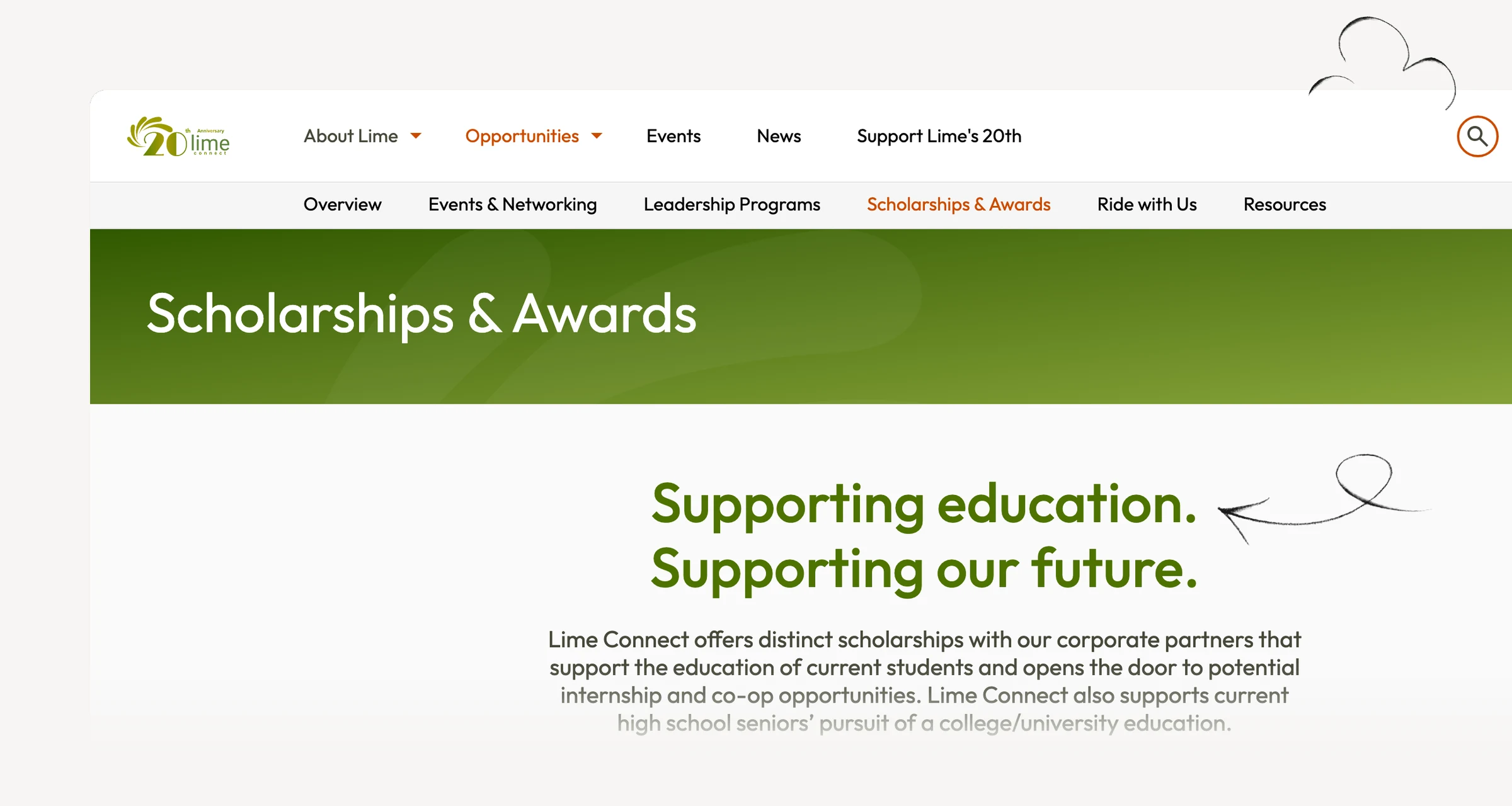
Source: Lime Connect scholarships
Lime’s official index distinguishes the Pathways high-school-to-college route from the healthcare/STEM scholarship for students already in college. It also lists a Canada-specific DevOps/technology program for eligible undergraduates. A student should match geography, stage, and major before preparing an application.
The index includes leadership awards and contests alongside scholarships. Do not count a professional leadership award as tuition funding for a high school senior. Likewise, expired contest banners are not evidence of an open scholarship cycle.
180 Medical: only the listed conditions qualify
The provider requires U.S. legal residency, full-time fall acceptance in an eligible two-year, four-year, or graduate program, and physician care for spinal cord injury, spina bifida, transverse myelitis, bladder exstrophy, neurogenic bladder, or an ostomy. Medical-school students are excluded, and unlisted conditions do not qualify.
This is not a scholarship for every physical disability. If your condition is outside the stated list, choose a broader program rather than assuming that an impactful essay can override the requirement. The provider’s caregiver scholarship is a separate opportunity with its own rules.
Ask for accessible application support
Use this suggested message:
“I am interested in program. Can you confirm the current deadline, accepted documentation, and available application accommodations? I would also like to know whether there is an accessible alternative if the form or upload process is difficult to use.”
An accessibility request does not require publishing your diagnosis online. Use the provider’s official contact and secure application route. Ask before uploading extra records that were not requested.
Prepare a small, private scholarship folder
Suggested contents:
- Provider-requested eligibility documentation, with no unnecessary medical history.
- Transcript and planned enrollment information.
- Actual financial-aid information when required.
- A short goals statement focused on the education you want to pursue.
- Recommendation contact details and any format requirements.
For an illustrative essay approach, explain a study method you developed, the problem it addressed, and the kind of coursework or work you want to pursue next. You do not need to perform an inspirational narrative or exaggerate adversity to be specific.
Choose by fit, then by timing
An eligible senior planning a technical program can investigate Allegra Ford Thomas when a new cycle is announced. A current healthcare student may fit a Lime route. A full-time student with a listed condition can prepare for 180 Medical’s January opening.
Your next action is to mark each program eligible, needs clarification, or not a match, then record only the date confirmed by that provider. Never disclose more personal information than the application actually requires.






