
Compare official programs
| Program and official provider | Published funding | Key fit and category | Cycle status checked October 13, 2026 |
|---|---|---|---|
| Hispanic Scholarship Fund Scholar Program | Potential $500–$5,000 award; Scholar designation does not guarantee money | Hispanic heritage; qualifying U.S. citizen/permanent resident/DACA status; full-time four-year or graduate study | 2026 application closed February 15 |
| McDonald’s HACER | Individual award amount not stated on inspected eligibility page | High-school seniors under 21; 2.8 GPA; eligible full-time college/vocational study; current list has no Hispanic-parent requirement | Provider says applications closed; next date not claimed |
| Hispanic Heritage Youth Awards | Current amount not specified in inspected 2026 FAQ | Spring 2027 graduates, 3.0 unweighted GPA, U.S./territory residence, 2027–28 higher education; check current form rather than older ancestry rules | November 1, 2026, 11:59:59 p.m. PST document cutoff |
| USHLI Dr. Juan Andrade Jr. Scholarship | $1,000, one time and nonrenewable | Full-time U.S./territory two-/four-year undergraduate study in 2027–28, financial need, stated age/stage rules; non-U.S. citizens eligible | December 30, 2026, 11 p.m. CT |
Do not reuse older directories’ award values or ancestry requirements when the current provider page says something different or leaves a fact unstated.
HSF: selection and funding are different outcomes
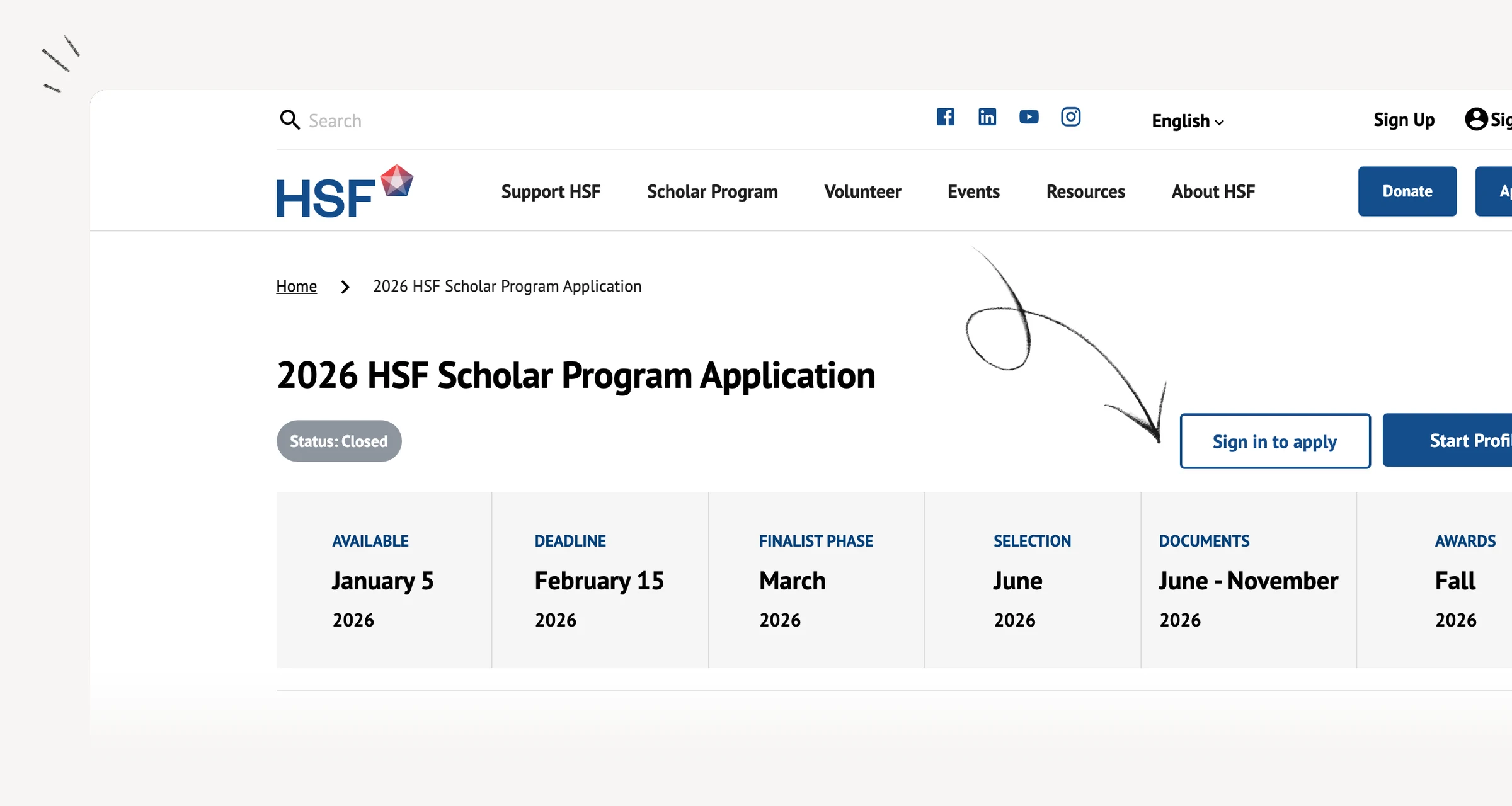
Hispanic Scholarship Fund — Scholar Program
HSF’s current rules require a 3.0 GPA for high-school students or 2.5 for college/graduate students, plus the 2026–27 FAFSA and qualifying enrollment. Selected Scholars receive support services and may receive funding depending on resources and stated program conditions. Treat potential scholarship money separately from Scholar recognition; do not subtract the maximum from your budget before an award is confirmed. HSF current requirements and award explanation.
HACER: “no essay” does not mean no writing
McDonald’s HACER — eligibility and requirements
The provider’s eligibility page says no essay is needed, yet requires a personal statement, transcript, recommendation, and service-project list. It requests a FAFSA Submission Summary from semifinalists rather than an initial SAI submission. Follow the actual form and stage-specific instructions. Do not assume eligibility requires a Hispanic parent; that rule is absent from the inspected current criteria. HACER documents and criteria; Program closure notice.
Youth Awards: use the 2026 portal, not a legacy FAQ
The current FAQ limits the program to the qualifying graduating class, permits specified GED applicants under 21, and requires attendance at a virtual ceremony if selected. Its portal accepts one recommendation. A separately indexed older FAQ has different ceremony and eligibility language; use the cycle-specific page linked in this guide. 2026 Youth Awards FAQ.
Before applying, identify the category matching real work you have done and give your recommender its criteria. Do not add an older dollar amount or travel requirement to the current application from memory.
USHLI: references need time to finish their part
USHLI — Dr. Juan Andrade Jr. Scholarship
The current Andrade page requires both background and leadership essays and two recommendations: one academic and one professional/community source. Reference contacts receive submission instructions after you submit, and letters are due December 30, 2026. The application is not necessarily complete just because your own form is sent. The public criteria no longer justify assuming a Hispanic-parent requirement from an older listing; read the actual portal. USHLI application requirements.
Build a truthful shortlist
Use one row per award: heritage rule as written; citizenship/status; school stage; GPA; geography; amount certainty; documents; and deadline. Keep “eligible,” “unclear,” and “closed” separate. Send uncertain immigration-status or family-document questions privately to the provider; do not publish sensitive records in a general profile.
Illustrative planning example: A community-college student investigates whether their next term meets USHLI’s full-time undergraduate rules; a graduate student checks HSF rather than a senior-only award. Neither example promises selection. Essays should describe actual experiences you choose to share, not an invented migration story or cultural stereotype.
Next step: Screen your stage and current eligibility, calendar the nearest applicable deadline, and ask references early. Submit only after checking the cycle-specific provider form.






