Use these verified examples to select your route. Use the linked guides to explore your stage, then confirm the current rules with each provider.
Checked October 13, 2026.
| Stage / route | Real example | Published support | Timing distinction |
|---|---|---|---|
| High-school grades 9–12 | VFW Voice of Democracy | National top award: $35,000 | Current high-school competition; October 31, 2026 entry deadline |
| Incoming or enrolled degree students | Point Flagship | Up to $15,000; maximum four years of support | At least a high-school senior when applying; funding starts fall 2027 |
| Sophomore timing / qualifying transfers | NOAA Hollings | Up to $9,500 per year for two years, plus paid internship | 2027 cycle requires qualifying bachelor’s graduation in December 2028–August 2029 |
| College junior | Truman | Up to $30,000 | Selected during college for later graduate/professional study; February 2, 2027 deadline |
| Senior preparing for research graduate study / first-year graduate student | NSF GRFP | Three years of funded graduate support | Current graduate-study limits apply; not a general senior-year tuition award |
High school: match the grade and application task
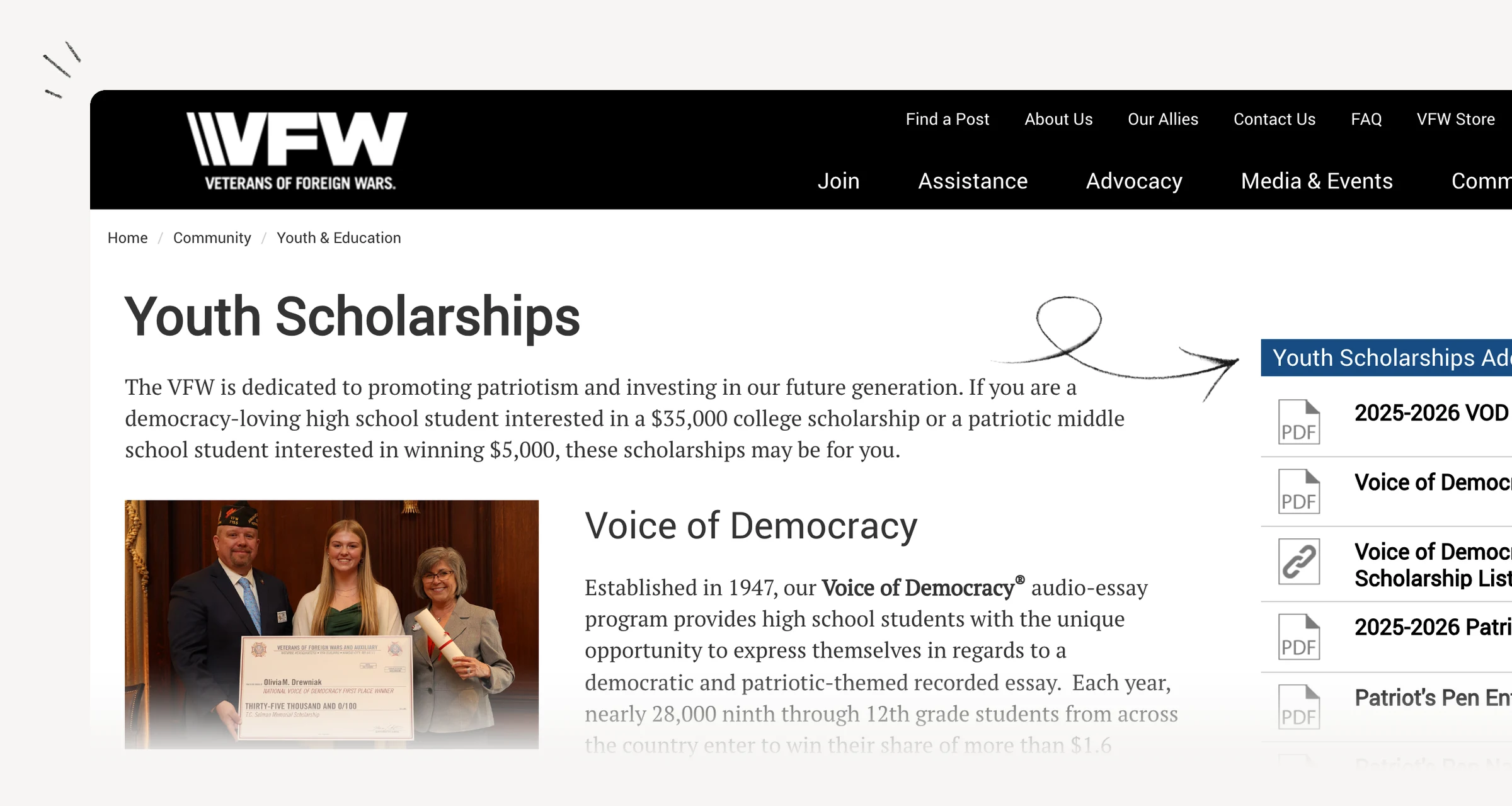
Source: VFW Voice of Democracy
Voice of Democracy accepts grades 9–12 and requires an audio essay for the current theme, not a generic college essay. Entries go through a participating VFW Post. Read the current program instructions.
A junior-only or senior-only award needs a separate check. Do not assume a broad high-school category makes younger students eligible for every program.
Freshman and other undergraduate years: funding starts later
Point accepts qualifying LGBTQ+ and ally students across several degree stages. Its current rules require full-time enrollment, GPA 3.3+, an accredited US nonprofit institution, and an eligible degree format; fully online programs are excluded. The posted application window is September 9–November 19, but funds begin in fall 2027. Check Point’s current criteria.
Your current class year and the funding-start stage belong in different columns of your shortlist.
Sophomores: remaining study can matter more than earned credits
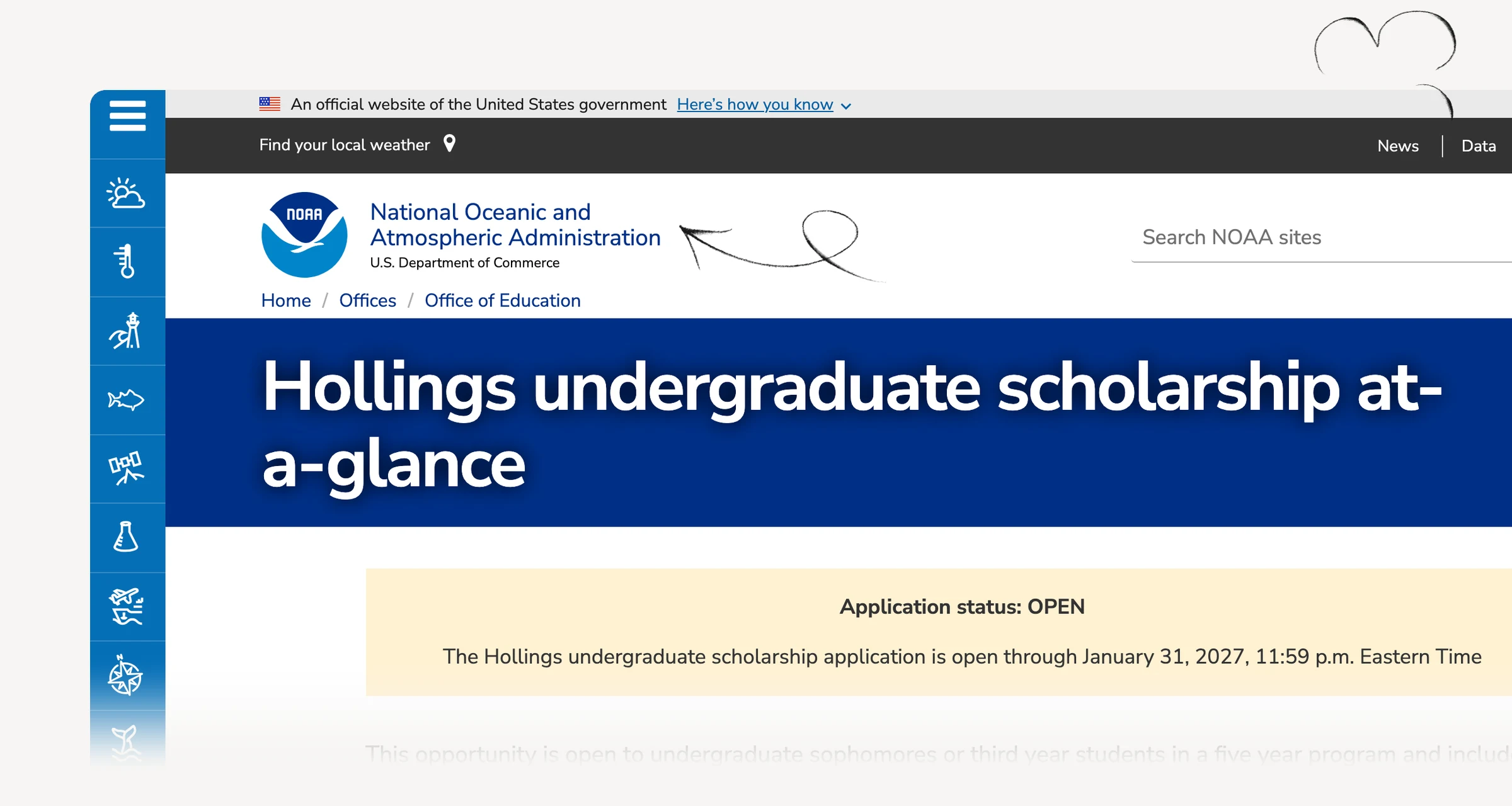
NOAA’s 2027 Hollings cycle uses expected bachelor’s graduation in December 2028–August 2029. Its description includes eligible community-college students transferring as juniors in fall 2027 and third-year students in five-year programs. Current class labels alone can mislead. The application is open through January 31, 2027, at 11:59 p.m. Eastern. Review the actual conditions.
Also check GPA, citizenship, major relevance, and the full-time internship commitment before applying.
Juniors: distinguish undergraduate support from graduate plans
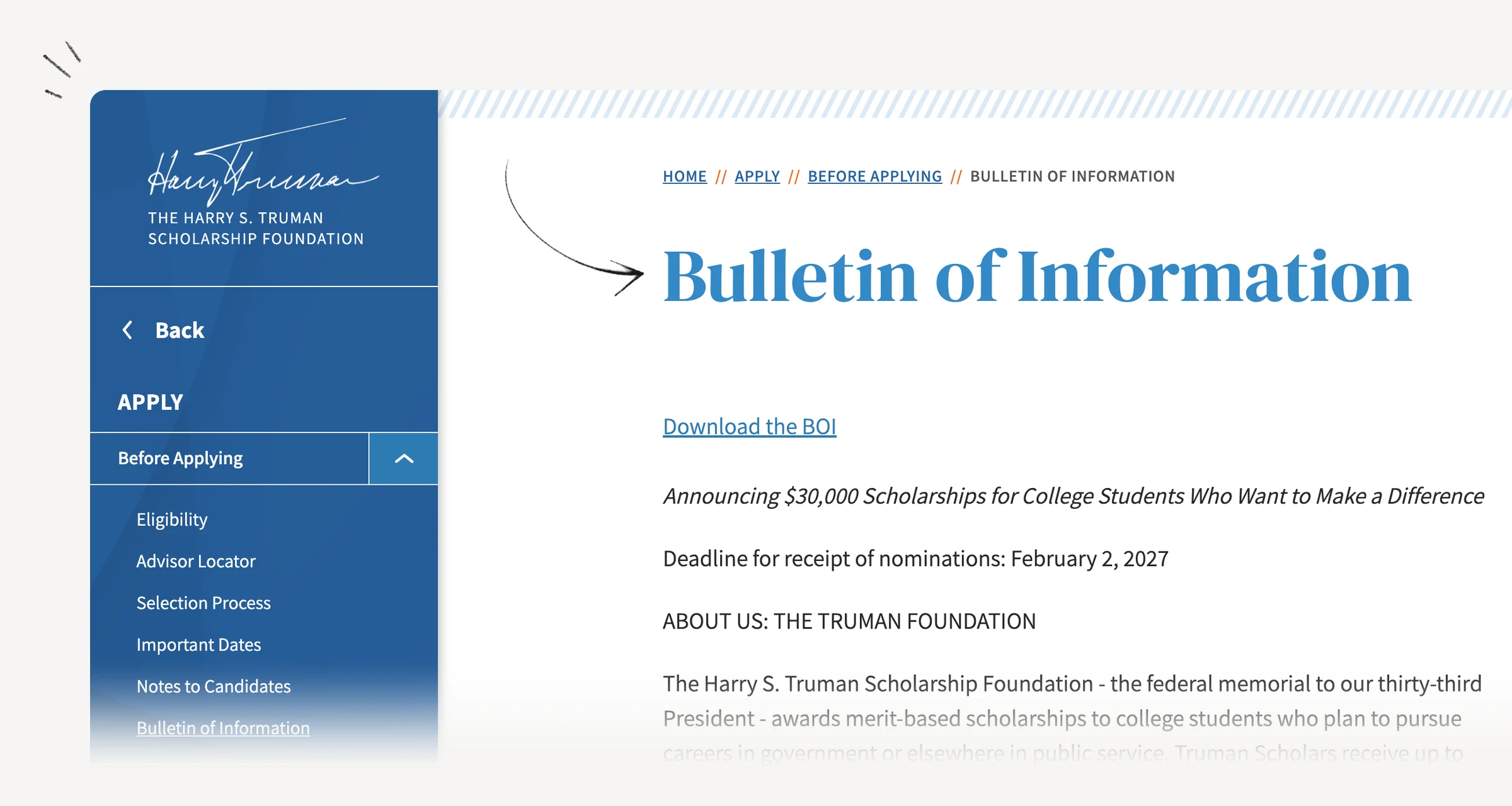
Truman requires an institutional nomination and a public-service direction. Its 2027 junior definition generally covers bachelor’s graduation between December 2027 and August 2028, with additional rules for accelerated programs. Its award supports a later public-service-related graduate degree. Read the current bulletin.
The campus competition can happen earlier than the national deadline. Contact your representative rather than trying to submit directly at the last minute.
Graduate routes: use the current prior-enrollment rule
NSF GRFP’s current eligibility generally requires less than one academic year completed in a graduate degree program and an eligible research-based STEM degree. Previous applications and degrees also matter. Undergraduate seniors can be eligible, but professional-practice degrees are excluded. Use the live eligibility guide.
This is a different search from general undergraduate scholarships. Do not rely on old summaries permitting two years of graduate study.
Your next move: write four dates
Record your current stage, expected graduation month, application deadline, and first funded term. Then add the actual provider’s definition of standing and any transfer or degree-format restriction.
Hypothetical example: A student’s college may call them a junior because of dual-enrollment credits, while a sponsor uses semesters remaining or the graduation date. Resolve that mismatch with the provider before choosing the scholarship route.






