Verified options and restrictions
| Program and official provider | Published funding | Key eligibility | Timing |
|---|---|---|---|
| Cochlear Graeme Clark Academic Scholarship | $2,000 annually, up to four years | Cochlear Nucleus recipients; qualifying U.S./Canadian citizenship and residence; 3.0 GPA; accepted eligible postsecondary study after high-school graduation | Annual September 30 deadline; 2026 date has passed |
| Cochlear Anders Tjellström Academic Scholarship | $2,000 annually, up to four years | Baha or Osia recipients; same published citizenship, academic, and enrollment framework | Annual September 30 deadline; 2026 date has passed |
| Wisconsin Hearing/Visually Impaired Student Grant | Confirm current award amount with HEAB | Qualifying Wisconsin-resident undergraduates with severe/profound hearing or visual loss, financial need, and eligible enrollment | Annual application required; confirm institutional submission timing |
These are verified programs, not an assertion that applications are open today. Facts checked October 13, 2026. The Wisconsin option is a state grant, not a private scholarship.
Implant-specific awards: match the actual system
Cochlear — academic scholarships
Cochlear’s academic awards are not available to every deaf or hard-of-hearing student. Confirm the eligible system, institution, age/guardian-consent rule, and employee-family exclusion. Payment follows the academic year and proof of standing; it is not an upfront tuition payment. Maintaining a 3.0 GPA and submitting required records matter for continued funding. Cochlear terms and renewal rules.
Do not make a medical decision to pursue an award. Use the system you actually have when checking eligibility, and discuss treatment questions with a qualified clinician—not a scholarship directory.
Wisconsin: out-of-state study is not automatically disqualifying
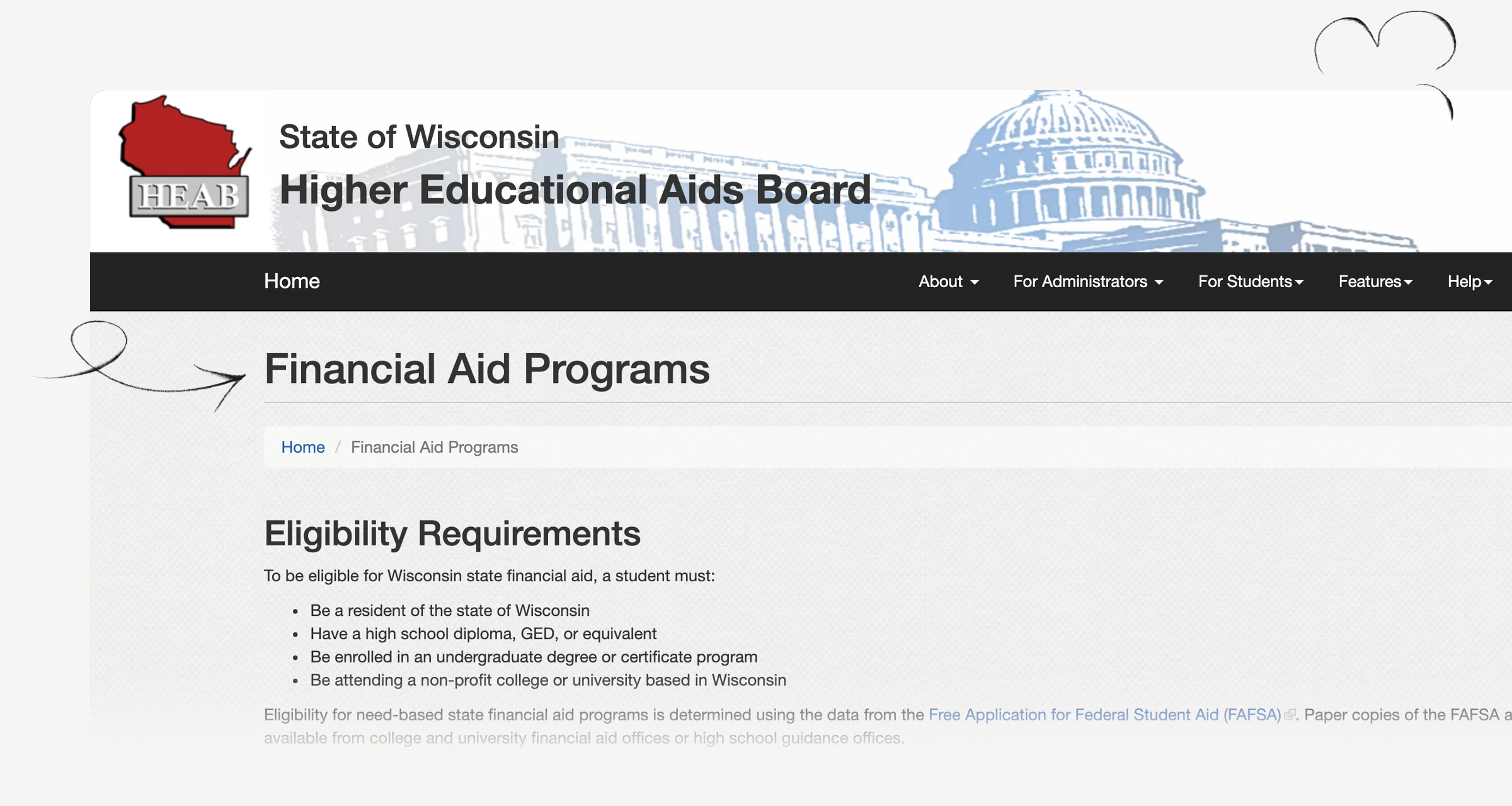
Wisconsin HEAB — financial aid programs
HEAB’s FAQ allows eligible out-of-state attendance under specified circumstances. Its rules describe situations including institutions specializing in education for deaf or hard-of-hearing or visually impaired students, programs not available in Wisconsin, and particular recommended training. Ask HEAB and the college to confirm your situation instead of assuming every out-of-state school qualifies. HEAB FAQ; Out-of-state criteria.
The official application requires at least half-time qualifying undergraduate study. First-time applicants need certification from a physician or audiologist; the FAQ says medical certification is not required again every year, although an annual application is. Use the currently linked application through your financial-aid office. HEAB application forms; Grant application.
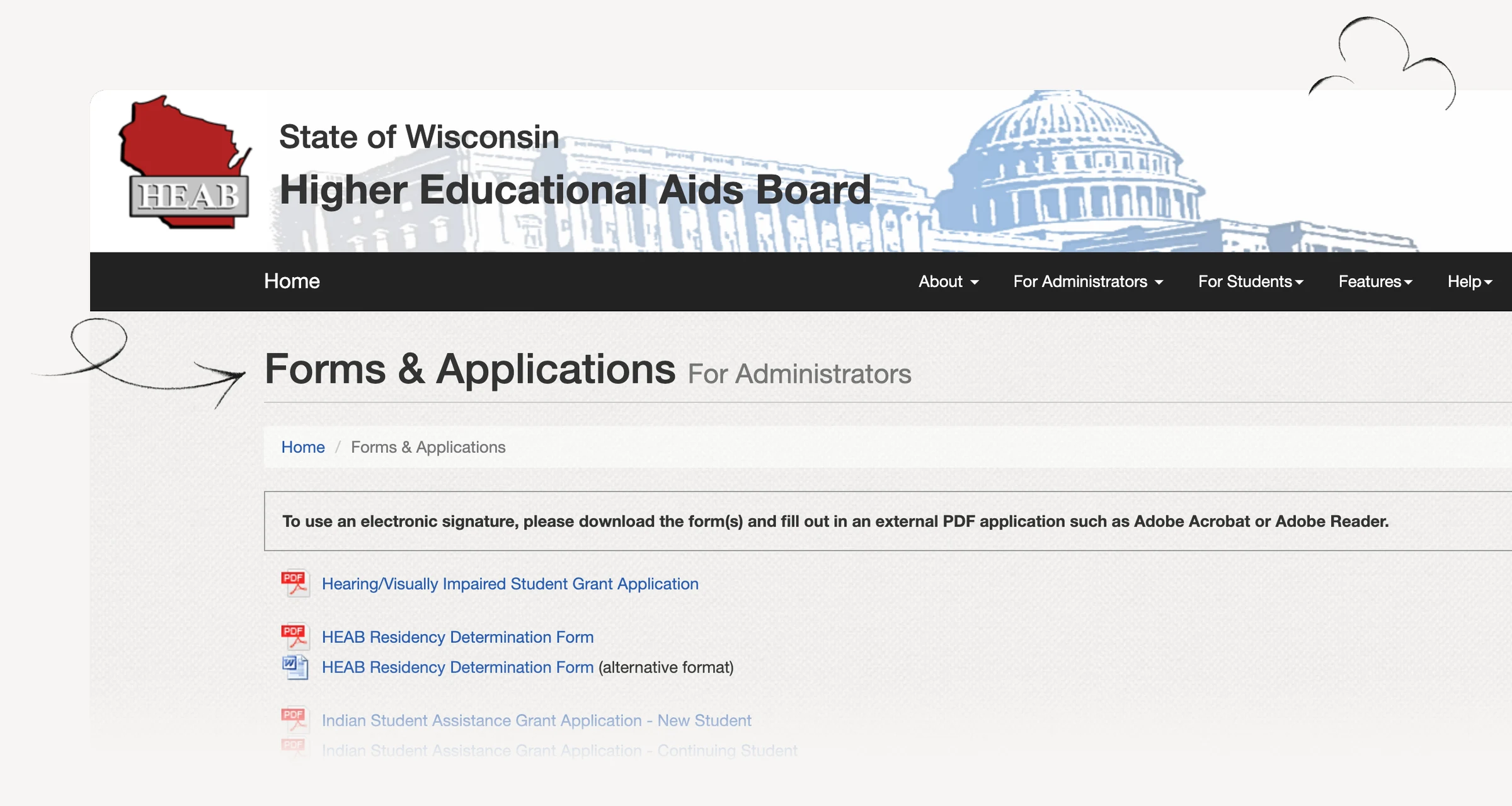
Wisconsin HEAB — grant application forms
Prepare only the evidence a provider requests
Create separate folders for academic records, admission/enrollment evidence, and sensitive medical records. Before sending an audiogram or other clinical information, check the recipient, secure submission route, required fields, and whether an existing certification suffices. Do not place medical records in a public student profile or attach them to every unrelated scholarship application.
If an essay asks about your experience, decide what you are comfortable sharing. A useful outline might describe an actual educational goal, the support or access conditions relevant to it, and the expense the award would help address. It does not require a dramatic hardship narrative, and this article does not prescribe an identity label for applicants.
Illustrative screening example: A Wisconsin resident attending an eligible specialized out-of-state college asks HEAB about the grant. A student using a different manufacturer’s system does not assume eligibility for Cochlear’s device-specific awards and instead investigates broader disability or campus funding. These are decision examples, not invented award recipients.
Questions to ask next
Does every award require an implant? No. The two Cochlear academic awards do; Wisconsin’s grant uses different rules.
Is a scholarship a substitute for arranging accommodations? Treat funding and disability-access planning as separate conversations. Ask the college’s access office what documentation it needs rather than assuming a scholarship application establishes campus support.
Where do I start? Screen device or state criteria, check the provider’s current cycle, and contact your college’s financial-aid office about additional options. Add an award to your application list only after those checks.






