These verified starting points cover three different fields. Use the linked subject guides for more funding routes, then check the provider’s exact conditions.
Checked October 13, 2026.
| Field / program | Published support | Key fit test | Announced status |
|---|---|---|---|
| Chemistry — ACS Catalyst | $10,000; possible renewal | Eligible chemistry-related major, academic performance, US citizenship/permanent residency, and need | 2026–27 cycle closed; next dates not verified |
| Interior design — ASID Legacy Undergraduate | $4,000 | Junior/senior in a qualifying accredited interior-design program | February 15–April 15, 2027 planned application period |
| Interior design — ASID David Barrett | $12,000 | Qualifying undergraduate/graduate program; classical design and traditional materials | February 15–April 15, 2027 planned application period |
| Occupational therapy — AOTF scholarships | Program range $150–$5,000; individual awards vary | Enrolled professional-level OT or OTA program; one year of OT coursework completed | 2026–27 funding-cycle application opens January 2027; closing date not stated |
Chemistry: intended career can exclude a related major
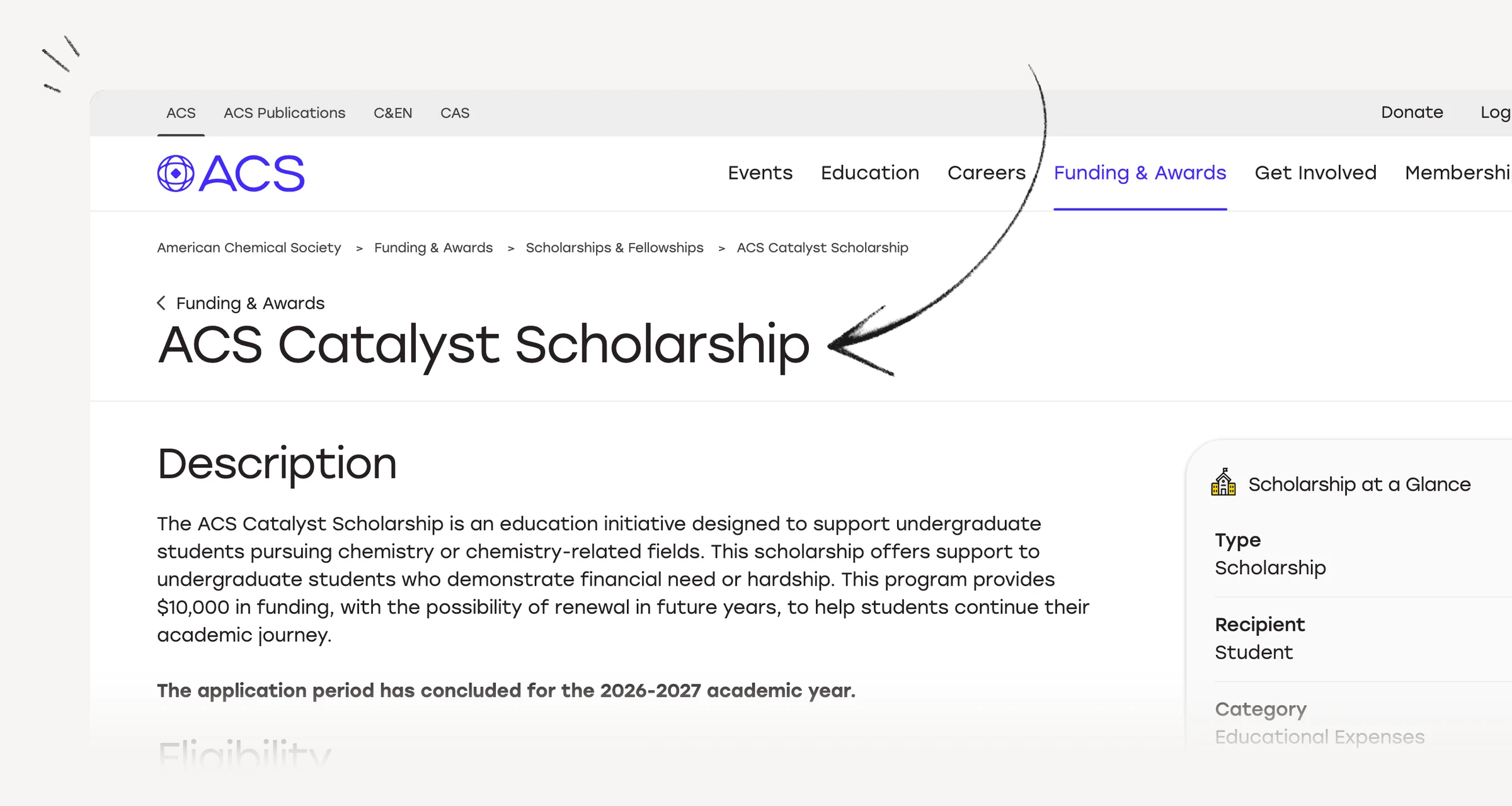
Source: Chemistry — ACS Catalyst
ACS Catalyst includes chemistry-related undergraduate fields but excludes certain career intentions, including pre-med, pharmacy, and nursing. It requires a 3.0 GPA and documented financial need. A biochemistry course or a general interest in science does not establish qualification. The March 1, 2026 deadline has passed. Read the official ACS criteria.
Next move: Check your actual degree and intended career, prepare the required records, and monitor a newly announced cycle rather than relying on a stale application link.
Interior design: portfolios need to answer the award’s task
Source: Interior design — ASID Legacy Undergraduate
ASID’s two listed awards have different purposes. Legacy Undergraduate evaluates junior/senior work and solutions affecting occupant well-being; David Barrett focuses on classical principles and traditional materials and also admits graduate applicants. Both specify portfolios of 8–12 pages and additional application materials. Compare the foundation’s requirements.
Next move: Select work for the particular award rather than sending an unchanged general portfolio. These are announced future windows, not applications described as open today.
Occupational therapy: professional enrollment is different from a pre-OT major
Source: Occupational therapy — AOTF scholarships
AOTF’s overall eligibility requires full-time enrollment in an accredited or developing professional-level master’s/OTD or OTA program and at least one year of occupational-therapy coursework. Students preparing to apply to OT school should not assume a psychology or health-sciences bachelor’s major meets that condition. Review the current program page.
One application considers applicants for qualifying awards, but state, school, or scholarship-specific conditions still apply. The 2026 award list includes many amounts marked TBD and says that application cycle closed February 20. Do not reuse those listings as guaranteed 2027 awards.
Next move: Confirm your program stage and watch the January 2027 opening for the actual current award roster.
Use five filters for any other field
Before adding a discipline-specific scholarship, write down:
- Degree and program required—not just the broad major category
- Current class stage and funding-year enrollment
- Career intention or professional objective, when specified
- Evidence: transcript, portfolio, research, or professional-course history
- Current cycle, amount, and any renewal or service conditions
Hypothetical example: A student planning pre-medical study should not assume ACS eligibility because their major is chemistry-related. A student in a professional OT program should investigate AOTF rather than relying on a general “healthcare scholarships” label.
Your next move
Pick the closest verified provider, check the exact program rules, and prepare the specific evidence. If your major is not represented here, begin with your department, professional society, and college foundation—but add a named opportunity only after finding its actual application information.






