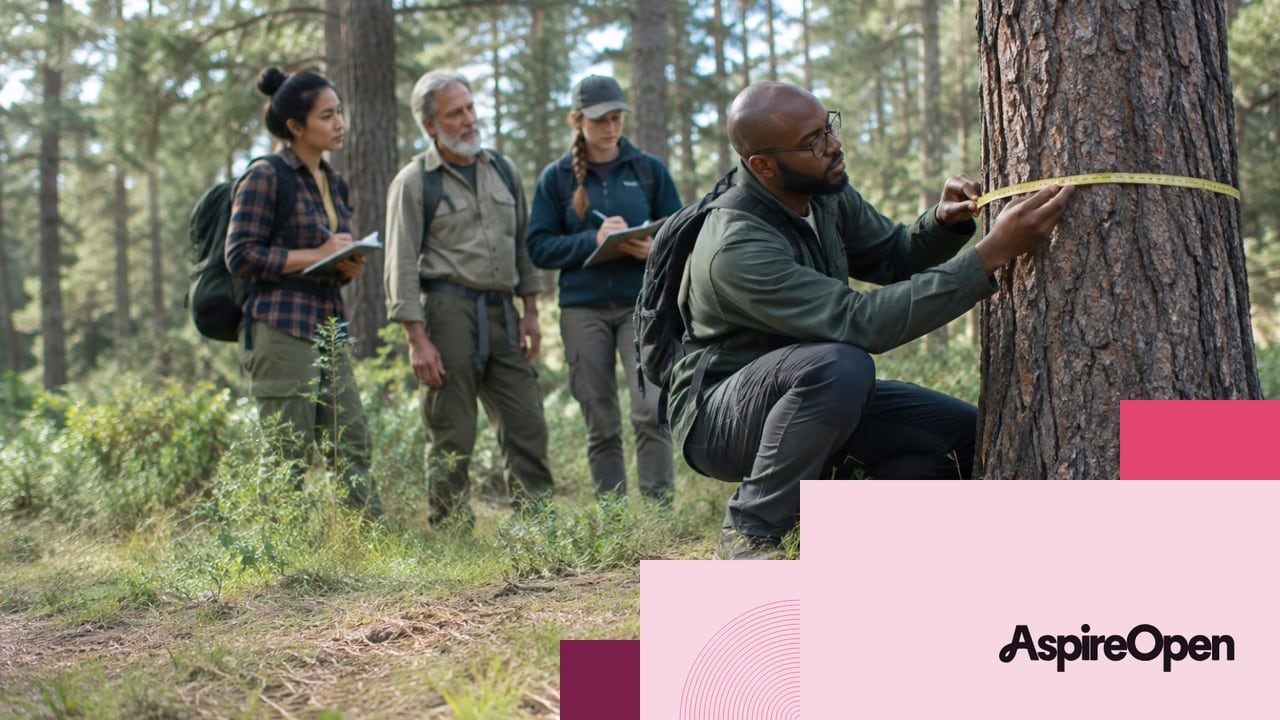
Natural-resources funding can support forestry study, a particular engineering major, or professional participation. Start with the actual degree and expense rather than assuming every conservation-related award fits.
The selected opportunities below separate academic support from convention and mentoring benefits. A conference scholarship is valuable, but it is not automatically money for tuition.
Compare selected routes
Checked October 14, 2026. Full individual criteria apply.
| Program | Who should investigate | Amount/status | First action |
|---|---|---|---|
| SAF Hill Student Scholarships | Eligible SAF student members in undergraduate forestry or related natural-resources study | Amount not stated on overview; 2026 closed | Monitor the actual new cycle and individual guide |
| SAF Future Forest Scholars | Eligible students from underrepresented groups at U.S. forestry/natural-resources programs | Mentoring, membership and convention scholarship; 2026 closed | Check next cohort and participation commitments |
| ASABE James Koelliker NRES Scholarship | Eligible biological/agricultural engineering undergraduates with natural-resources/environmental-systems interest | One $2,000 award annually; exact current deadline not established here | Read the specific major and membership rules |
Your interest does not replace the required major
ASABE requires a qualifying ABET/CEAB-accredited biological or agricultural engineering major in the U.S./Canada, student membership, at least a year completed and a year remaining, minimum 2.5 GPA, and financial need. An environmental interest alone is not enough. ASABE criteria.
Write your program’s exact title and accreditation beside the award. If your degree is adjacent rather than listed, ask the provider instead of assuming equivalence.
For a project example, describe a real resource-management or engineering question, methods, your role and limits. A hypothetical applicant might explain a water-system tradeoff without inventing field results or claiming professional authority.
Convention and mentoring support has its own commitments
Future Forest Scholars includes virtual meetings, in-person convention participation and mentoring activities. Its 2026 convention occurred October 6–9, so the past cohort’s benefit is not a new open October scholarship. Members and nonmembers could apply under that cohort’s criteria. Future Forest program.
Read the new cohort’s actual dates and obligations before applying. Ask about remaining travel costs, participation and accessibility arrangements rather than assuming every expense is covered.
Do not count mentoring or membership as a cash tuition amount. Put each benefit in the correct budget category.
Check the individual funding year
SAF’s overview separately lists research grants, young-professional grants, conference support and student scholarships. It says the Hill student and 2026 Future Forest cycles are closed, while an RMS scholarship entry still references 2025. Do not relabel that old entry as a verified 2027 opportunity. SAF funding overview.
A professional-society grant for a chapter is also not necessarily an individual student award. Verify applicant type before preparing materials.
Look for campus awards without assuming portability
SUNY ESF’s Sustainable Resources Management Department lists its own undergraduate scholarships. Those are institutional routes; another college’s student should not treat them as portable external funding. Use your own department’s current process as the first campus search. ESF department awards.
Ask whether applications, faculty nomination or automatic consideration apply. Record the actual funded term and any degree-specific restrictions.
Build a truthful application and budget
Protect sensitive locations, private landowner data, employer information and unpublished research. Ask permission before sharing a map or field record. Explain uncertainty rather than polishing it away.
For each actual offer, record amount, eligible expense, payment recipient, renewal and commitments. Keep pending awards separate from confirmed funding and ask your aid office how outside support affects the package.
Next step
Choose tuition, research or professional participation; verify your exact degree and current cycle; then ask your department about separate institutional awards.






