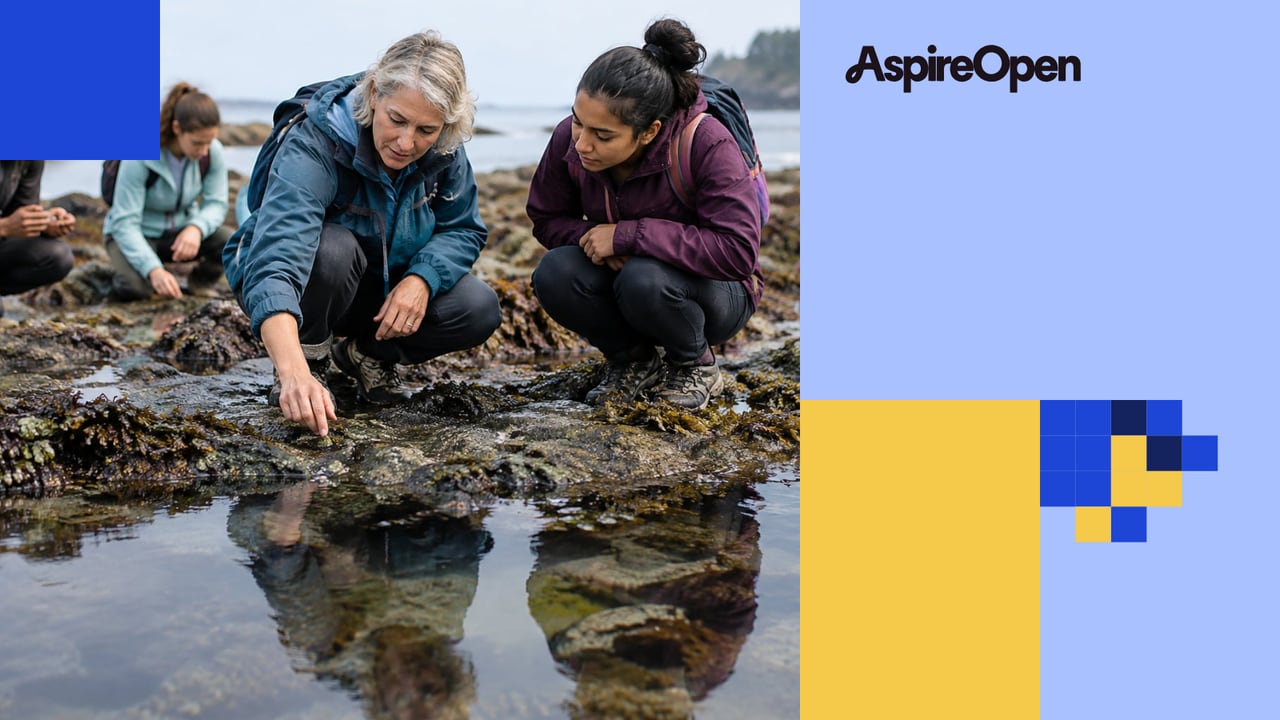
Marine-biology funding can pay for college attendance, a research project, or specialized fieldwork—and those purposes are not interchangeable. If you need tuition money, do not budget a conservation-research award that explicitly excludes tuition and living expenses.
Verified opportunities to compare
| Program and official source | Amount/support | Applicant and funding purpose | Current timing |
|---|---|---|---|
| NOAA Hollings Undergraduate Scholarship | Up to $9,500 yearly for two years plus paid internship | Eligible undergraduates in NOAA mission fields, including biological sciences | Open through January 31, 2027, 11:59 p.m. Eastern |
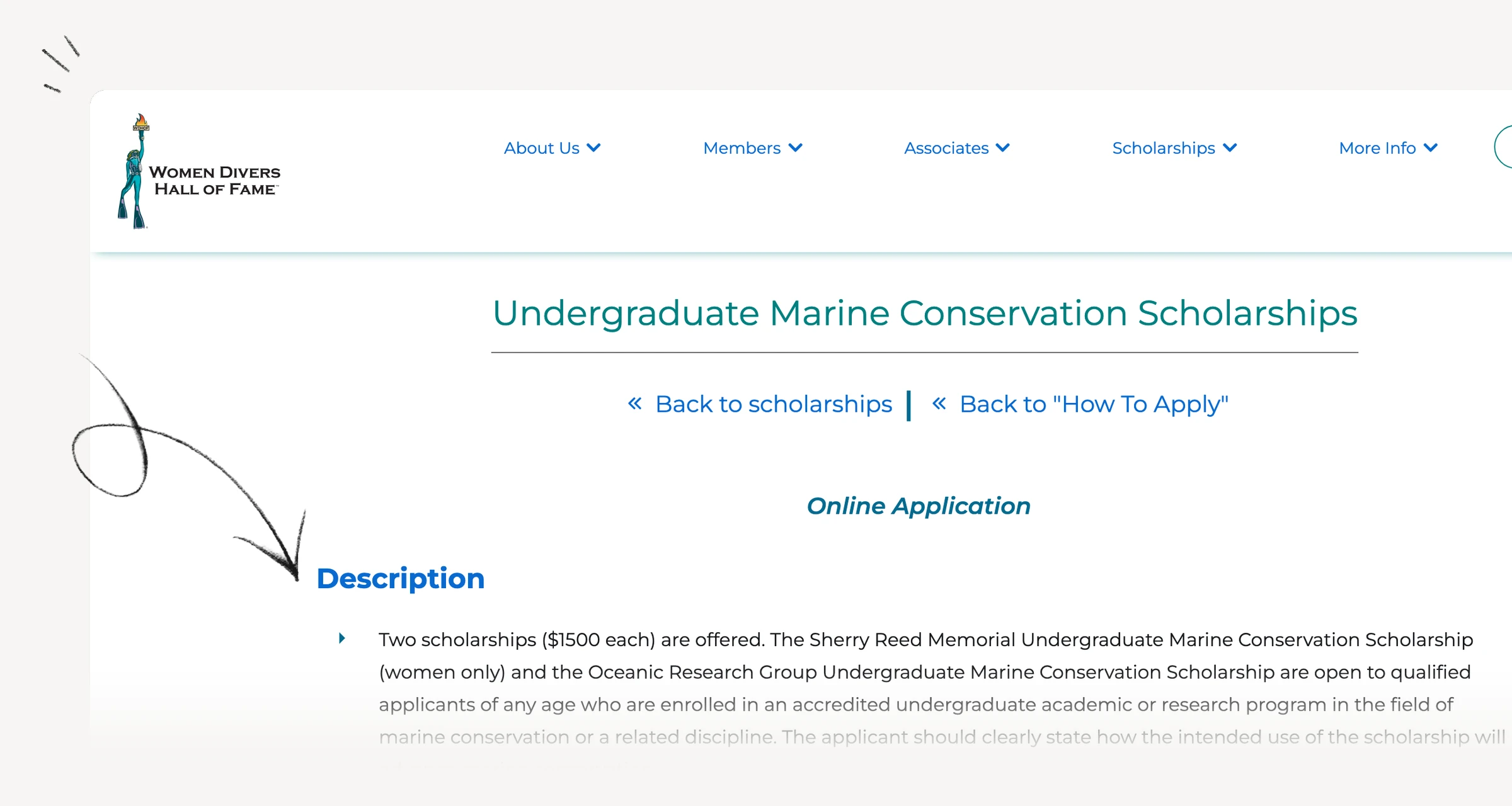
| WDHOF Undergraduate Marine Conservation awards | Two awards, $1,500 each | Accredited undergraduate study/research in marine conservation or related discipline; research/fieldwork, not tuition | November 30, 2026, 5 p.m. New York time |
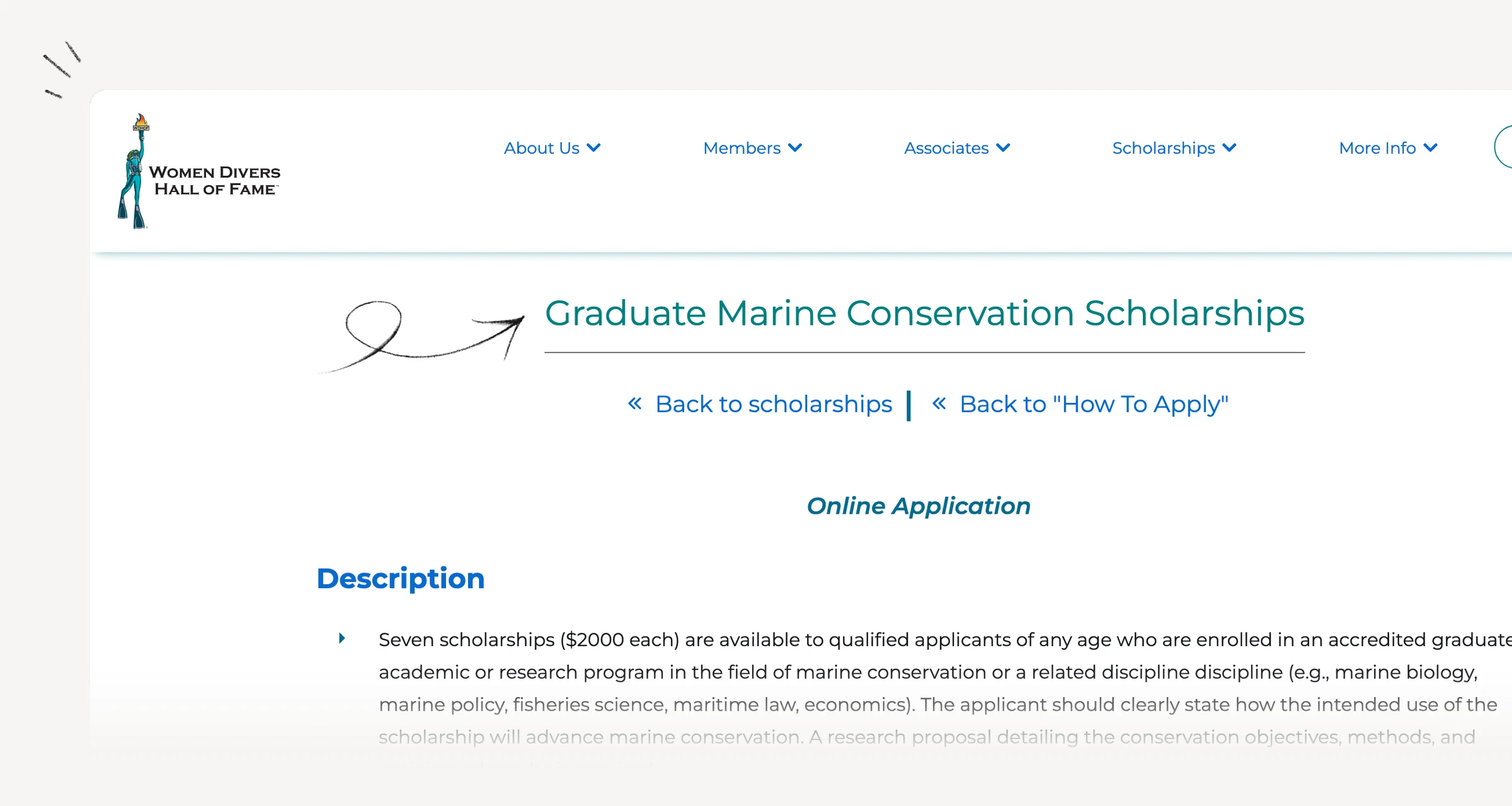
| WDHOF Graduate Marine Conservation awards | Seven awards, $2,000 each | Women in eligible accredited graduate programs; research, fieldwork or applied conservation | November 30, 2026, 5 p.m. New York time |
| UNF Dan and Michelle Webb Scholarship | Amount not stated | UNF-only funding; marine-biology category in university index | Matching route; individual availability/date must be confirmed |
Facts checked October 13, 2026. The two WDHOF rows belong to one administrator and its one-application limit; they are not an invitation to submit to both.
Hollings: a mission-linked undergraduate pathway
NOAA’s 2027 eligibility summary requires U.S. citizenship, full-time undergraduate enrollment, a 3.0 GPA, and a NOAA-relevant field. The intended graduation window is December 2028 through August 2029, including eligible community-college students transferring as juniors in Fall 2027.
A marine-biology student should explain an actual mission connection—such as coastal ecosystems, fisheries, ocean conditions, or environmental education—rather than only a general love of marine animals. The program includes a mandatory paid ten-week internship; failure to participate ends program eligibility.
Ask about travel, internship scheduling, housing support, and ongoing academic conditions before accepting. The internship is part of the experience, not an optional replacement for a summer job.
WDHOF undergraduate awards: choose the fund carefully
The provider’s detail page distinguishes the women-only Sherry Reed Memorial award from the Oceanic Research Group award. Its general application index places the undergraduate category among opportunities for women, men, and non-binary applicants; follow the specific fund’s eligibility, not the umbrella label.
Funds support independent research or fieldwork at an accredited university. They do not cover tuition, salary, living costs, loan payments, or previously incurred expenses. Dive gear or cameras need a specific research justification. Build a prospective project budget, not a general college-expense request.
WDHOF graduate awards: write a conservation proposal
The graduate page requires a proposal describing objectives, methods, and expected results. Eligible fields include marine biology and related conservation disciplines; it is not a general graduate scholarship for any ocean-themed interest.
The awards require women applicants in good standing with a 3.0 GPA; first-year graduate students may provide a minimum 2.5 GPA from their final undergraduate year. They exclude the same ordinary tuition and living-cost categories. Ask the provider about any budget item that appears ambiguous.
The current application instructions require two recommendations by the closing date and allow only one scholarship or training-grant application. Awards are made in March 2027; do not apply if you need money earlier. The proposed activity must be completed within the stated 18-month window, by August 31, 2028.
A useful fieldwork proposal example
The following is an illustrative structure, not a claim about a funded applicant:
- Question: How does shoreline habitat condition relate to observed juvenile-fish abundance at approved sampling sites?
- Method: Use a mentor-approved sampling design, record environmental conditions, and explain analysis limitations.
- Conservation relevance: Identify which management decision the observations could inform without claiming to settle it.
- Budget: Itemize eligible future supplies or fieldwork costs and confirm exclusions with the fund.
Describe permissions and safety planning accurately; do not claim you have authorization that is still pending. Diving is not automatically required for every marine research project.
UNF: a school-specific route with a scope discrepancy
UNF’s index labels the Webb Scholarship Coastal and Marine Biology, while its detail page lists a broader College of Arts and Sciences major condition, UNF admission, full-time semester rules, and a 3.5 GPA. Ask financial aid to confirm which scope controls before assuming that every COAS major is eligible.
The university uses ScholarshipUniverse matching and asks students to answer UNF-specific questions. A student outside UNF should not treat the award as a national application.
Graduate watchlist: Nancy Foster is not confirmed open
The official Nancy Foster program page supports graduate research including marine biology and requires clear alignment with National Marine Sanctuaries priorities. Its FY2027 announcement depends on approval and funding. Do not reuse the 2025 notice’s deadline or present a future award amount as confirmed.
Your next action is to identify your degree stage and actual expense, then choose a program that explicitly funds both. Budget with verified terms, not just a marine-related title.






