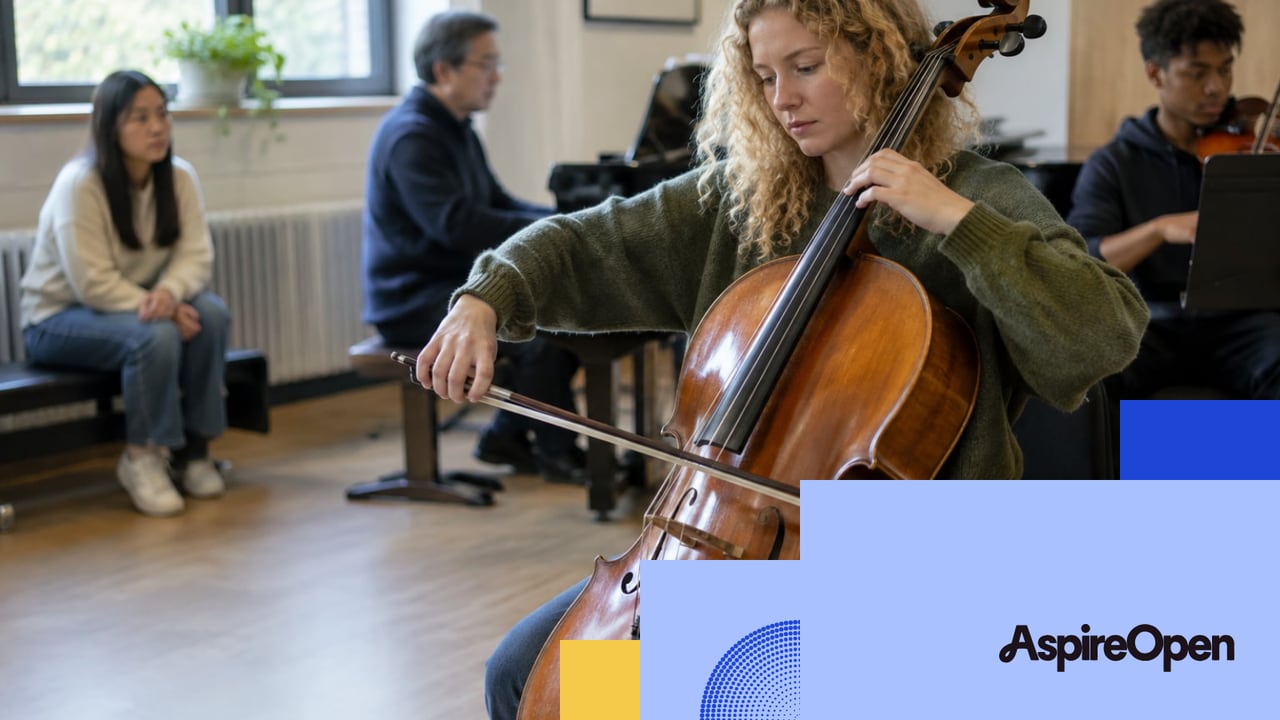
An instrument scholarship can mean help buying or using an instrument, paying for lessons, or developing as a performer. It does not always mean college tuition.
Start with the actual need and your stage. The selected opportunities below include a pre-college training award and a string competition; a school instrument donation is separately labeled so it is not mistaken for personal cash.
Compare verified personal opportunities
Checked October 14, 2026. Full eligibility rules apply.
| Program | Who should investigate | Support/deadline |
|---|---|---|
| From the Top Young Artist Award | Eligible financially needy pre-college classical musicians ages 8–18 in the U.S. | Up to $10,000; next deadline November 9, 2026, last opportunity for high-school seniors |
| Sphinx Competition | Eligible string musicians under the competition’s full audience/instrument rules | Junior first prize $10,000; senior first prize $50,000; apply by October 20, 2026, 11:59 p.m. ET |
Sphinx addresses barriers within Black and Latino communities and has junior/senior age divisions. Semifinalists/finalists can access additional scholarship/instrument support, not a guaranteed instrument for every applicant. Sphinx program.
Training funds are not college tuition
From the Top’s award is one-time, need-based and linked to full Learning and Media Lab participation. It can support permitted pre-college music expenses but cannot pay college tuition. College students and high-school graduates are ineligible under its FAQ; citizenship is not required, but full-time U.S. residence/study is. Award FAQ.
Its recipient page lists instrument purchases, lessons, summer tuition and audition expenses among permitted uses. Read the actual award terms before making purchases. Use examples.
A hypothetical student needing an instrument should identify the real cost and why current resources cannot meet it—not assume the maximum is awarded automatically.
Prepare the correct recordings and secure documents
From the Top requests unedited/unenhanced samples, recommendations, academic records and financial documents through its secure system. Parents may complete the financial section; the applicant completes other sections. Do not email tax records to an unofficial contact. Application requirements.
For every competition, follow its exact repertoire, instrument, age, recording and assistance rules. Do not assume a school audition video meets another program’s specifications. Credit accompanists and collaborators accurately.
School instrument grants are not personal scholarships
Mr. Holland’s Opus Foundation donates instruments/equipment to eligible U.S. public schools with established music programs and specified economic-need, staffing and storage conditions. It does not give individual students cash or transfer a school’s instruments freely elsewhere. School grant rules.
Ask your music teacher whether the school qualifies. Do not submit as an individual student or count a prospective school donation toward your college bill.
Compare the actual costs
Record purchase versus loan, ownership, insurance, maintenance, travel, lessons and training relevant to your situation. Verify what each award permits and when funds or equipment arrive. A prize pool is not one student’s award.
Keep pending applications separate from confirmed support. For college study, separately ask the institution about tuition scholarships and ensemble participation requirements.
Next step
Choose training, competition or school-access support; verify age/instrument eligibility; and prepare the actual application before its nearest deadline.






