One professional-association route
| Route | Supported information | Missing checks |
|---|---|---|
| AWRA undergraduate scholarship information | Official result describes funding for students connected to water resources and lists degree/enrollment conditions | Current complete rules, award value, live deadline, documents and payment |
The result alone is not a complete application record. This guide makes no current-open or award-value claim. Professional membership and water-related study should be checked against the actual call, not assumed.
Use the exact degree and project description
Your program might be housed in geology, environmental science, engineering or another department. Write down the degree title and a concise description of the water-science connection. Ask the provider whether a related degree qualifies when the rule is unclear.
Distinguish a degree requirement from a preferred topic. A scholarship may target a level of study or enrollment format even when your research fits its mission. Resolve those conditions before requesting references.
Explain the research question in ordinary language
A hypothetical groundwater student could state what is being measured, why the measurement matters and what role they perform. A modeling student could identify the question and the data used. Do not imply that a student exercise has established a regional policy result.
Keep methods and contribution separate. Describe what you sampled, processed or analyzed and what you still need to learn. A technically modest account can be more credible than unsupported claims of expertise.
Check fieldwork and research expenses separately
Create different budget rows for tuition, instruments, data access, travel, field supplies and living costs. Ask what the award permits. A water-science label does not establish that equipment or fieldwork expenses are eligible.
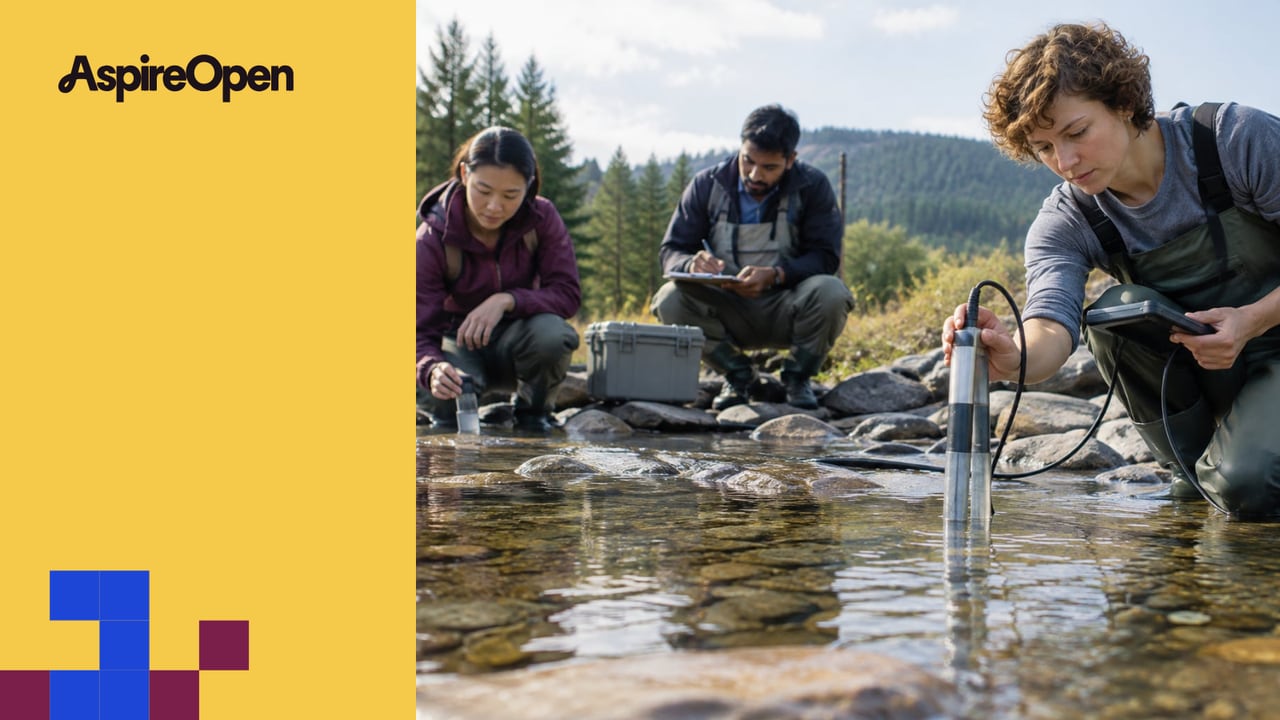
For a hypothetical monitoring project, connect each requested item to an actual task. Do not budget unconfirmed access to a site or an instrument as if it is already arranged. Include pending permissions as questions to resolve, not completed facts.
Build a degree-specific shortlist
Use your water-science profile to contact the department, financial-aid office and appropriate providers. Record eligibility, benefit type, current deadline and unanswered questions. Broad STEM awards should remain clearly labeled as broader funding rather than hydrology-specific opportunities.
Your next step is to obtain the current AWRA call and confirm your exact degree fit. Then research institutional tuition and project support separately. The final published page should give readers actual eligible opportunities—not a water-themed list with missing rules.






