Define the outcome
Write a short purpose statement with three parts: the students you intend to support, the educational cost or milestone involved, and the reason that group fits the purpose.
Illustrative planning statement: “Support students in our community who are enrolling in an accredited training program and need help with required supplies.” This is a draft concept, not approved eligibility language. An administrator must review it before launch.
Decide whether you want a one-time award or continuing support. Ask how changes in enrollment, unused funds, and renewal decisions would be handled.
Compare administration routes before collecting applications
Prepare questions for a college, community foundation, charity, or other proposed administrator:
- Who legally holds the funds and selects recipients?
- What fees and minimum commitments apply?
- How are awards paid and unused funds treated?
- Who handles student questions and privacy?
- What documentation will donors receive?
- What happens if the planned fund cannot continue?
Ask the proposed administrator to confirm its services, fees, and terms in writing.
Make the selection process explainable
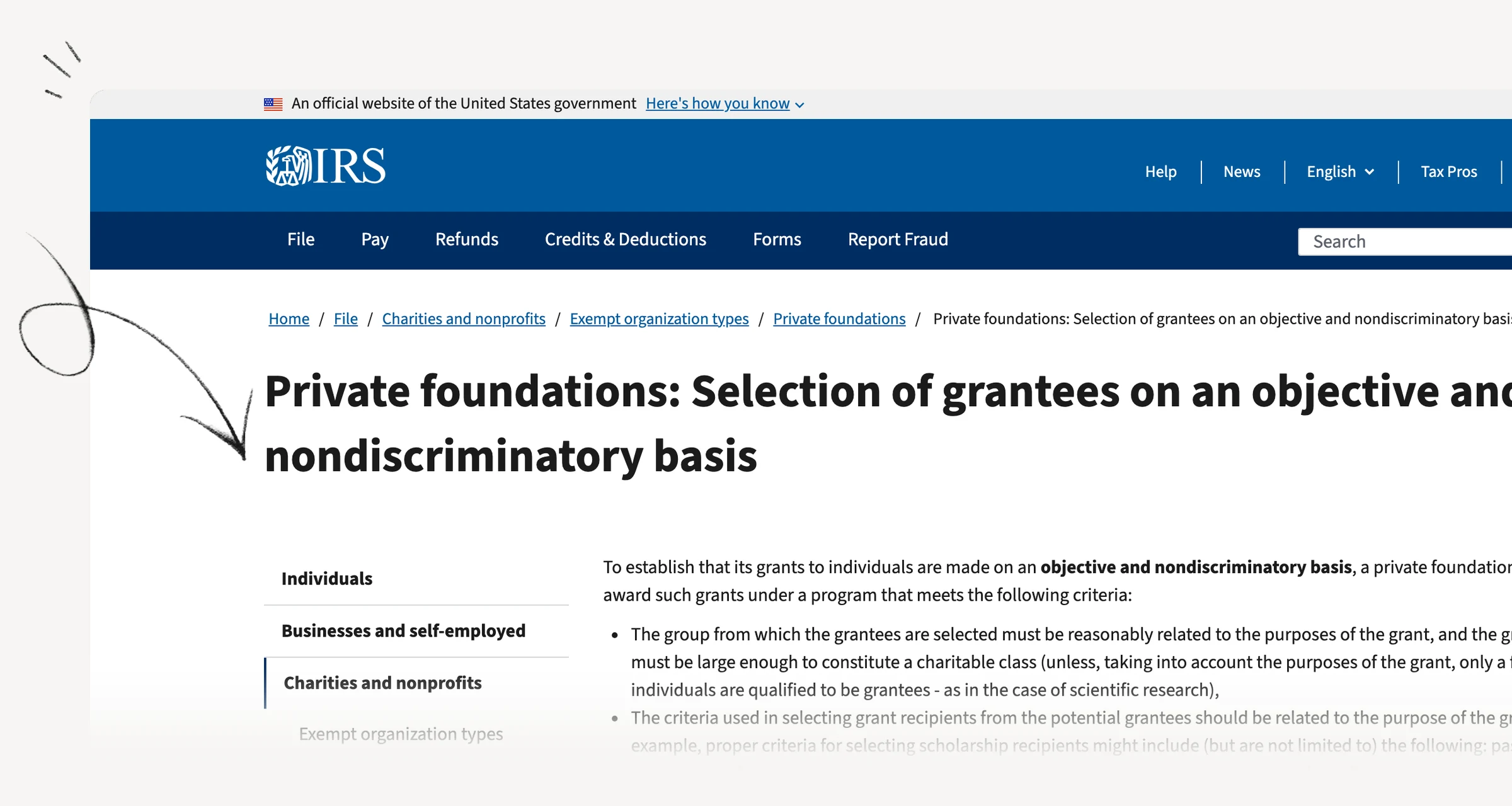
Source: IRS selection guidance
As a proposed design exercise, draft the rubric before reading applications. Translate “leadership” into evidence a reviewer can evaluate, and avoid requiring expensive extracurricular participation when the stated purpose concerns financial need.
For private foundations, the IRS describes objective, nondiscriminatory selection, a suitable charitable class, purpose-related criteria, and avoiding private benefit in selection. These rules concern that legal context; they are not a universal compliance checklist for every donor arrangement. IRS selection guidance
Ask the administrator how reviewers handle conflicts of interest and whether they can explain a decision using the published rubric.
Separate a gift from a tax conclusion
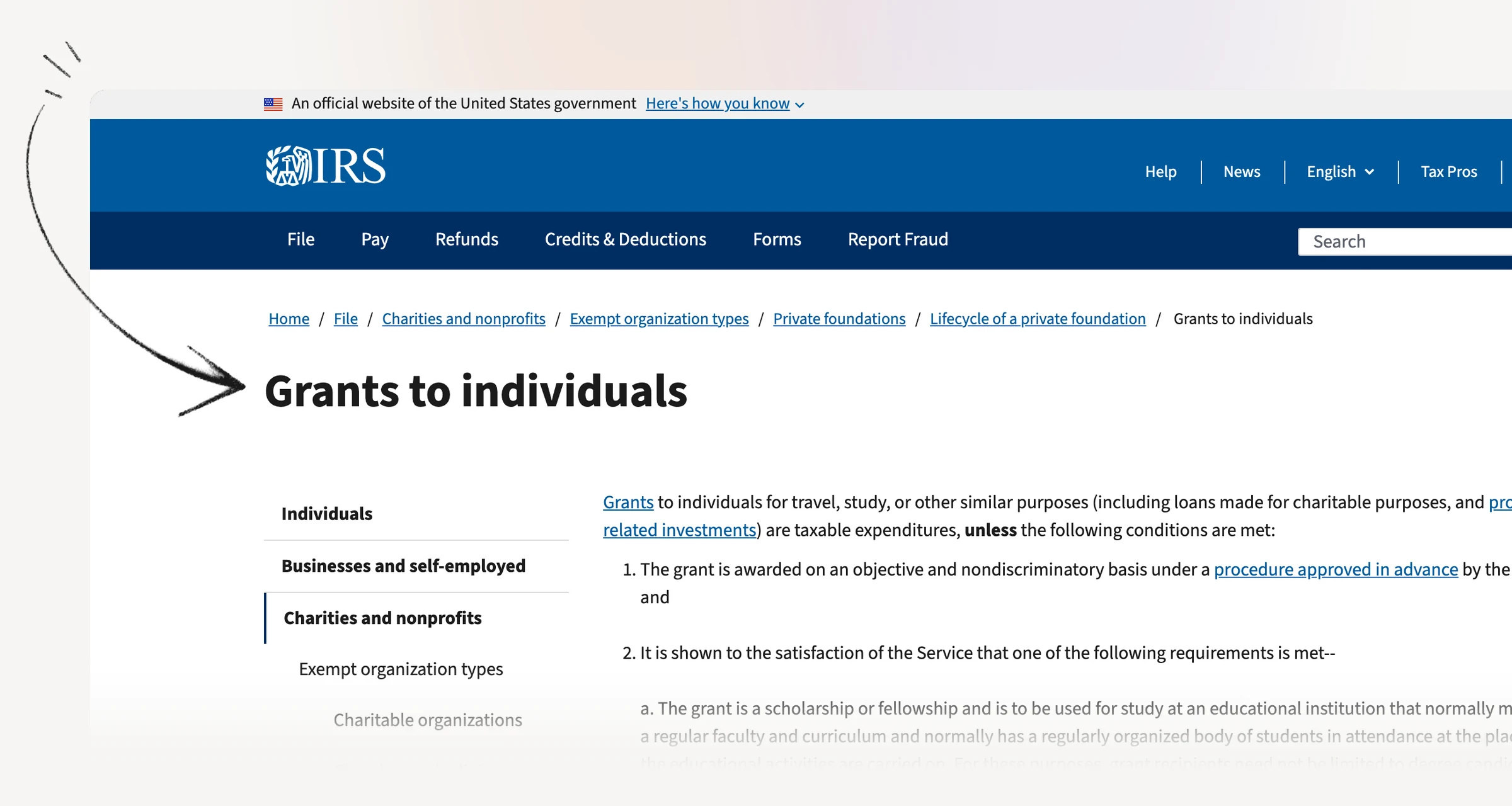
Source: Individual-grant rules
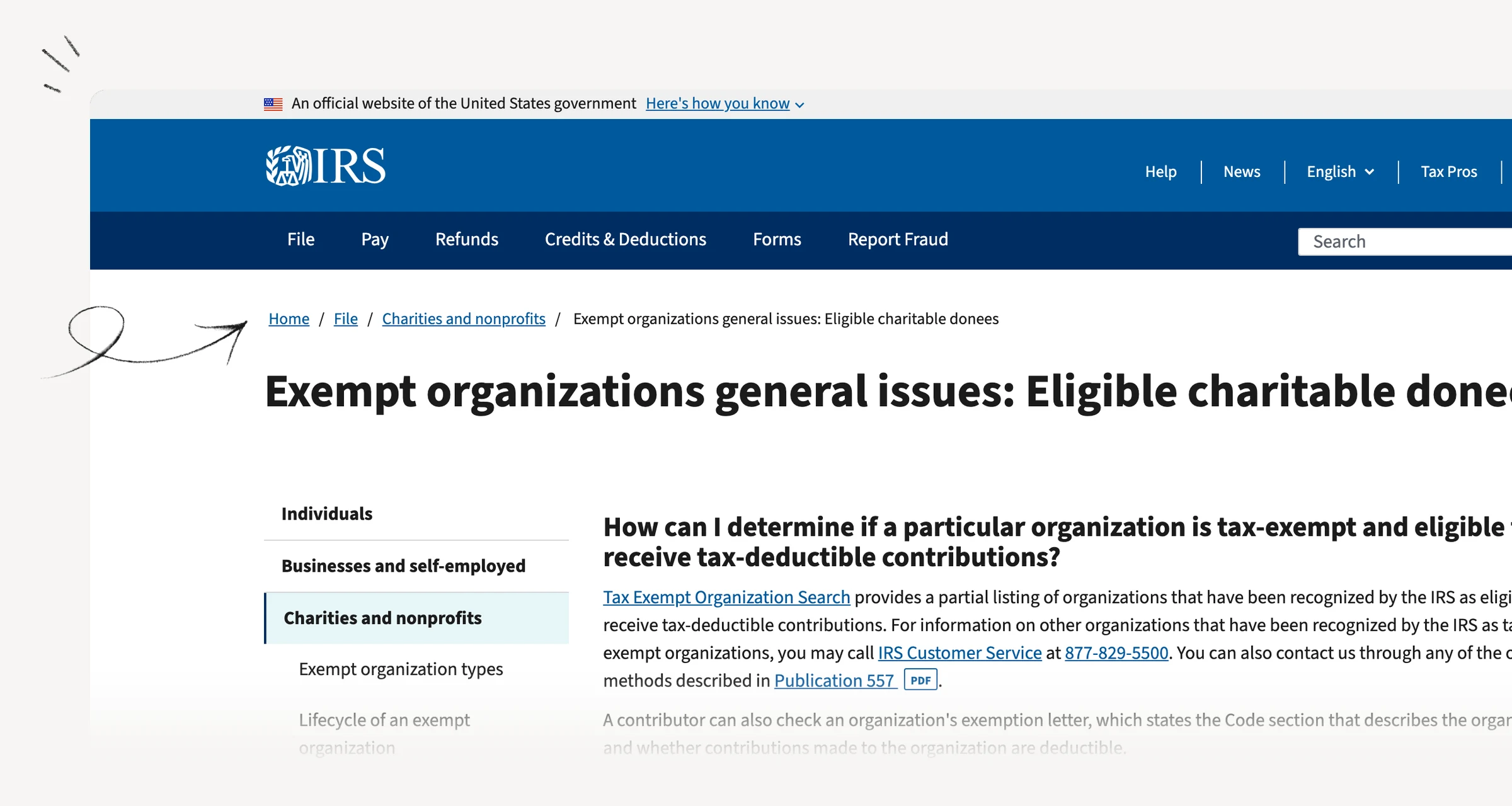
Source: IRS eligible-donee guidance
A payment labeled “scholarship donation” is not automatically deductible. Check the receiving organization’s status and obtain advice about the actual arrangement. The IRS Tax Exempt Organization Search is a starting point for reviewing recognition and eligibility to receive deductible contributions; it does not determine your individual deduction. IRS eligible-donee guidance
Private-foundation grants to individuals have additional requirements, including advance-approved procedures in the circumstances explained by the IRS. Employer-related scholarships also have specific considerations. Individual-grant rules and company scholarship guidance
This hub is an orientation, not personalized legal or tax advice.
Ask for meaningful reporting without unnecessary exposure
Suggested report fields: awards committed and paid, renewal decisions, administrative costs, and aggregate enrollment outcomes when available. Ask the administrator how students consent to public stories and whether participation in publicity is separate from receiving aid.
Illustrative distinction: “Four awards paid” is an administrative result. “Four students graduated because of our award” is a causal claim needing evidence. Report the former accurately rather than upgrading it into an unsupported outcome.






