Some high-school scholarships accept students before senior year; others require a particular graduation and college-entry year. Start by matching your grade and timeline to the actual rules. A large award is not a reason to apply if its eligibility excludes you.
Verified October 13, 2026. Each opportunity below has a currently announced application cycle, but confirm the provider page before submitting.
| Program | Grade / key qualification | Published award structure | Current deadline |
|---|---|---|---|
| VFW Voice of Democracy | Grades 9–12; complete current entry rules apply | National first prize: $35,000; other prizes vary | October 31, 2026; entry received by a participating VFW Post |
| Coolidge Scholarship | Current juniors entering college full-time for the first time in fall 2028; US citizens or permanent residents | Four years of tuition, room, board, required fees, and books/supplies stipend | December 1, 2026, 5 p.m. Pacific; includes references |
| Elks Most Valuable Student | Current seniors or equivalent; US citizens; full-time four-year degree plans | $1,000–$7,500 per year; four-year awards | November 12, 2026, 11:59 p.m. Pacific |
Grades 9–12: Voice of Democracy is an audio-essay competition
VFW’s 2026–27 theme is “What a Veteran Taught Me About America.” Applicants produce a recorded essay; a generic college-admission personal statement will not fulfill the task. The national top prize is paid directly to the winner’s US university, college, or vocational/technical school. Read the current program overview.
Next move: Find a participating Post, read the current entry form, and confirm the recording and delivery requirements. The provider says entries must be in the Post’s hands by the deadline; don’t assume starting an upload or emailing a file to any Post is enough. Use the current entry form.
VFW’s Patriot’s Pen is a separate middle-school competition, not another opportunity for this high-school list.
Juniors: Coolidge has a precise college-entry requirement
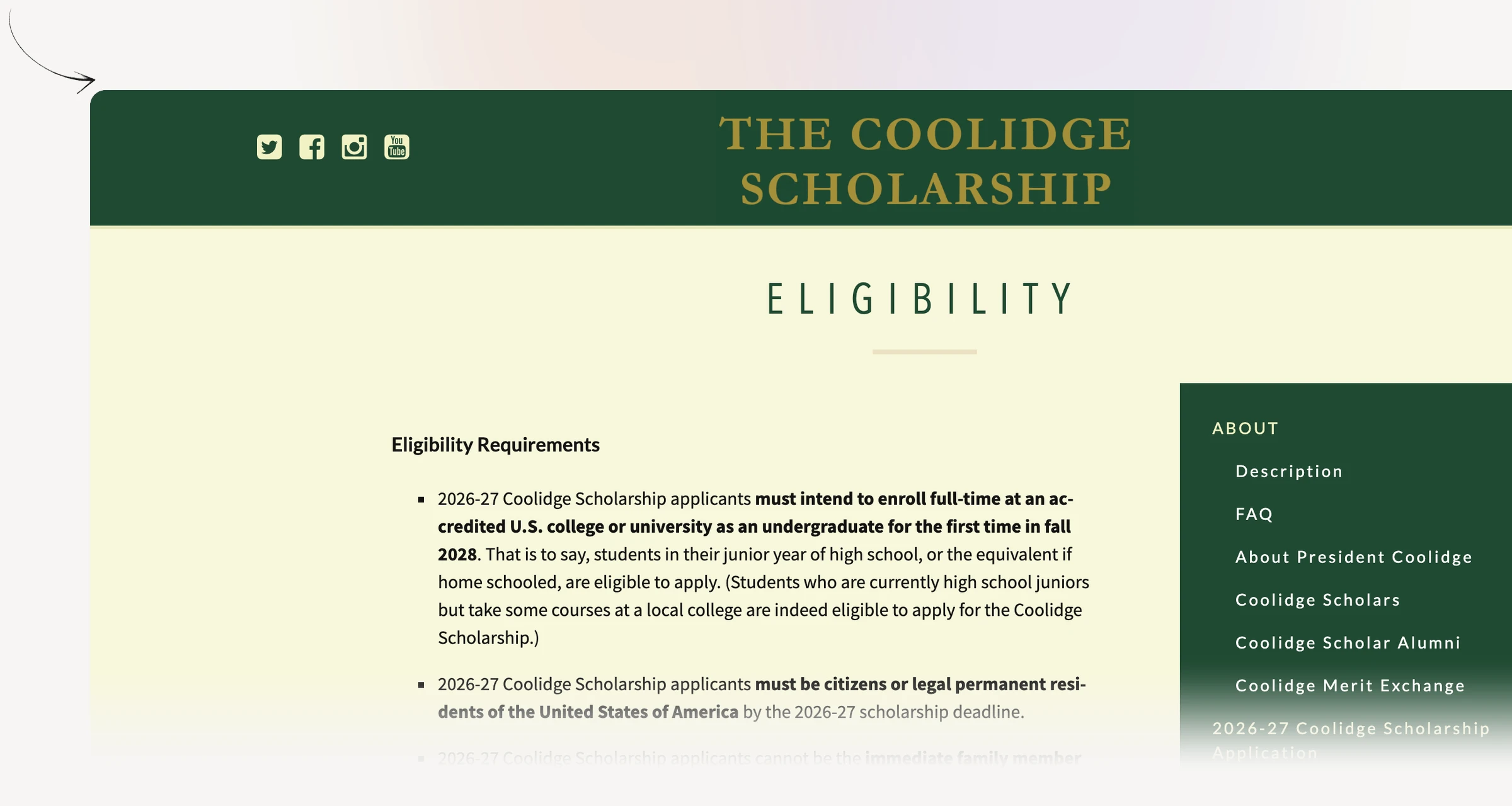
The 2026–27 Coolidge cycle targets high-school juniors, including eligible homeschooled students, who plan to begin full-time undergraduate study in fall 2028. Juniors taking college courses through dual enrollment can remain eligible. Current seniors, juniors graduating early in spring 2027, and juniors planning a later start after a gap year do not fit the stated timing. Check the official eligibility page.
The award is portable to an accredited US college or university where the recipient gains admission; winning does not itself secure college admission. Read the award FAQ.
Next move: Check the required readings and prompts, ask your two recommenders early, and monitor their submissions. All materials must meet the December 1 deadline. A second assessment and finalist interview follow for selected applicants. See the current selection timeline.
Seniors: Elks MVS does not require an Elks family connection
The Elks National Foundation’s Most Valuable Student program accepts qualifying current seniors who are US citizens; applicants do not need to be related to an Elks member. Selection considers academics, leadership, service, and financial need. This is distinct from Elks Legacy Awards, which have family-connection rules. Read the official MVS page.
The MVS FAQ says standardized test scores are not required. Applicants who advance may later need transcripts and a FAFSA Submission Summary. Top-award recipients must attend the specified leadership weekend. Check the current applicant FAQ.
Next move: Use a reliable personal email, submit the initial application before the deadline, and watch for follow-up requests. Treat the advertised range as competitive award possibilities—not guaranteed support.
Make a grade-specific application plan
Create one row per program with current grade, graduation year, college-start year, status requirement, required work, exact deadline/time zone, and how funds are paid. Keep the task visible: recorded essay, researched written responses, and staged scholarship review are different applications.
Hypothetical example: A sophomore may investigate Voice of Democracy, but is not yet eligible for the current Coolidge junior cycle or Elks senior competition. A senior planning college in fall 2027 should investigate MVS rather than trying to change class standing to fit Coolidge.
Your next move
Choose the nearest verified deadline for which you qualify, read the sponsor’s instructions, and create a submission checklist. Keep local school, employer, and community opportunities in a separate shortlist only when you have their actual rules. Never replace a verified application with a fabricated list of hundreds of awards.






