The provider examples below complement the linked background guides. Each program has its own eligibility rules and application cycle.
Facts checked October 13, 2026.
| Route | Real starting point | Distinction that matters | Current action |
|---|---|---|---|
| Hispanic heritage | HSF Scholar Program | Open to students of any race identifying with Hispanic heritage; status, GPA, and enrollment conditions apply | 2026 application closed; monitor next announced cycle |
| American Indian / Alaska Native eligibility | American Indian College Fund — non-Tribal-college route | Tribal enrollment or qualifying descendancy documentation; full-time nonprofit enrollment; GPA 2.0+ | Read annual application/priority-review schedule and confirm current portal cycle |
| LGBTQ+ community or ally connection | Point Flagship | Allies are eligible too; degree, GPA, institution and format restrictions apply | Posted September 9–November 19 window for fall 2027 funding; confirm portal timing |
HSF: heritage is required, race is not the category definition
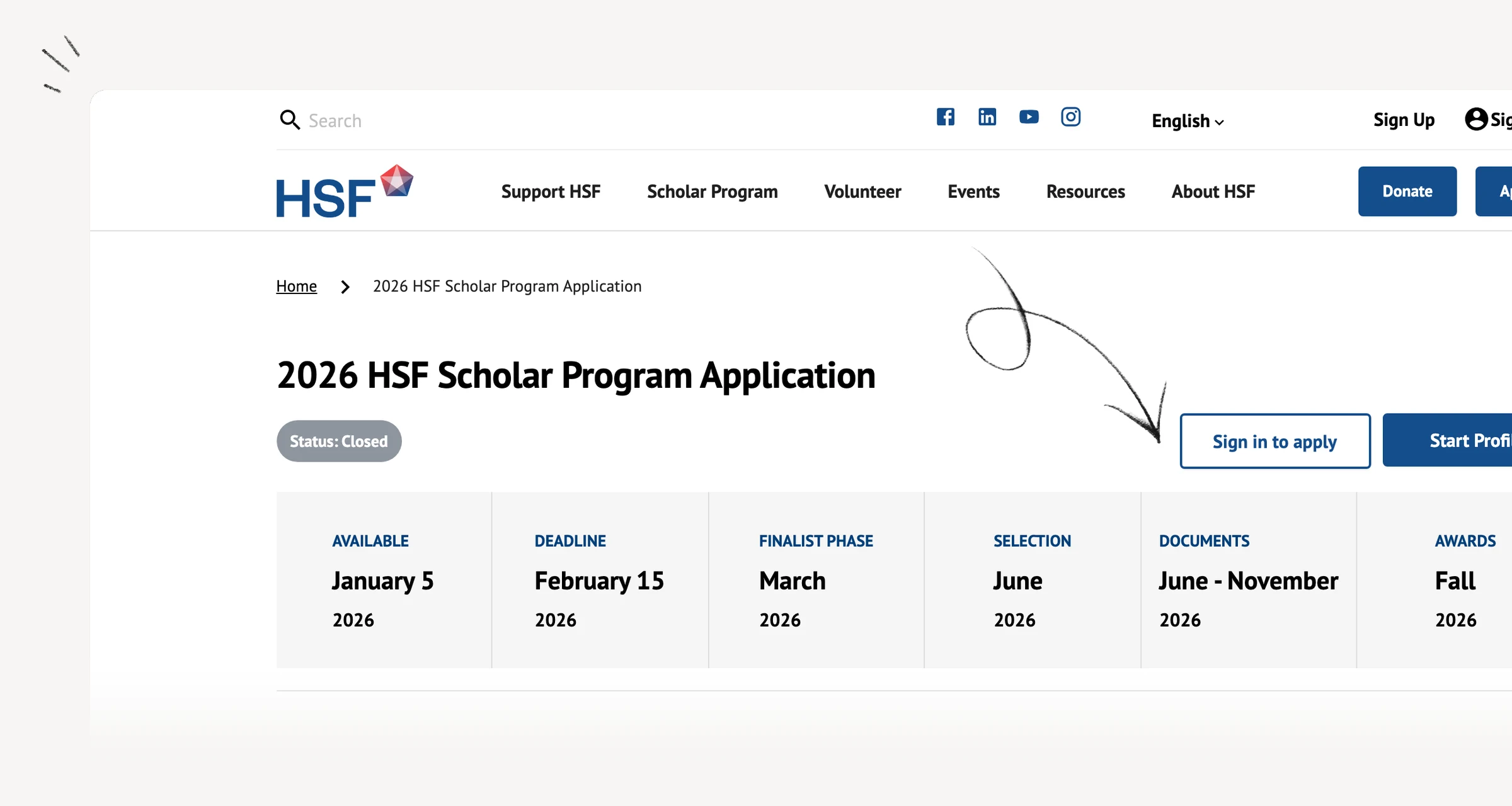
HSF’s documented rules include US citizenship, permanent legal residency, or DACA, plus a 3.0 high-school GPA or 2.5 college/graduate GPA. Full-time enrollment must fit its four-year or graduate institution requirements. Scholar selection does not guarantee a cash scholarship: funding depends on available resources, with possible awards of $500–$5,000. Read HSF’s actual conditions.
Next step: Check your degree stage and status against the next published cycle. Do not treat a closed 2026 application as currently available.
College Fund: prepare evidence of eligibility
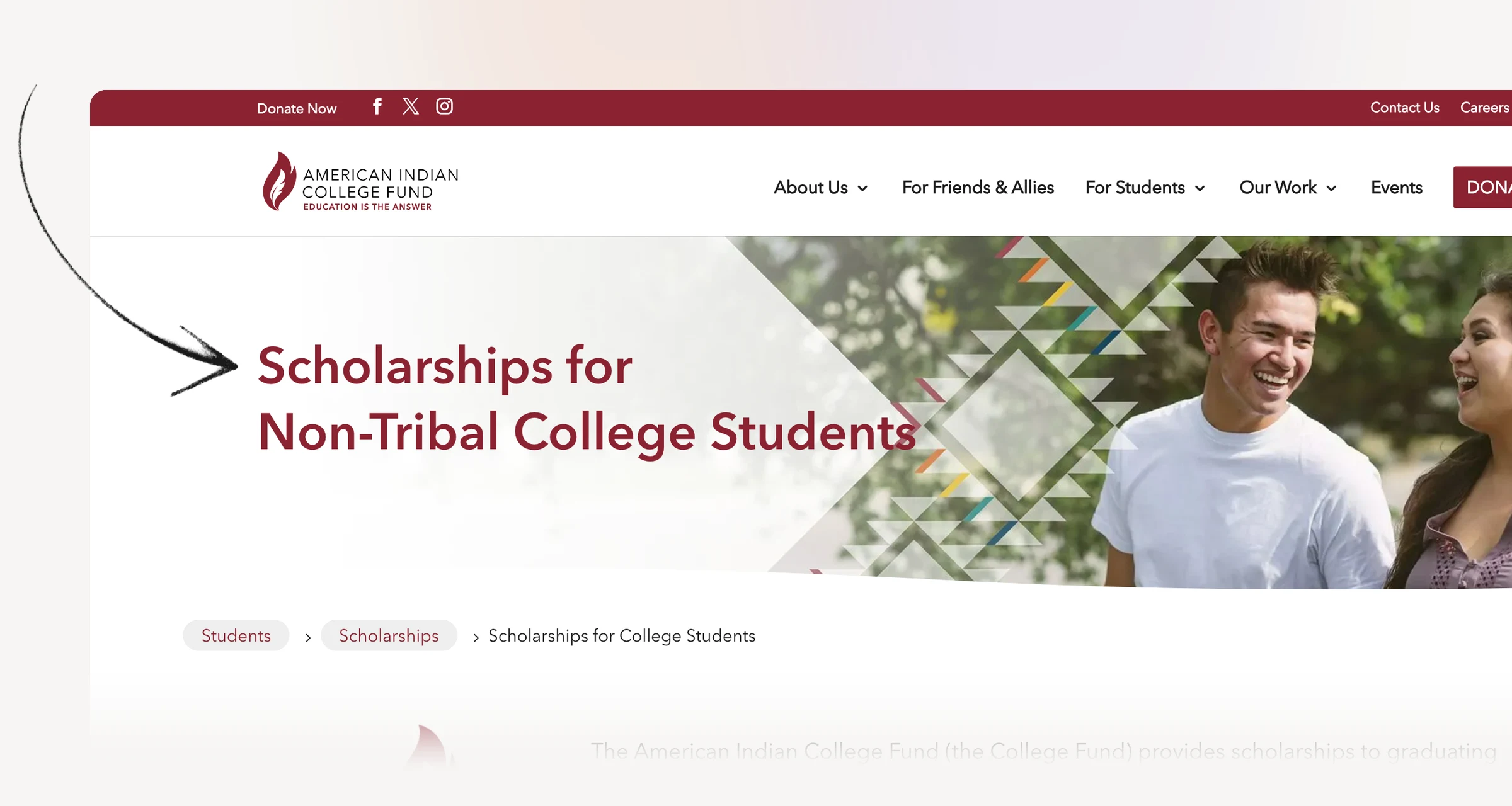
Source: American Indian College Fund — non-Tribal-college route
The non-Tribal-college page accepts enrolled members of federally or state-recognized Tribes, or descendants of enrolled members. It describes documentation such as a Tribal ID and records connecting a descendant to an enrolled parent or grandparent. One application supports consideration across its scholarship portfolio; amounts vary. Use the official application guide.
The provider describes an annual February 1 opening, May 31 priority review, and consideration after that priority date. Do not mistake the priority date for a universal hard close. Tribal-college students should use the separately identified TCU route.
Next step: Gather the actual records requested and ask the scholarship team which current cycle applies. A background description in an essay does not replace required documentation.
Point: community connection does not remove academic conditions
Point accepts LGBTQ+ students and allies pursuing eligible full-time undergraduate, graduate, or professional degrees. The current GPA minimum is 3.3, institutions must be accredited US nonprofits, and fully online degree programs are excluded. Awarded scholars begin funding in fall 2027, with awards up to $15,000 and a maximum four years of support. Read the Flagship criteria.
Next step: Verify degree format and enrollment plans before drafting. Do not relabel Point as an LGBTQ+-only award or assume maximum support is automatic.
How to use other background categories
When exploring first-generation, disability, military-family, foster-care, religious, or regional programs, check three things before adding an award to your shortlist:
- The provider’s exact definition—not a broad category label
- The evidence or application statement required, and who reviews it
- Whether your current stage and funding-year enrollment qualify
These are search routes, not claims that a specific scholarship or live AspireOpen page exists for each one. You do not need to publish sensitive details to start researching; share only what the actual application requires and you choose to provide.
Your next move
Pick one verified route matching your circumstances, read the official rules, and save the specific documents and dates. Keep a separate list of general academic, service, and local scholarships; a background-focused search should not hide opportunities without that requirement.






