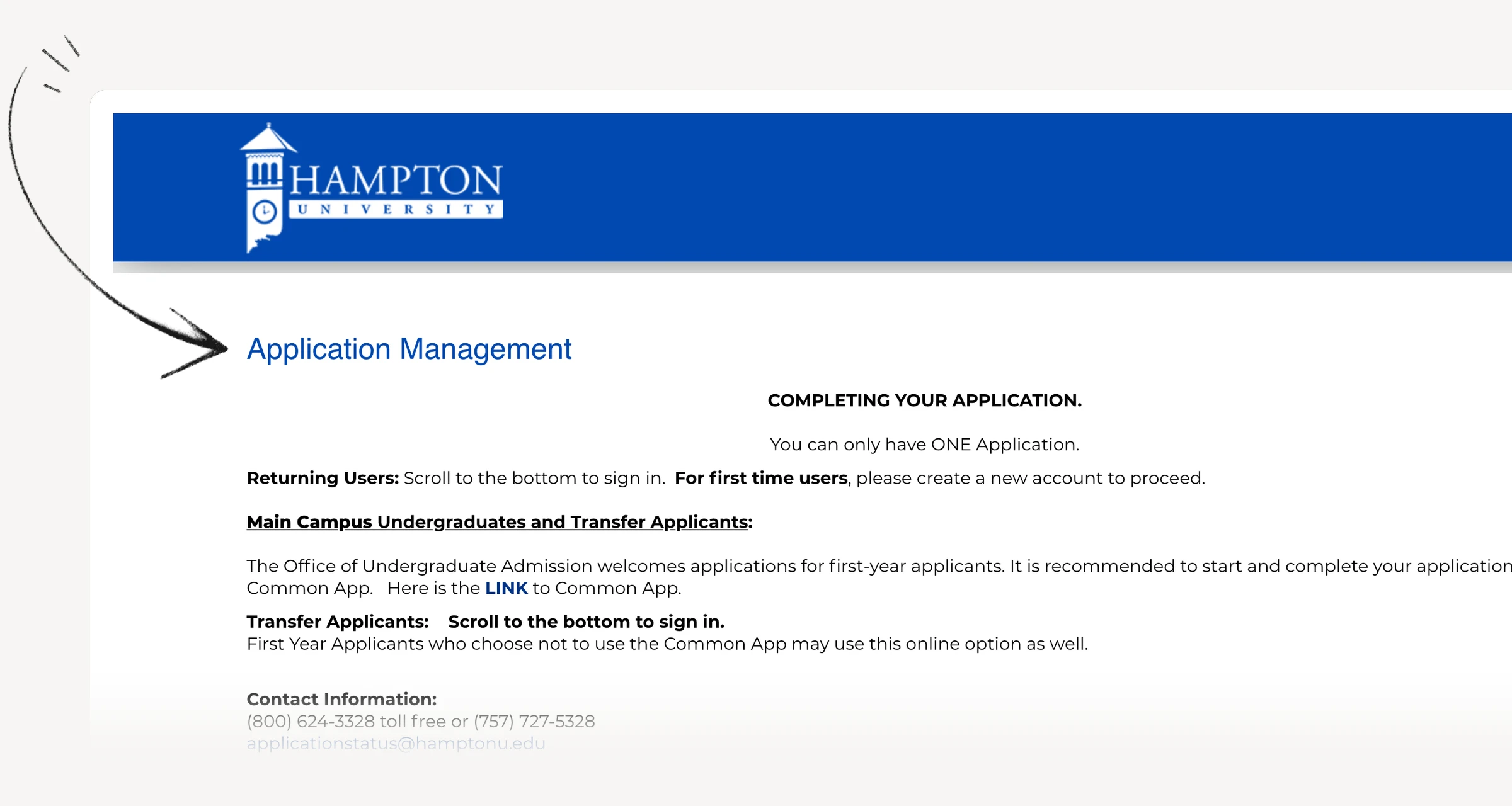
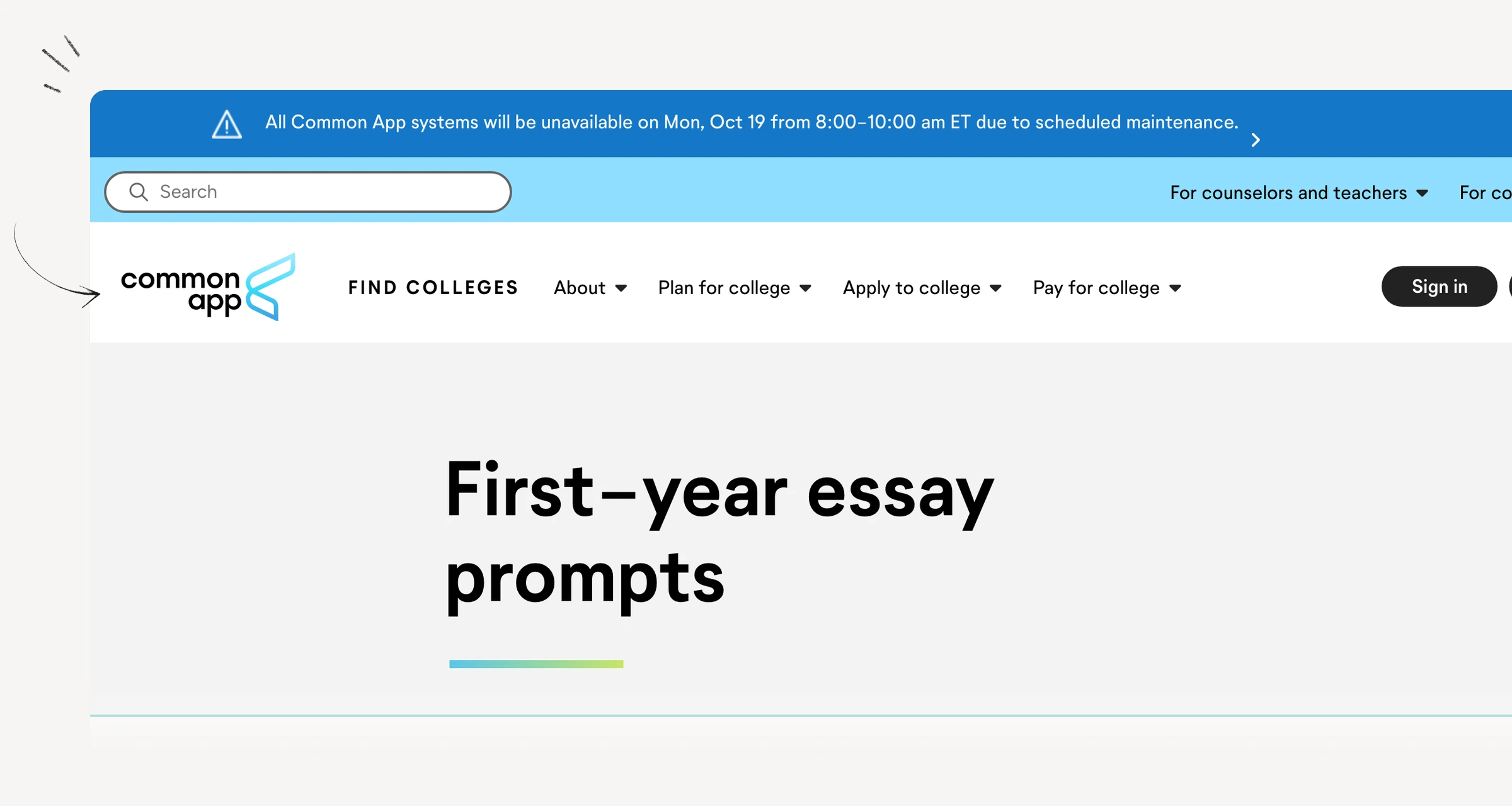
Do not begin with an old “Hampton supplemental essay” prompt. Hampton’s current first-year admissions page offers a traditional written essay using a Common App prompt or a video of up to 90 seconds explaining what “Character Matters” means to you. Check your actual application before deciding which route to use.
For fall 2027, Hampton lists November 15, 2026 for Early Action and March 1, 2027 for Regular Decision. Those are application-completion deadlines, not separate essay-only deadlines. The university says review begins when required materials have arrived. See its official requirements.
Choose the route you can execute clearly
| Written essay | Video essay |
|---|---|
| Start with the Common App prompt you select | Address the university’s stated character topic |
| Develop a real experience through detail and reflection | Explain one clear example within the stated time limit |
| Follow the live application’s word limit | Test duration, sound and submission instructions |
Do not assume Hampton’s graduate personal-statement rules apply. Its Graduate College guidance concerns main-campus graduate applicants, not this first-year choice.
For the written route, identify a meaningful change
Begin by listing three experiences you can explain without inventing achievements. For each, ask: What did I notice? What decision did I make? What changed in my understanding or behavior? Choose the experience that lets you answer the actual prompt, not the one with the most impressive title.
An original outline might follow a student who discovered that a club’s sign-up process excluded classmates without reliable internet. The narrative could show the observation, the student’s contribution to an alternative process, and what the experience taught them about access. It should not fabricate a participation increase or imply one student solved the whole problem.
A written personal essay is not automatically a “Why Hampton?” response. Read the selected prompt and keep the piece centered on what it asks.
For the video, show character through a decision
A workable planning structure is:
- Explain what character means to you in a specific situation.
- Describe a real choice, including its difficulty or tradeoff.
- Explain what you did and what you learned.
Practice a short version, time it aloud, and cut repetition rather than speaking faster. Keep the recording within Hampton’s 90-second maximum. Elaborate editing cannot substitute for an answer.
Original example: turn a slogan into reflection
Generic opening: “Character means always doing the right thing, even when no one is watching.”
More specific model: “When our volunteer schedule fell apart, I wanted to blame the people who had not replied. Instead, I called them and learned the sign-up system was confusing. Taking responsibility meant fixing our instructions before criticizing anyone else.”
This is a hypothetical writing demonstration, not text to submit as your own experience. Its useful feature is the link between a decision and reflection. Your version should use events and language that are true to you.
Avoid three common misfires
- A campus history paragraph that never explains your own perspective.
- A list of moral qualities without a concrete example.
- An exaggerated story in which you are always right and everyone else needs correction.
Ask a reviewer to tell you what they learned about your judgment. If the only answer is “you value character,” add a specific choice and its implications.
Before submitting
Verify the current prompt, chosen format, live word or time limit, upload method and completion deadline. Read the written piece aloud or replay the video once for clarity. Keep the final work your own; examples and feedback should help you think, not manufacture an identity.