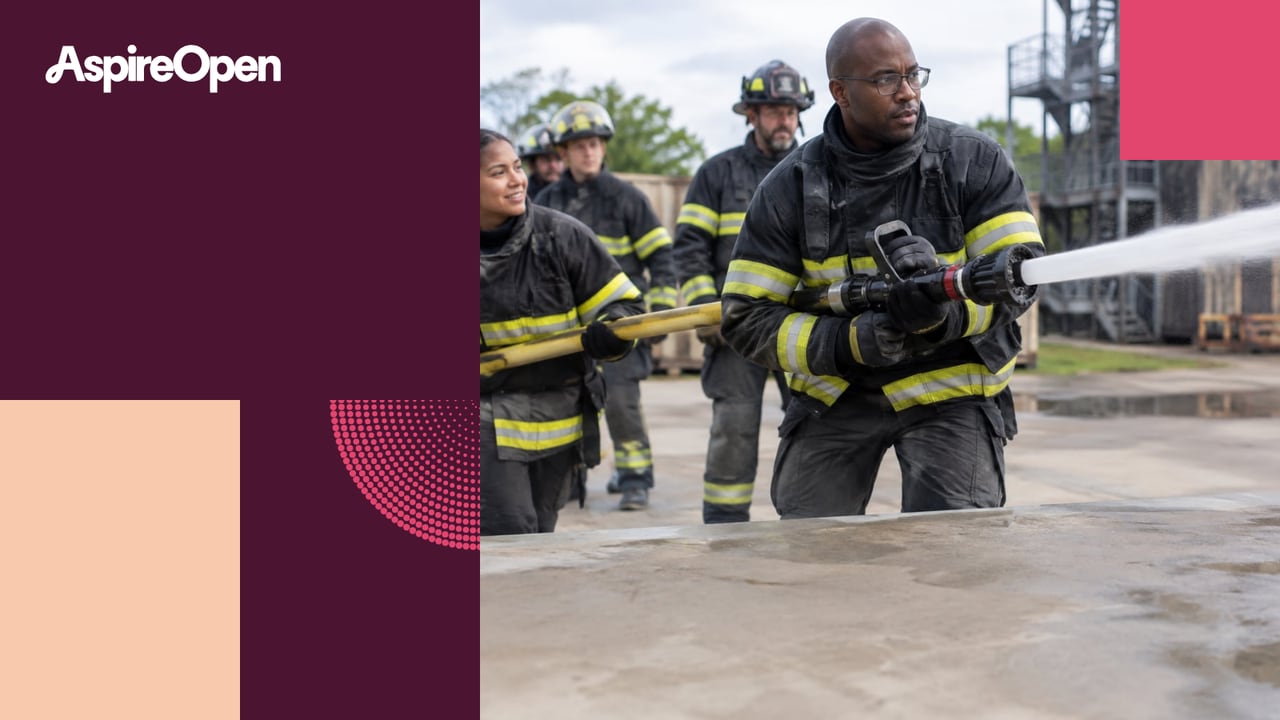
Firefighter scholarships can mean education aid for a firefighter’s family or funding for someone training to enter the profession. Those are different routes. A student’s relationship to a fallen firefighter may qualify them for education in a field unrelated to firefighting, while an academy award may require a specific training course.
Verified family scholarship programs
The National Fallen Firefighters Foundation supports eligible families of firefighters honored at the National Fallen Firefighters Memorial. These programs should not be advertised as open to every firefighter’s child or every aspiring firefighter.
| Program | Who/what it supports | Amount and timing |
|---|---|---|
| Senator Paul S. Sarbanes Scholarship | Eligible spouse, life partner, child or stepchild; undergraduate/graduate study, certification or job-skills training | Award varies with evaluation; published application deadline March 1; confirm the next year-specific call |
| Motorola Solutions Foundation Enhanced Scholarship Initiative | Same family connection plus STEM or public-safety major | Year-by-year assessment; published January 1–March 1 application period, not a currently open October call |
| Sander Cohen Memorial Scholarship Fund | Eligible family members studying public safety | Amount and individual current deadline not stated on reviewed description; confirm with NFFF |
These are related routes within one foundation’s support system, not three independent guarantees or unrestricted training grants.
Check the relationship and both age conditions
The Sarbanes eligibility page names spouses, life partners, children and stepchildren of firefighters honored at the Memorial in Emmitsburg, Maryland. For children, the rules require current age under 30 and age under 22 at the time of the firefighter’s death. Both conditions matter; meeting only one is not enough.
The overview includes stepchildren in its child-age conditions. Ask the foundation about your exact relationship and records rather than substituting another dependent status. Do not assume a friend’s family eligibility establishes yours.
Applicants must have a diploma/equivalency or be in their final high-school year, and pursue or plan accredited study/training. Full-time and part-time students are included in the published Sarbanes rules; academic-degree applicants need at least a 2.0 GPA or C average.
General study versus STEM/public safety
Sarbanes is not restricted to a fire-science degree. The foundation describes support for undergraduate/graduate education, vocational-technical training, certifications and job training.
Motorola’s enhanced route adds a STEM/public-safety major condition. The provider lists examples including engineering, computer science, environmental science, criminal justice and emergency management. For a less obvious degree, scholarship managers review the curriculum/graduation requirements and can assess the proposed program in advance.
Sander Cohen is public-safety-focused. Do not expand that description to all majors merely because another NFFF program permits broader study.
Prepare the financial and academic case privately
NFFF describes an award evaluation combining financial need and academic performance; it does not state a universal award value for all applicants. The Sarbanes page says the FAFSA-related financial report should be submitted but is not required, while the enhanced route has additional scoring distinctions. Read the specific application instead of carrying an exception from one program into another.
Ask which current financial-aid report is accepted, especially where webpage wording uses older report terminology. Send it through the designated secure process, not a public comment or general social-media message.
A concise clarification request is:
My intended program is (your exact degree/certificate) at (your school), with (your full-/part-time) study. Could you confirm the applicable scholarship route, required relationship documents and current financial-report format for the next cycle?
Provide sensitive details only after the foundation identifies the secure channel.
Write about your own education goal
A family-based application does not require inventing operational fire-service experience or disclosing confidential incident details. Explain your education plan, what you have done to prepare and how funding would address a specific gap.
A hypothetical applicant pursuing an emergency-management certificate might describe a real class or supervised community project and the skills they still need. Do not claim completed professional credentials, response duties or a relative’s achievements as your own.
If you need firefighter academy funding
The family programs above are not universal academy scholarships. Ask the academy, college aid office or employer about the exact course, approved credential, funding source and eligible expenses. Confirm whether a benefit is tuition aid, reimbursement or a loan and whether employment/service conditions apply.
Keep tuition, equipment, examinations, travel and living expenses separate. Obtain a written offer and payment schedule before relying on support for an upcoming bill.
Your next step
Eligible Memorial families can screen the NFFF route matching their degree and relationship, then confirm the current cycle. Applicants without that family connection should pursue separately verified training funding rather than submitting under a condition they do not meet.






