
Verified funding options
| Program and official source | Published value | Key eligibility | Cycle or next action |
|---|---|---|---|
| ACFEF culinary scholarships | Apprenticeship/certificate: up to $1,500; postsecondary degree: up to $2,500 | Accepted to an accredited institution with a culinary, pastry, or foodservice-related major; cumulative GPA at least 2.75 | Annual April 30 and October 31 deadlines; linked form is Fall 2026 |
| NRAEF scholarships | Individual award amount not specified on inspected overview | Postsecondary restaurant, foodservice, and hospitality study; check individual award rules | 2026–27 closed; next application January 15–March 15, 2027 |
| CIA Excellence Award—New York campus | $6,200–$16,000 annually, depending on program/enrollment season | Academic excellence and leadership; identified during admission | No separate application; renewal requires 3.0 cumulative GPA |
| CIA Alumni Referral Scholarship | $1,000 one time for the listed degree routes | Prospective domestic/international applicants with a CIA graduate’s referral letter | Include letter with admission application; freshman-year restriction |
Facts checked October 13, 2026. Awards are competitive or conditional, not guaranteed discounts.
ACFEF: collect evidence before writing essays
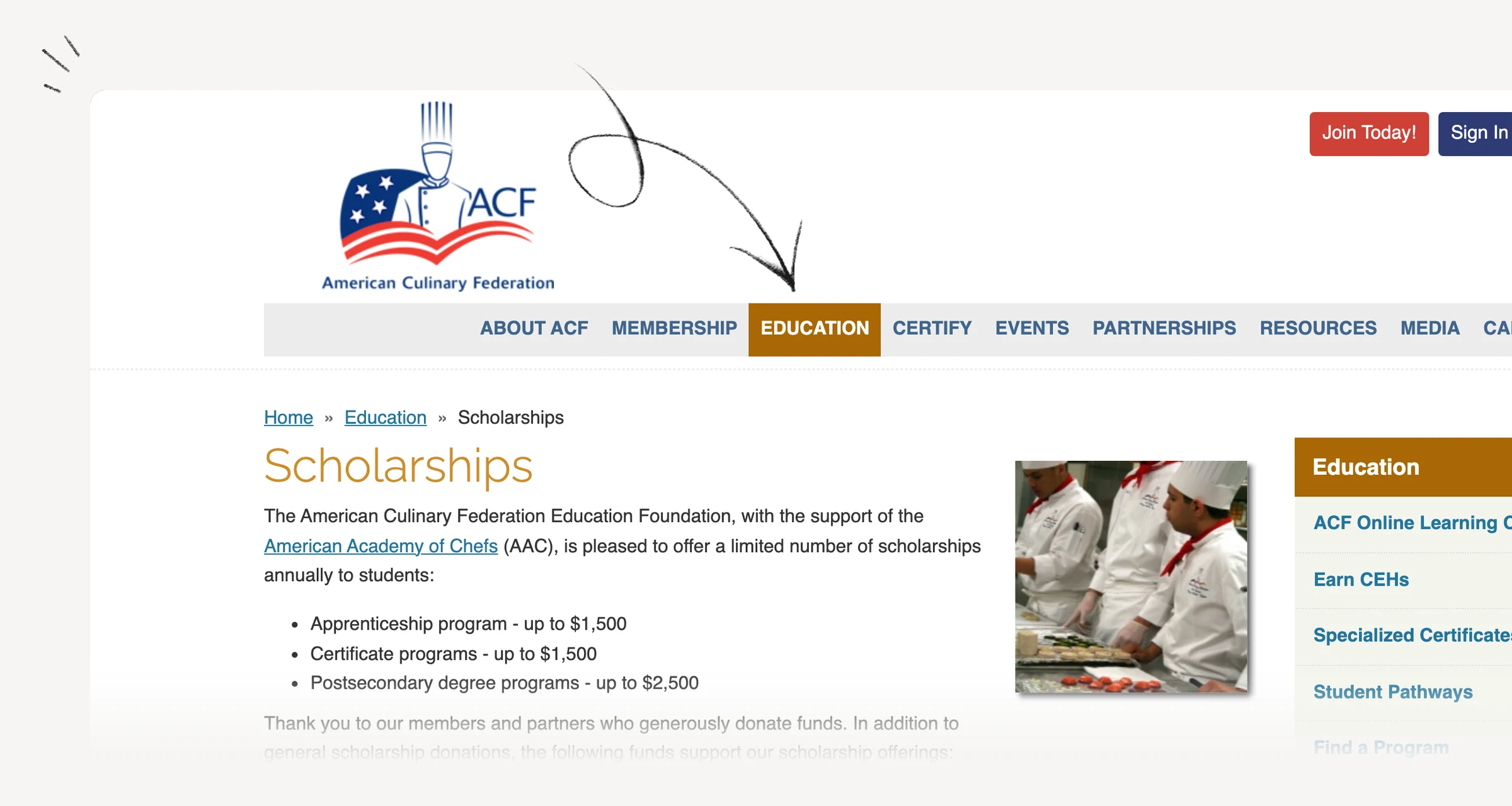
American Culinary Federation — scholarship overview
The official Fall 2026 form uses a point system covering GPA, culinary competition participation, volunteering, and ACF involvement. Competition and volunteer evidence must match the listed recent-activity rules; submitting unrelated accomplishments is not the same as meeting them. ACF membership appears as a points category, not as a blanket membership prerequisite in the listed basic eligibility. Official Fall 2026 application.
The form asks for three essays of 50–200 words each about culinary interest, goals, and leadership. Prepare a transcript and supporting letters before the deadline, then answer each prompt separately. The foundation encourages students to apply again when future funding is needed; that is not automatic renewal. ACFEF application.
NRAEF: keep student awards separate from educator grants
National Restaurant Association Educational Foundation — student scholarships
NRAEF’s site also describes grants and professional support. A high-school classroom grant, educator grant, or certification award is not necessarily a scholarship a culinary student can use for tuition. Use the scholarship page and its FAQ to identify the student application. The foundation also links state restaurant-association scholarships, which have their own rules. NRAEF student scholarship overview.
CIA: the campus and renewal rules change the comparison
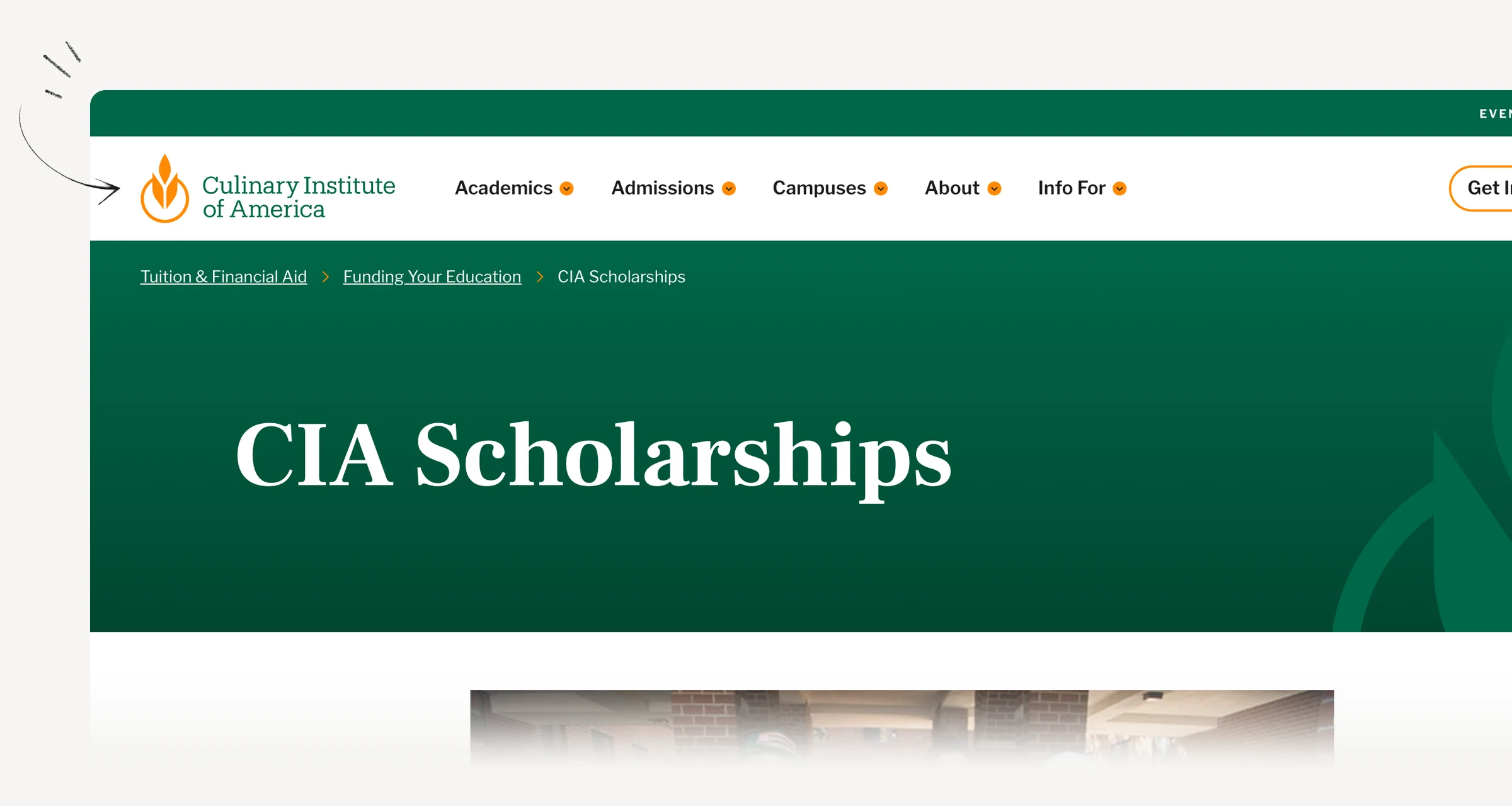
Culinary Institute of America — college scholarships
CIA publishes different Excellence Award ranges for New York and California; do not copy New York’s amount into every campus budget. Its alumni-referral route requires a real graduate’s letter, not merely knowing that an alumnus exists. These awards support CIA attendance, not any culinary school. Campus-specific CIA scholarships.
Once accepted, students can investigate the college’s $HEF donor-scholarship system. Treat admission-based awards and later applications as separate steps; access to a portal is not receipt of every award listed there. CIA scholarship access.
Build a culinary-specific funding file
Create a checklist with: program and campus name; credential level; admission status; transcript; documented competition or community work; reference contacts; and renewal terms. Ask your school which equipment, uniforms, ingredients, or other charges appear outside tuition. Then ask each provider which expenses its award permits—do not assume all training expenses are covered.
Illustrative essay planning: Instead of “I have always loved cooking,” identify one true task that shaped your interest, what skill you learned, and the next training step. A pastry student might discuss a real baking responsibility; an apprenticeship applicant might discuss supervised kitchen work. No invented restaurant employment or competition medal belongs in the application.
Next step: Pick the route matching your credential, check its current form, and send the school a campus-specific funding question. If a cycle is closed, build the application file for the published next cycle rather than claiming the award is open now.






