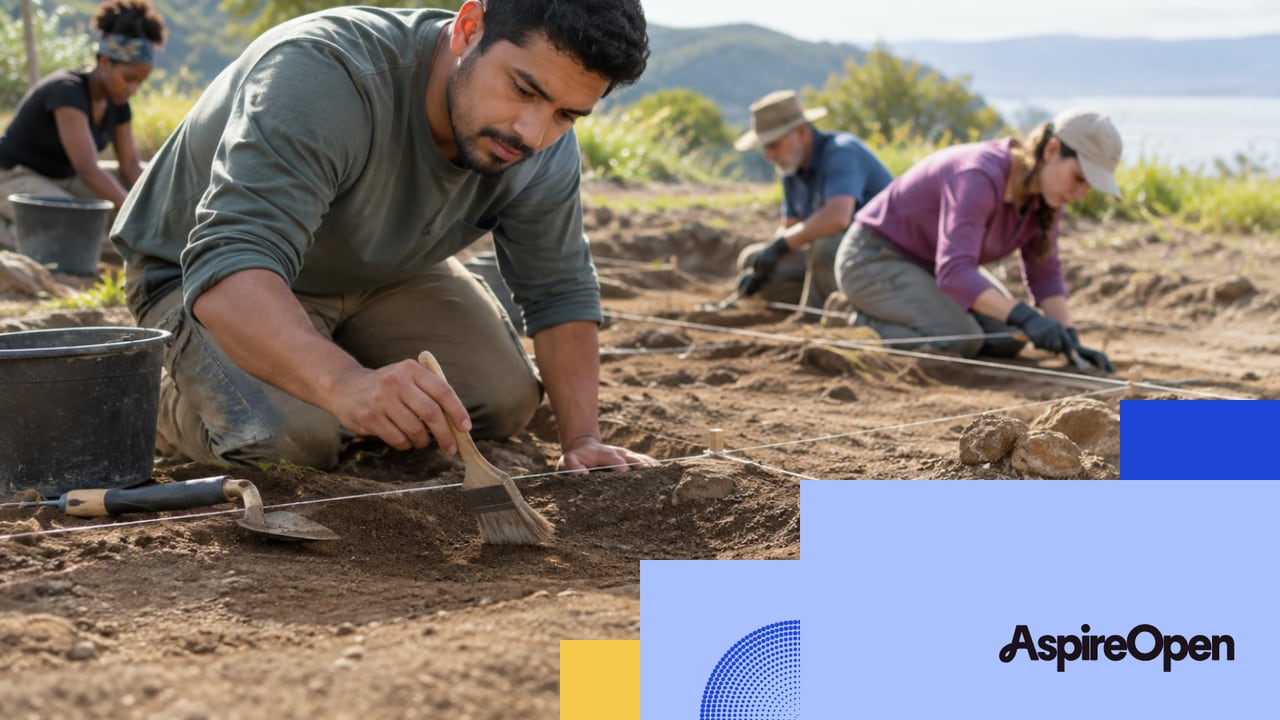
Archaeology funding can support a first field school, later research, a museum internship or conference travel. Begin with the activity you need funded. A grant for publishing research is not a general tuition scholarship.
For a first field school, the AIA offers several named programs through one application. Choose a legitimate project that fits your academic goals and the sponsor’s rules—not a destination solely because an award exists.
Compare verified AIA field-school routes
Checked October 14, 2026. Full common and individual criteria apply.
| Program | Project fit | Amount/deadline |
|---|---|---|
| Jane C. Waldbaum Field School Scholarship | Qualifying first archaeological fieldwork | $2,000; March 1, 2027, 11:59 p.m. Eastern |
| Laura Obolensky Scholarship | Qualifying projects in the provider’s specified countries | Same common application; read country list |
| American School of Prehistoric Research Scholarship | Eastern-hemisphere sites occupied before the mid–first millennium BCE | Same common application and published funding |
Applicants must be at least 18, enrolled in the U.S./Canada, have begun undergraduate year three without completing graduate year one, and have no previous archaeological fieldwork. Projects must last at least four weeks. AIA eligibility.
First experience means an actual eligibility condition
If you have previous field experience, ask the sponsor whether it disqualifies you. Do not omit an experience because it was informal, short or unpaid in order to appear eligible.
Write down your academic stage and relevant transcripts before requesting references. A transfer student should be prepared to document earlier college study rather than assuming the current transcript is complete.
For an uncertain project category, contact the sponsor with the actual location, dates and activity. Do not infer eligibility from a country’s broad historical connection to archaeology.
Connect the project to your learning
AIA requests a short statement, two academic references, project details, budget/other funding and transcripts. Selected recipients need project acceptance, student membership and post-project reporting. AIA application and follow-up.
Explain why this particular field school advances your study. A hypothetical applicant could identify a method they need to learn and how it relates to a genuine academic question. Do not claim you will discover a particular artifact or resolve a major historical debate.
Use your own words and distinguish your goals from the project’s established findings. Credit supervisors and collaborators accurately.
Budget the whole experience
Ask the field school for program fees, accommodation, meals, travel, equipment and other relevant costs. Mark which items are included in the fee and which remain your responsibility.
Then identify which expenses the scholarship permits, payment timing, cancellation rules and what happens if the project changes. An award does not automatically make every project affordable or approved by your institution.
Keep pending applications separate from confirmed funds and disclose other support accurately. Do not request the same expense twice without the sponsors’ permission.
Respect people, sites and restricted information
Ask your institution and project director about academic credit, supervision, permissions and appropriate participation. A scholarship page is not a substitute for a field school’s actual academic and safety arrangements.
Protect sensitive site locations, community information and unpublished findings. Share only material you are authorized to include. Avoid presenting access to heritage as a personal entitlement or a guaranteed souvenir-producing experience.
Other archaeology support has different purposes
AIA separately lists museum-internship, meeting-travel, research and publication programs. Their dates and applicant types differ. AIA funding directory.
The Society for Historical Archaeology’s 2026 field-school program used an April 3, 2026 deadline, now past. A genuine historical award is a future research lead—not an open October application. SHA 2026 program.
Next step
Verify your first-fieldwork status, choose a qualifying project, obtain a complete budget and coordinate academic references before the actual deadline.






