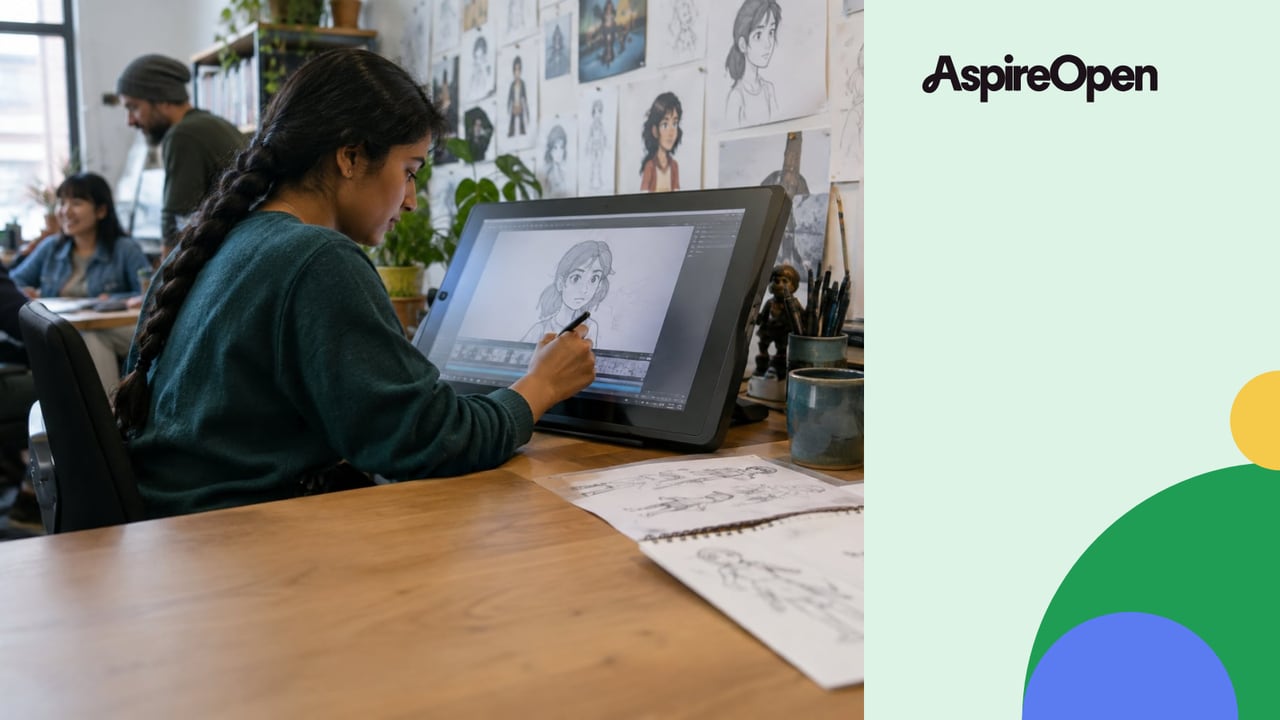
No specific animation award has been verified for this guide. The article does not present a closed competition or professional program as an open student scholarship. A researched opportunity comparison is still needed before publication.
Define what you are trying to fund
Write down your study stage, intended program, preferred medium, and the expense you need help covering. A prospective undergraduate seeking tuition support has a different task from an enrolled student financing a short film.
| Funding question | What the official rules must resolve |
|---|---|
| Is this for students? | Eligible enrollment and education stage |
| Does my work fit? | Accepted animation media and subject matter |
| What is funded? | Tuition, training, equipment, production, or another purpose |
| What should I submit? | Reel length, file format, portfolio, statement, or other materials |
| Can collaborators apply? | Individual versus team eligibility and credit rules |
Do not assume a program accepts your work because its title contains “animation.”
Build a portfolio that shows your contribution
Start with a credit sheet for every piece you might submit. Note what you personally created, what collaborators contributed, and which assets or tools require disclosure under the application rules.
For a hypothetical group film, “I animated the character movement in these scenes” is more informative than listing the whole film without attribution. Keep your role accurate; do not imply that direction, modelling, compositing, or sound design was yours when it was not.
Choose pieces that answer the provider’s criteria. If the rules ask for a particular technique or format, a polished but ineligible reel is not a substitute.
Test the submission as a reviewer would
Open links without your own account signed in. Check access permissions, playback, sound, captions where relevant, and the order in which the work appears. Confirm that the link points to the intended version rather than an unfinished upload.
Use the stated length and file specifications. Do not assume that a longer reel demonstrates more skill; select the strongest relevant evidence that fits the requirements.
Explain a creative choice concretely
When a statement is requested, describe a decision visible in the work. A hypothetical example might explain how you changed a character’s timing to make a reaction readable. Connect intention, technique, and revision rather than relying on claims such as “animation is my passion.”
Include only experiences and outcomes you can substantiate. Do not invent festival selections, client work, or audience results to make an application sound stronger.
Read ownership and funding conditions
Check whether the rules discuss publicity, licensing, originality, collaborative work, or the use of generative tools. Ask about unclear terms before uploading work that includes someone else’s assets or a client’s material.
Also confirm the payment recipient and eligible expenses. A production grant should not be entered into a tuition budget as though the uses were interchangeable.
Your next move
Create a two-column portfolio inventory: work ready to submit and work requiring clarification. Then evaluate one official award page against your actual study stage and funding need before editing the reel.






