Identify the payment model
| Model | Question that matters |
|---|---|
| Reimbursement after payment | How much must I advance, and what evidence releases repayment? |
| Direct tuition assistance | Will the school receive payment before my bill is due? |
| Partially funded study | Which costs remain mine and when are they due? |
| A discount only | What is the remaining price, and is there any employer payment at all? |
This is a reading framework, not a promise that every employer offers all four. Guild’s current FAQ describes both direct tuition assistance and reimbursement, including reimbursement options for programs outside an employer’s approved catalog. Guild payment FAQ.
Get approval before you create a bill
Ask HR or the benefit administrator for the written policy and an answer tied to the actual school and course. Use a checklist:
- Does my role, tenure and employment status qualify?
- Must the school, degree, course or field be approved in advance?
- Which tuition, fees, books and other costs are covered?
- What grade, completion evidence and claim deadline apply?
- Is the limit per term, calendar year or another period?
- What happens if I leave, change hours, withdraw or fail the course?
These are questions to verify, not universal conditions. Do not invent a service commitment or assume a repayment obligation without the actual policy.
A cash-flow example
The following is entirely hypothetical; it is not any employer’s benefit.
| Item | Example amount |
|---|---|
| Approved tuition billed now | $3,000 |
| Books excluded under the imagined policy | $200 |
| Maximum approved reimbursement after completion | $2,500 |
| Cash the student must advance | $3,200 |
| Remaining expense after full approved repayment | $700 |
The benefit reduces the final expense but does not erase the need to advance $3,200. The example also does not include financing charges or personal tax effects. If the employee cannot cover the initial bill, ask whether direct payment, a school payment plan or a different approved program is available before enrolling.
Do not confuse the employer limit with a tax exclusion
Source: IRS educational assistance
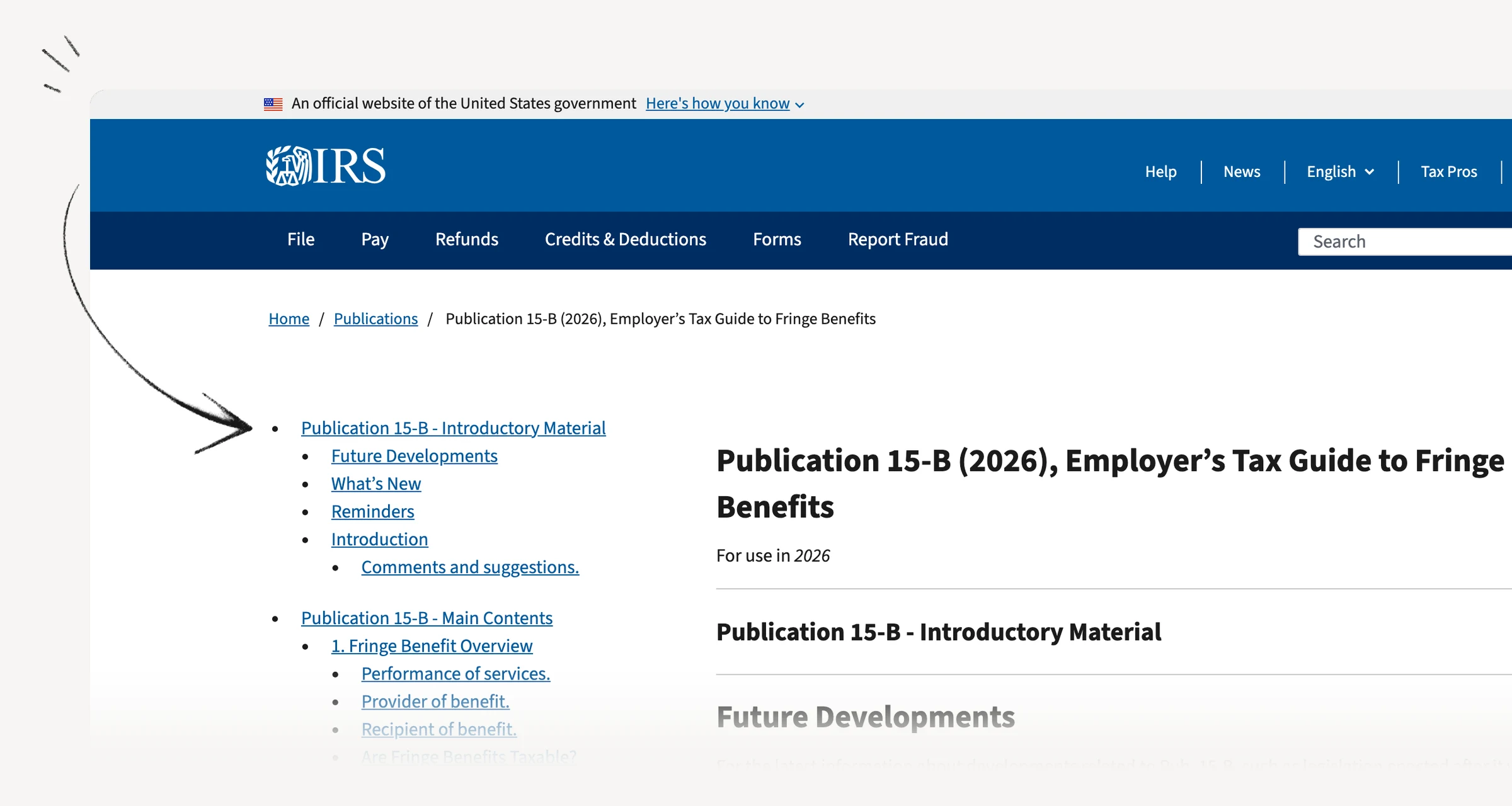
IRS Publication 15-B for 2026 permits up to $5,250 annually to be excluded from wages under a qualifying educational assistance program. Assistance above that is generally included in wages unless another applicable exclusion, such as a qualifying working-condition benefit, applies. This tax rule is not an obligation for every employer to offer $5,250. IRS 2026 employer guide.
The IRS guidance also excludes lodging, meals and transportation from this educational-assistance definition and requires substantiation of qualifying expenses. Ask payroll how your specific benefit will be treated; this article does not calculate an individual’s tax bill. The IRS’s older FAQ contains a pre-2026 expiration statement for student-loan payments, while the 2026 guide records the permanent extension. Do not rely on that outdated expiration sentence. Current IRS guide.
Who offers these benefits?
Employer programs and administrators are different. UPS, for example, publishes an Earn & Learn program with eligibility beginning on the first employment day for its qualifying route. Guild is an administrator used by employers; its existence does not mean an individual can claim a free degree without an eligible employer benefit. UPS Earn & Learn and Guild FAQ.
For comparing named companies, use the separate employer-list page once the approved internal destination exists. Here, focus on whether the payment mechanism works for the course you actually intend to take.
A message you can send today
“I am considering school, degree and course for term. Please confirm my eligibility, required preapproval, covered costs, payment timing, claim evidence, annual limit and any conditions if my employment changes. Please also identify the policy version that applies.”
Save the answer before paying. A benefit becomes useful when its timing and conditions fit your budget—not when the headline sounds generous.