Choose a destination, not just a class schedule
| Goal | Question for the college |
|---|---|
| Enter a specific occupation | Which credential, practical training and licensing requirements apply to this occupation in my state? |
| Transfer into a selected major | Which courses count toward that university’s admission and degree requirements? |
| Explore before choosing a major | Which initial courses preserve several realistic pathways? |
| Return while working | Can the required sequence be completed with my actual work schedule? |
These questions lead to different plans. A course can be interesting and still be a poor choice for a particular transfer route. Ask for an education plan tied to your goal and keep a copy.
Transferable credit is only the first check
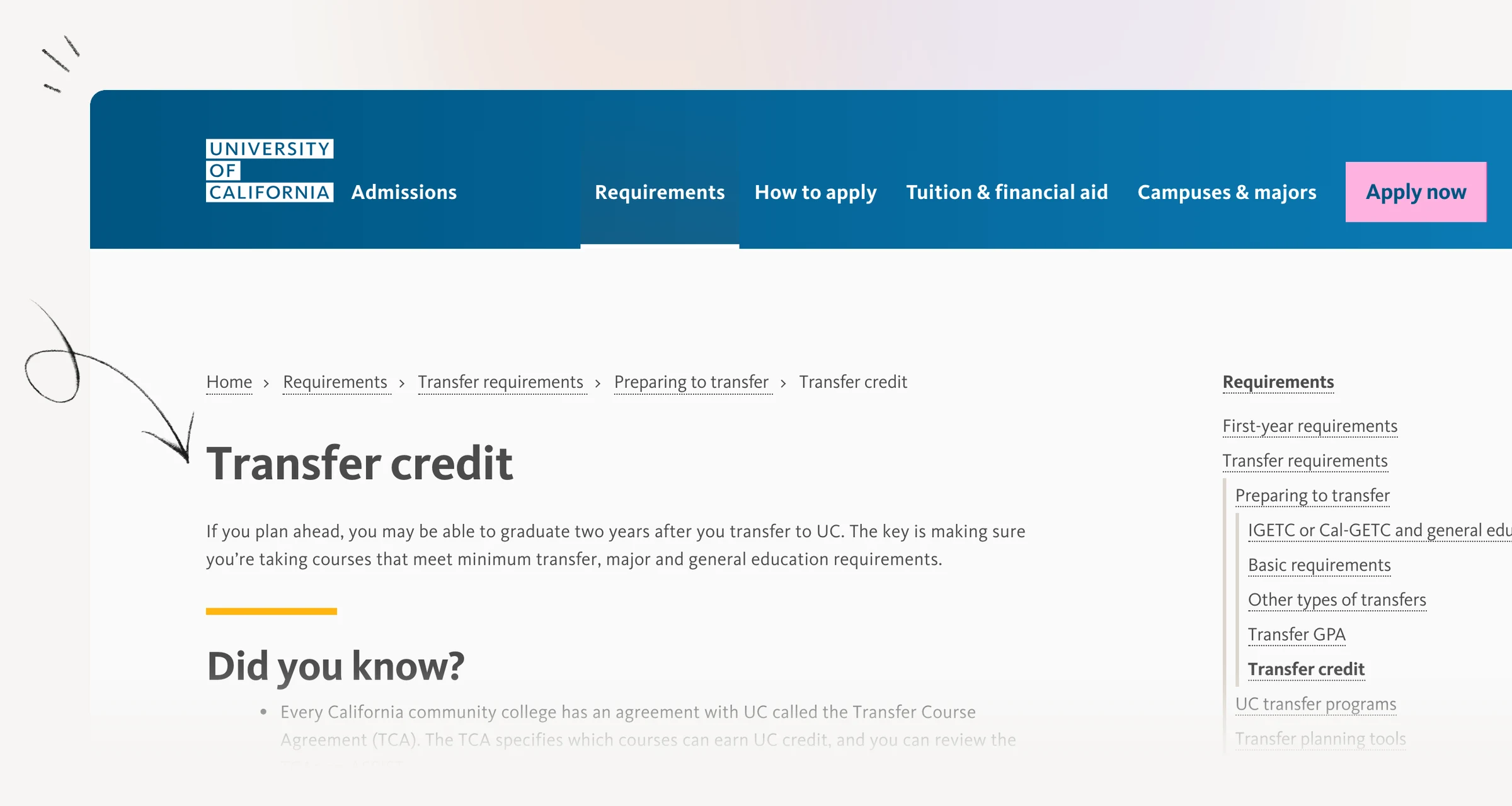
UC distinguishes transferable courses from the coursework needed for admission, general education and a major. It directs California community college students to ASSIST to inspect agreements with UC. UC transfer-credit instructions.
For each proposed course, record its local name, the relevant agreement year and what requirement it satisfies at the destination. Then ask the advisor about prerequisites and course availability. Do not treat a course’s catalog number, or a friend’s transfer result, as evidence that it will satisfy your own intended degree.
Read the exact meaning of a transfer guarantee
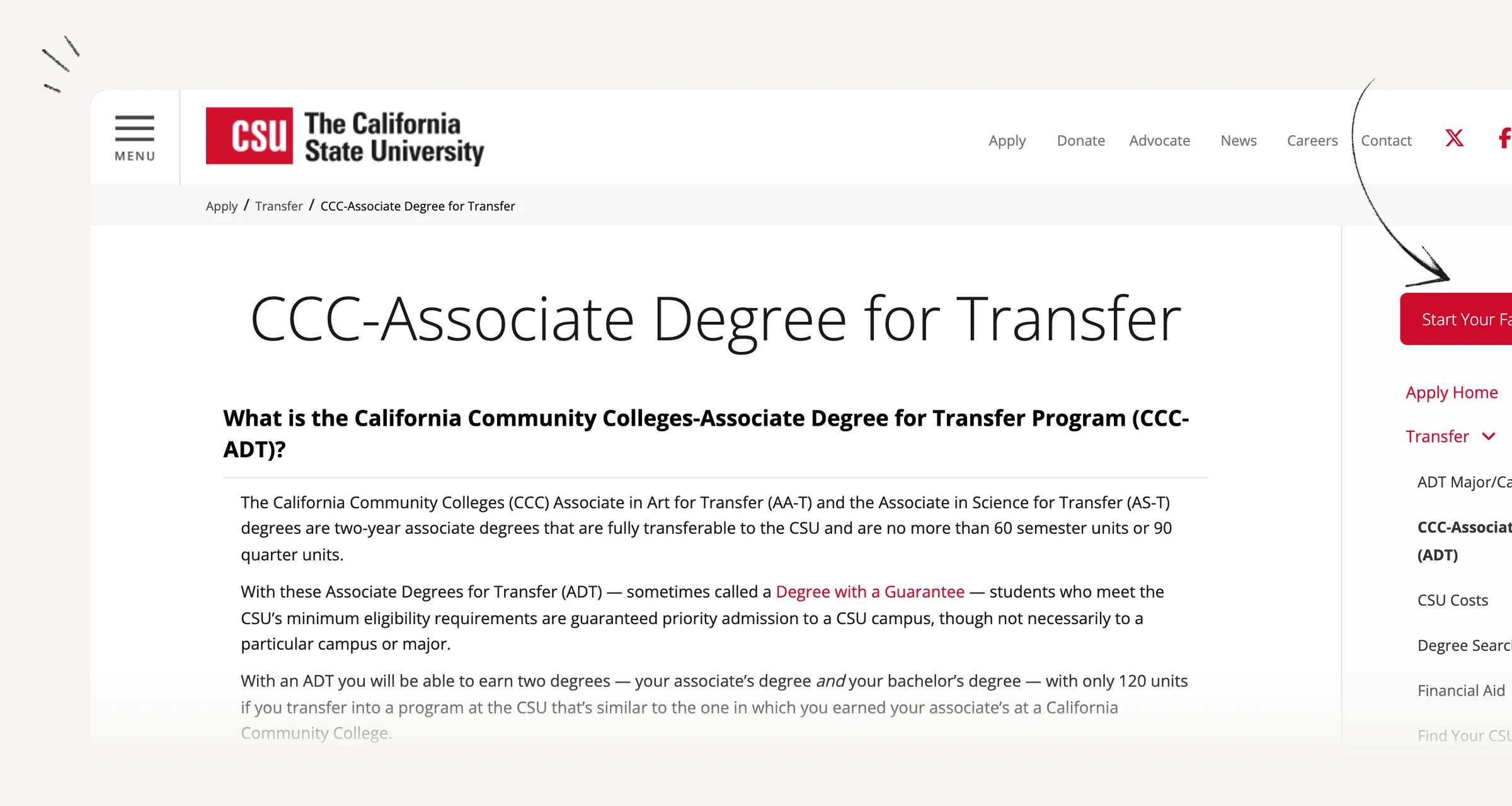
Source: CSU Associate Degree for Transfer
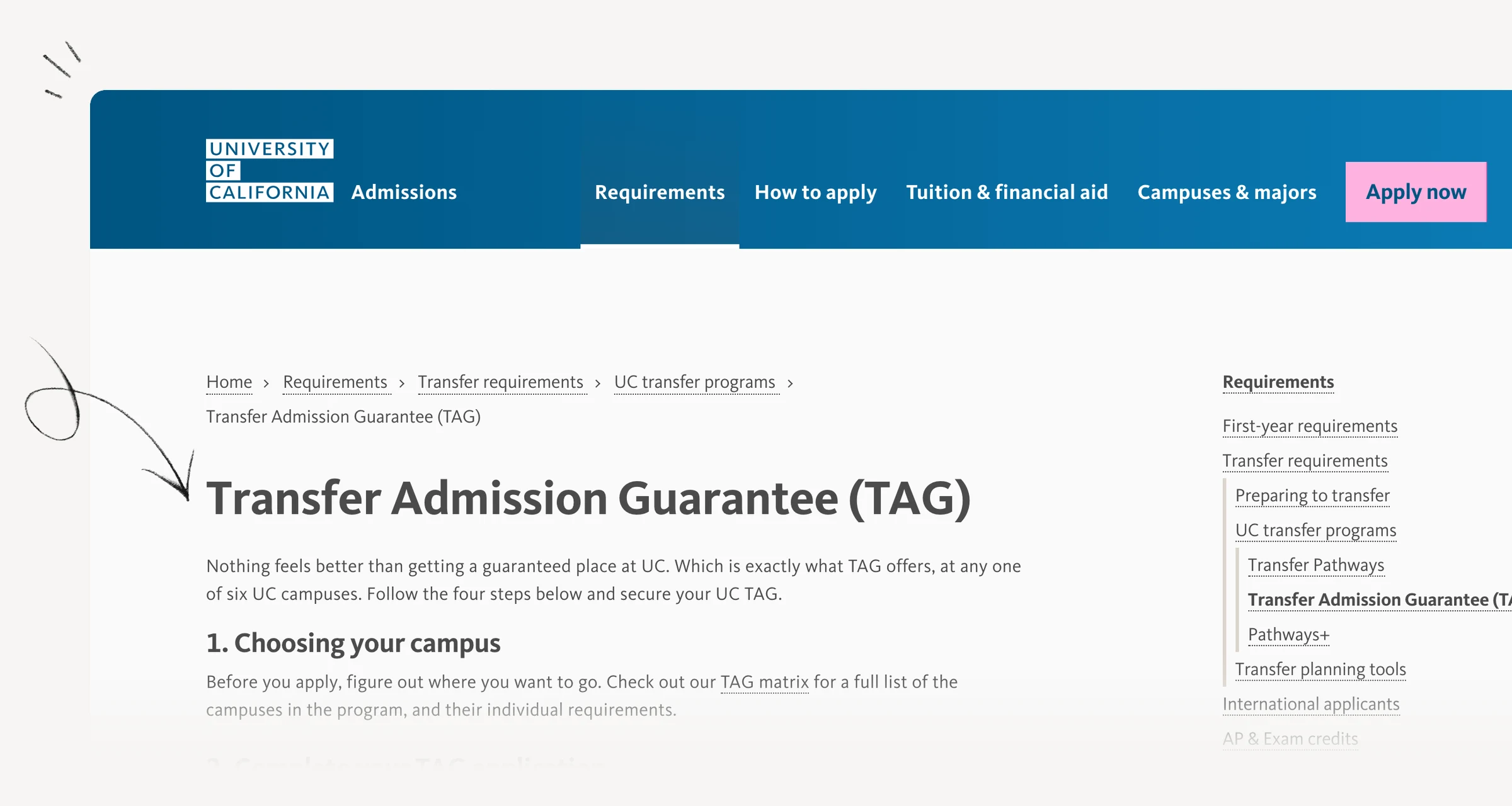
Source: UC Transfer Admission Guarantee
California provides two useful examples:
- UC’s Transfer Admission Guarantee operates at six participating campuses and depends on meeting the applicable conditions. It is not a guarantee to every UC campus. Follow the current campus rules rather than recycling a previous year’s matrix. UC TAG.
- CSU says a California Associate Degree for Transfer, with minimum eligibility satisfied, gives priority admission to a CSU campus—not necessarily a chosen campus or major. CSU ADT.
These are California examples, not nationwide rules. Outside that system, ask both institutions for the actual agreement and whether it covers your major, catalog year and applicant group.
Compare the whole route’s cost
Build a budget for tuition and fees, transportation, books, supplies, housing and time you cannot work. Then create a second budget for the destination university. USAGov points students to College Scorecard and net price calculators for cost research; a school’s actual aid offer remains important when you can obtain it. College-cost tools.
Avoid declaring the route cheaper based solely on a published tuition rate. In your own comparison, include the possibility of a longer course sequence or a credit that does not satisfy the destination’s requirements. These are budgeting scenarios, not claims that transfer students inevitably lose credits.
A worked planning example
A hypothetical student intends to transfer into biology. The student first drafts a schedule full of convenient general electives. Before enrolling, they consult the target university’s major-preparation instructions and discover that the plan needs a sequential science course early on.
The practical fix is to confirm the sequence, its prerequisites and when each class is offered, then fit general education around it. UC’s preparation page specifically recommends ASSIST for major preparation and notes that majors can differ across campuses. UC major planning.
Questions to take to your first advising appointment
Bring your tentative destination and ask: Which requirements will these courses satisfy? Which courses begin a sequence? What must be completed before transfer? Who verifies the final plan? What happens if the intended major changes?
Leave with a documented next-term schedule and a list of unanswered questions. Community college should be the first stage of an intentional plan, not a collection of credits whose purpose you discover later.