Public and private describe how a university is controlled; they do not tell you which school will be cheaper for you, offer better teaching in your major, or suit your daily life. The National Center for Education Statistics distinguishes public institutions from private nonprofit and private for-profit institutions. Do not collapse all private institutions into a single category. NCES institution-control definitions.
Build your shortlist around the program you need and the cost you would actually pay. Then use the public/private distinction to identify questions worth asking.
Compare these factors, not stereotypes
| Factor | What to investigate |
|---|---|
| Ownership | Is the institution public, private nonprofit, or private for-profit? |
| Residency | Does your classification change tuition or aid eligibility? |
| Price | What remains after confirmed grants and scholarships? |
| Academics | Can you enter your desired major, and are required courses accessible? |
| Daily experience | What are classes, advising, commuting and housing actually like? |
| Continuing cost | Does aid renew, and under what academic or enrollment conditions? |
Do not substitute “public schools are big” or “private schools are personal” for evidence. Compare a required first-year course, an upper-level class in your intended major, and the actual advising process at each finalist. Ask current students and departments specific questions rather than trying to infer their experience from ownership.
Residency can matter—but use the school’s policy
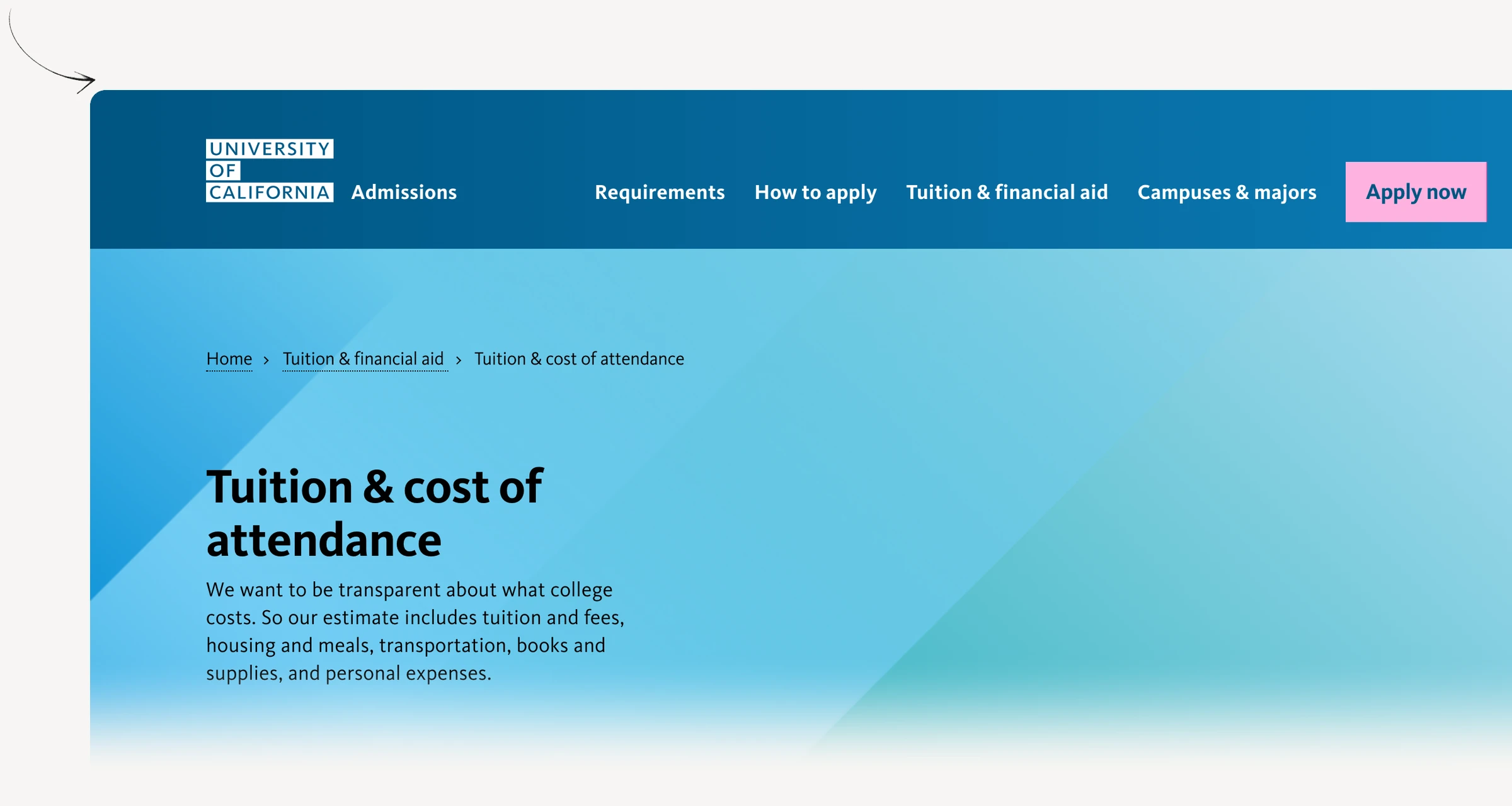
A public institution may charge different amounts to residents and nonresidents. For example, the University of California publishes additional nonresident tuition in its official cost information. That is an example of one system’s policy, not a universal price rule. UC tuition and cost of attendance.
Before labeling a public school “in-state affordable,” ask the residency office: “Which classification would apply to me when I enroll, and what documentation or exemptions should I review?” Do not build a budget around changing residency later until the institution explains its rules.
Compare net price before deciding
Federal Student Aid recommends comparing total costs and the actual aid offered, separating grants and scholarships from work-study and loans. Its formula subtracts grants and scholarships from total costs to calculate net price. Borrowing does not make a college’s price disappear. Official aid-offer comparison guide.
Here is an original, hypothetical illustration—not actual tuition or an aid promise:
| Annual calculation | Public option | Private nonprofit option |
|---|---|---|
| Total estimated attendance cost | $29,000 | $54,000 |
| Confirmed grants and scholarships | $9,000 | $36,000 |
| Net price | $20,000 | $18,000 |
In this example, the private option has the higher starting price and the lower net price. Reverse the aid figures and the result changes. Neither result tells you how much the family can contribute or what debt would be affordable.
Make a second worksheet for financing: available savings, realistic earnings, and proposed borrowing. Keep work-study separate from upfront cash. Federal Student Aid notes that work-study income requires obtaining and working a job and is not guaranteed simply because an amount appears in an offer. Aid-offer guidance.
Ask about years two through four
The first-year comparison is incomplete without renewal questions. Ask each financial-aid office for written answers:
- Which scholarships are renewable, and which are one-time?
- What GPA, enrollment level or major is required?
- Does the offer assume on-campus housing?
- What happens to institutional aid if an outside scholarship arrives?
- Is aid recalculated when family finances change?
Record the policy next to each award, rather than assuming one answer applies to every school or scholarship. A renewable award with conditions you can realistically meet may be more useful than a larger first-year-only award.
Make a decision your evidence supports
Choose three nonnegotiables—for example, access to a specific major, a maximum annual net price, and a manageable commute. Eliminate schools that fail those requirements before comparing amenities.
For each remaining school, write one advantage, one unresolved question, and the person or office that can answer it. “Private universities are better” is not evidence. “This department confirms first-year access to the courses my transfer plan requires” is information you can use.
Common questions
Are public universities always cheaper? Compare your actual net prices. Ownership alone does not answer that question.
Does private mean nonprofit? No. NCES separates private nonprofit from private for-profit institutions.
Which is better for my major? Compare the major’s requirements, entry process, courses and advising directly. This article does not present an unsupported ranking.
Your next step: put one public and one private option into the same cost-and-fit worksheet. Follow up on unanswered policy questions before paying a deposit.