
Choose programs by the work you want to learn, the training they actually provide, and the financial commitment they require. This guide concerns psychology doctoral study, especially professional-practice pathways; it is not a comparison of every PhD field. Official sources were checked October 13, 2026.
| Comparison | What to inspect in either degree |
|---|---|
| Research emphasis | Faculty interests, methods training, research participation, and dissertation requirements |
| Practice preparation | Curriculum, supervised training, internship pathway, and relevant outcomes |
| Funding | Written tuition coverage, stipend, fees, duration, duties, and renewal conditions |
| Completion | Published completion information and individual requirements |
| Licensure suitability | Applicable jurisdiction’s rules and the program’s current accreditation status |
Match the program to the career question
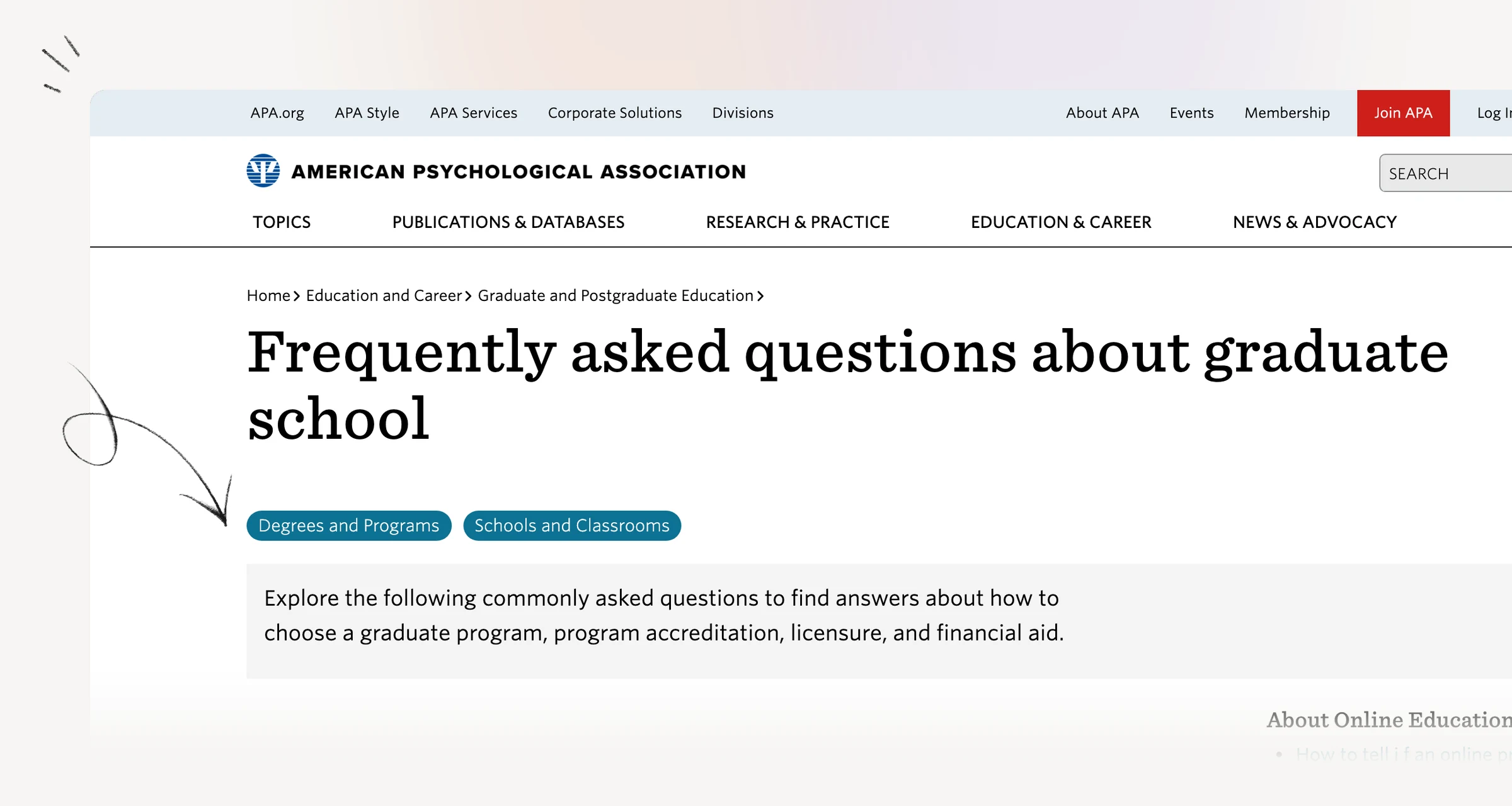
Source: APA’s graduate-school FAQ
If you want to investigate psychological questions, ask which faculty supervise work in your area and whether students can join the relevant research projects. If you want a practice-centered pathway, ask how supervised training develops and how students secure the next required training stage.
APA’s graduate-school FAQ describes the broad PhD/PsyD orientations and recommends checking outcomes for professional-practice programs. Do not turn that distinction into “PhDs cannot practice” or “PsyDs do no research.” Inspect each program’s curriculum and expectations.
Illustrative example: a student interested in evaluating treatments needs to compare research supervision, methods coursework, and clinical training together. Another student prioritizing service delivery should still understand the program’s research requirements. Neither can decide from the degree abbreviation alone.
Compare written funding, not assumptions
Do not assume every PhD is fully funded or every PsyD is unfunded. Ask each program for the actual offer and conditions. A phrase such as funding available is less useful than a document stating what is covered, for how long, and what work or academic standing is required.
Use separate rows for tuition, mandatory fees, living costs, health coverage, summer support, and training-related expenses. Then record the support attached to each row. Ask what happens during internship, a funding interruption, or a longer-than-expected dissertation period.
Example with hypothetical numbers: a $20,000 stipend and a tuition waiver are not equivalent to a $20,000 tuition scholarship with no living support. A fair comparison includes uncovered expenses in both scenarios. No actual program price or guaranteed benefit is implied.
Verify the exact program’s accreditation

Source: APA accredited-program database
Search the APA accredited-program database, not just a university’s general accreditation statement. APA notes that a listed next-site-visit date is not an accreditation expiration date. Read the status of the specific program and request clarification if it is unclear.
Do not interpret a school’s intention to seek accreditation as already having it. Likewise, do not treat one program’s status as covering every psychology degree at the university.
Check licensure in the place you intend to practice
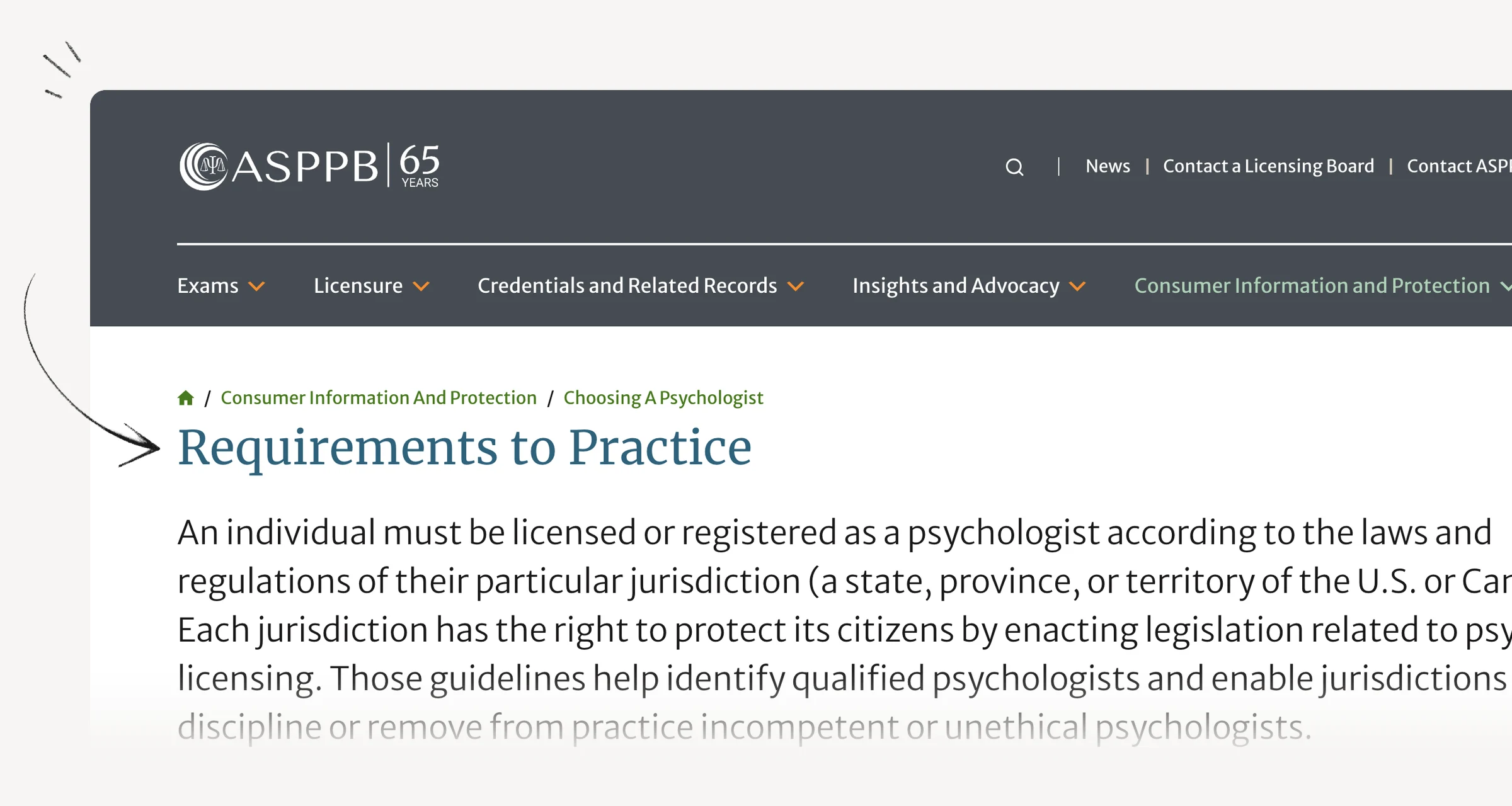
Source: ASPPB’s requirements overview
A doctorate alone is not permission to practice independently. ASPPB’s requirements overview emphasizes that practice is governed by the applicable jurisdiction’s laws and regulations. Its licensure resource directs readers to jurisdiction-specific information.
Ask the relevant licensing board whether the training pathway fits its current requirements. If you expect to move, investigate the second jurisdiction as well. This is a professional-eligibility check, not individualized legal advice or a promise that an accredited degree satisfies every rule.
Ask for outcomes with context
Request current program information on completion, attrition, internship placement, and graduates’ licensure where relevant. Look at the years covered and the number of students represented. A percentage from a small cohort should not be interpreted without its denominator.
Avoid comparing one program’s multi-year total to another’s single cohort as though they measure the same thing. Ask what the outcome actually tracks and what remains unreported.
Your decision worksheet
For each candidate program, write one paragraph answering: What will I train to do? Who will supervise the work? What support is guaranteed in writing? What could remain unpaid? Does the pathway fit the jurisdiction where I intend to practice?
Choose the programs with defensible answers. The best fit is not automatically the degree with the more attractive stereotype or the lowest advertised tuition.