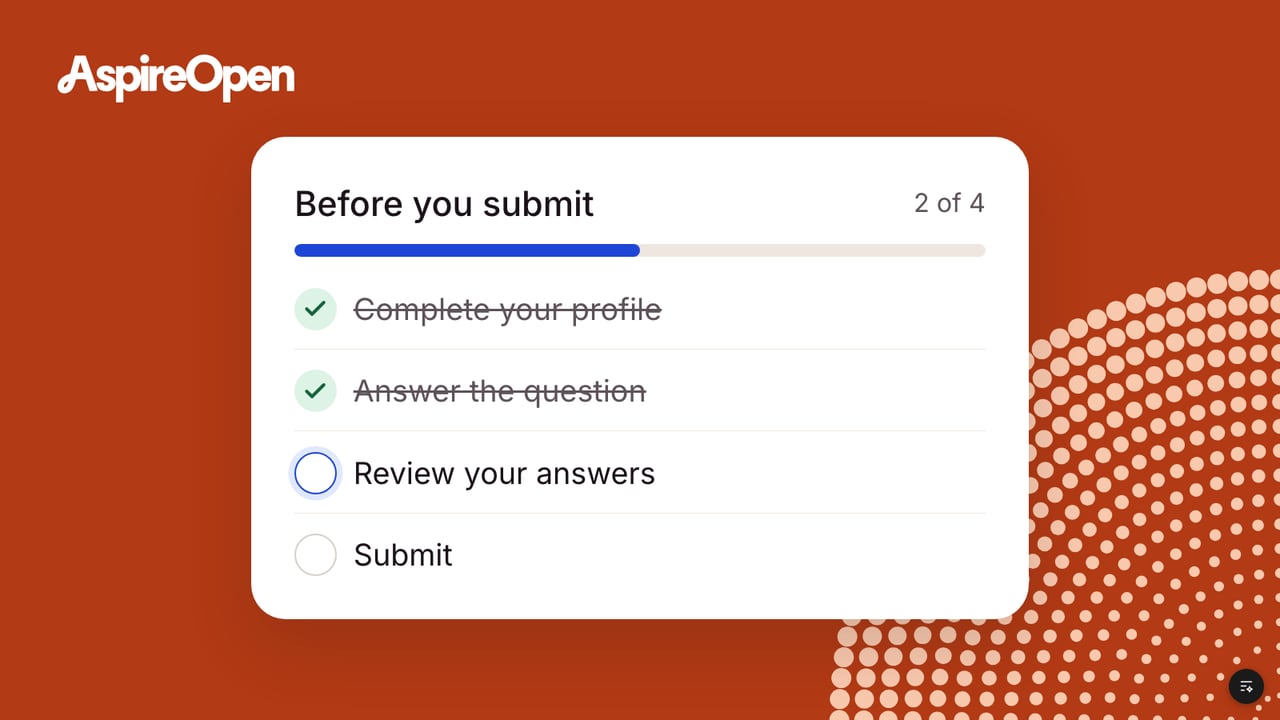
A useful starting sequence is: identify an experience, describe what you did, explain what changed in your thinking, then draft an opening that belongs to that story. This is an editorial method, not a promise of admission.
Read the actual assignment first
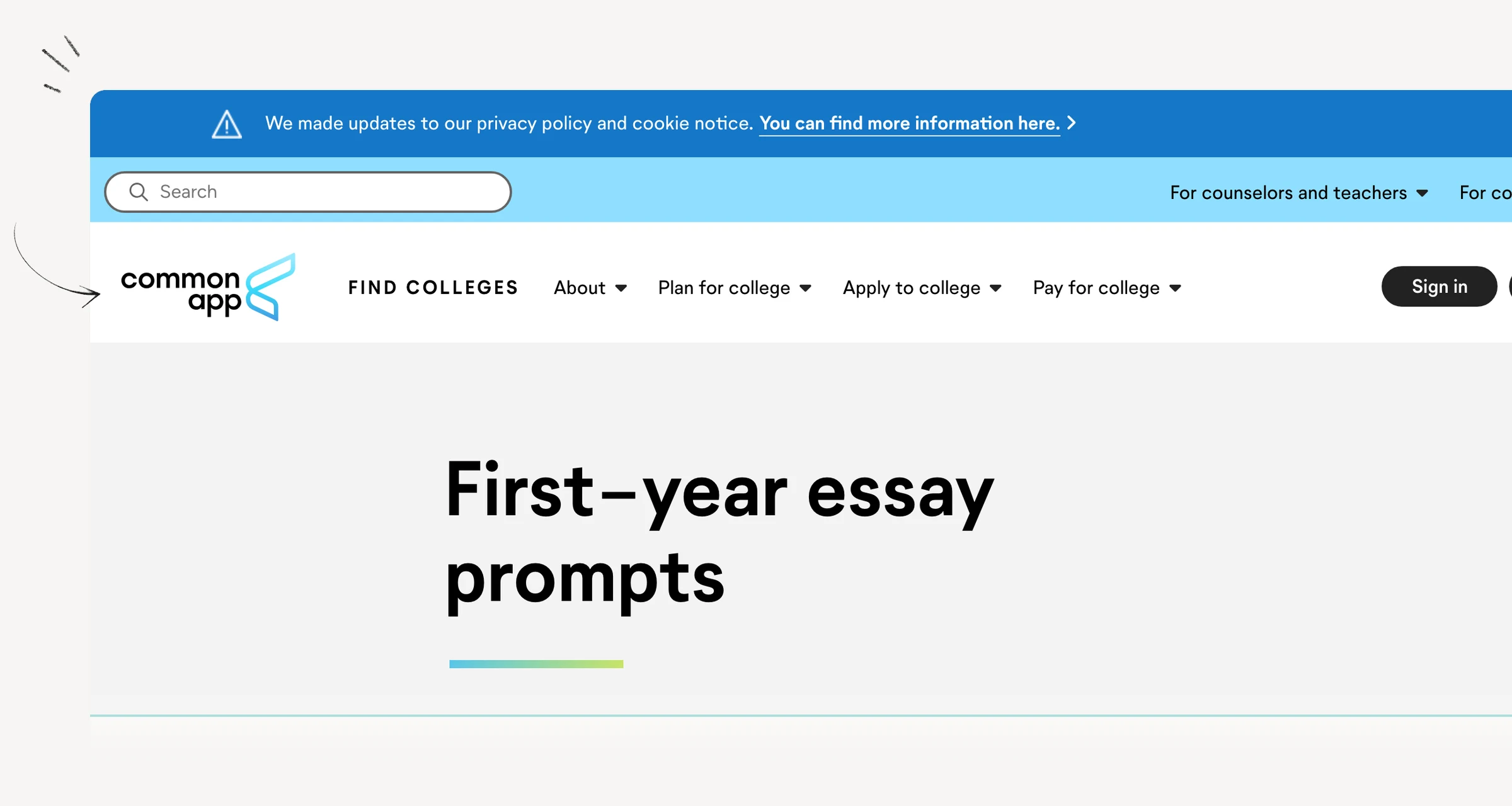
Source: Common App prompt page
The Common App prompt page lists the 2026–27 first-year prompts. Choose the prompt that fits the story you can tell honestly; do not reshape a routine experience into a fabricated crisis.
Requirements differ by college and application type. Common App’s essay-requirement guidance tells students to check the Writing section after adding colleges to see which require the personal essay. A college supplement may ask a narrower question and need a different opening.
Find a small moment with something to explain
Write three short notes for each possible topic:
- What actually happened, including one detail you remember.
- What you chose to do, rather than only what other people did.
- What you understand differently now.
A repeated responsibility, an unexpected mistake, or a question you kept investigating can provide material. The test is not whether the event sounds impressive. It is whether you can move beyond summary to explain your decisions and perspective.
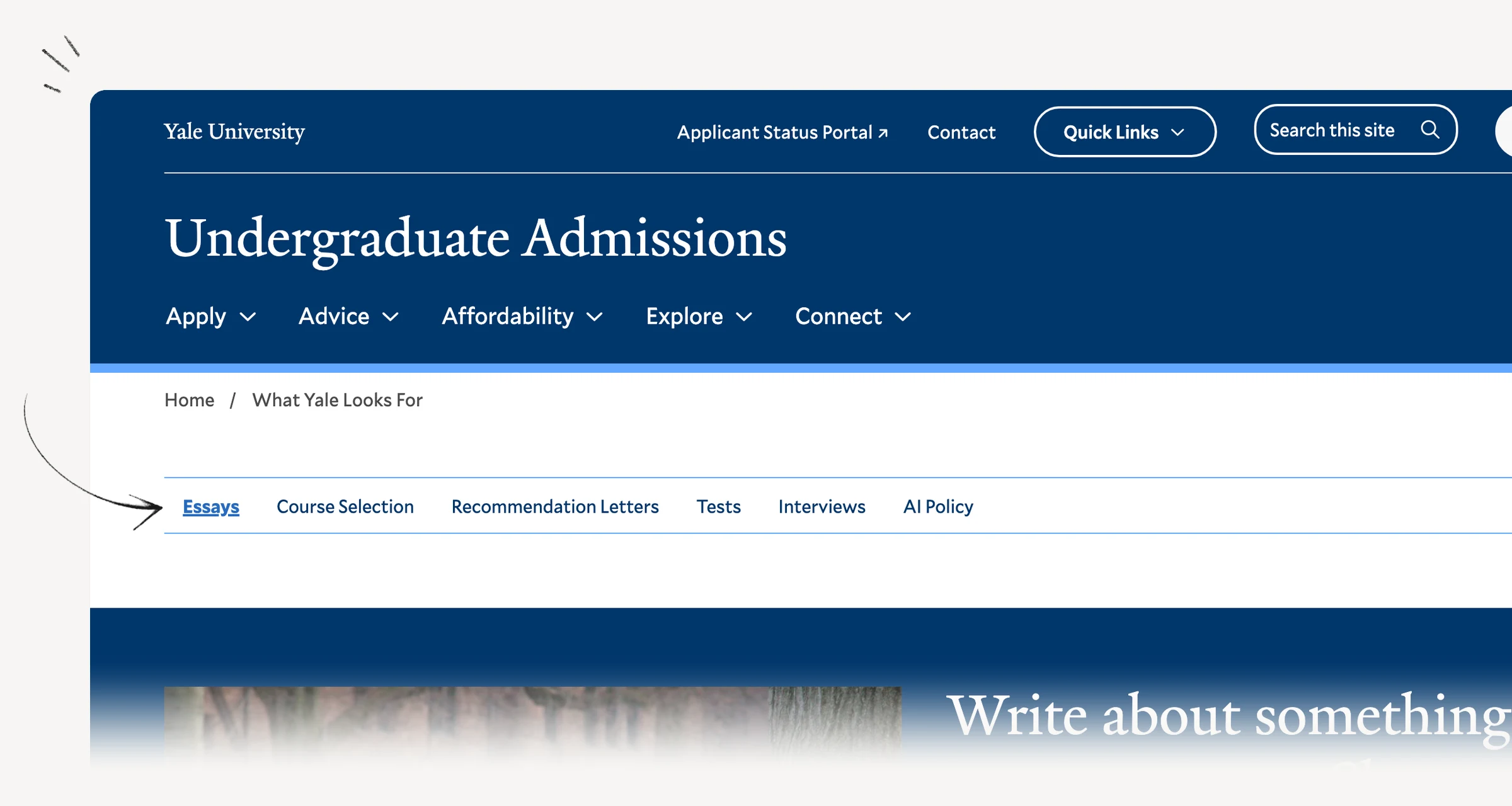
Avoid selecting a topic simply because you think admissions readers expect it. Yale’s essay guidance emphasizes retaining your own voice even when others help review your draft.
Draft the middle before polishing the beginning
If the first line stalls you, begin with a plain account: “I tried X because Y. It did not work as expected. I changed Z.” This is a brainstorming structure, not a submission template.
Once you can see the essay’s central idea, choose an opening detail that introduces it. Remove details that create suspense without helping the reader understand the experience. A dramatic scene followed by an unrelated lesson is not automatically stronger than a direct beginning.
An original annotated example
Generic opening: “Leadership has always been an important part of my life.”
More specific illustrative opening: “When the repair café’s sign-in sheet stayed blank, I moved our table away from the entrance and asked visitors what they had brought to fix.”
Why the revision helps: it identifies a setting, a problem, and a choice. It also creates a natural question: what did the writer learn about making people comfortable enough to participate?
Possible reflection direction: the writer might discuss learning to ask before directing. That reflection must come from the student’s real experience; the sample is invented for instruction and should not be copied or represented as an applicant’s history.
A specific sentence alone is not a finished essay. The body still needs to connect choices, consequences, and reflection without turning into a list of activities.
Revise for truth, clarity, and continuity
Read the opening beside the final paragraph. Do both belong to the same idea? Can a reader tell what you did and why it mattered? Does the language sound like something you would actually say?
Ask a reviewer where they became confused, what they learned about you, and which sentence felt unnecessary. Do not ask them to replace your voice with theirs. Check the current word limit inside the actual application rather than applying one platform’s limit everywhere.
Keep authorship your own

Follow each college’s stated AI and application-integrity rules. Yale’s AI policy, for example, distinguishes general topic or grammar help from submitting text-generating software’s composed application responses. That is a Yale policy example, not permission to assume every institution has identical rules.
The next step is a rough paragraph built from your own notes. Aim to make the experience understandable first; polish the opening only after you know what the essay is really about.