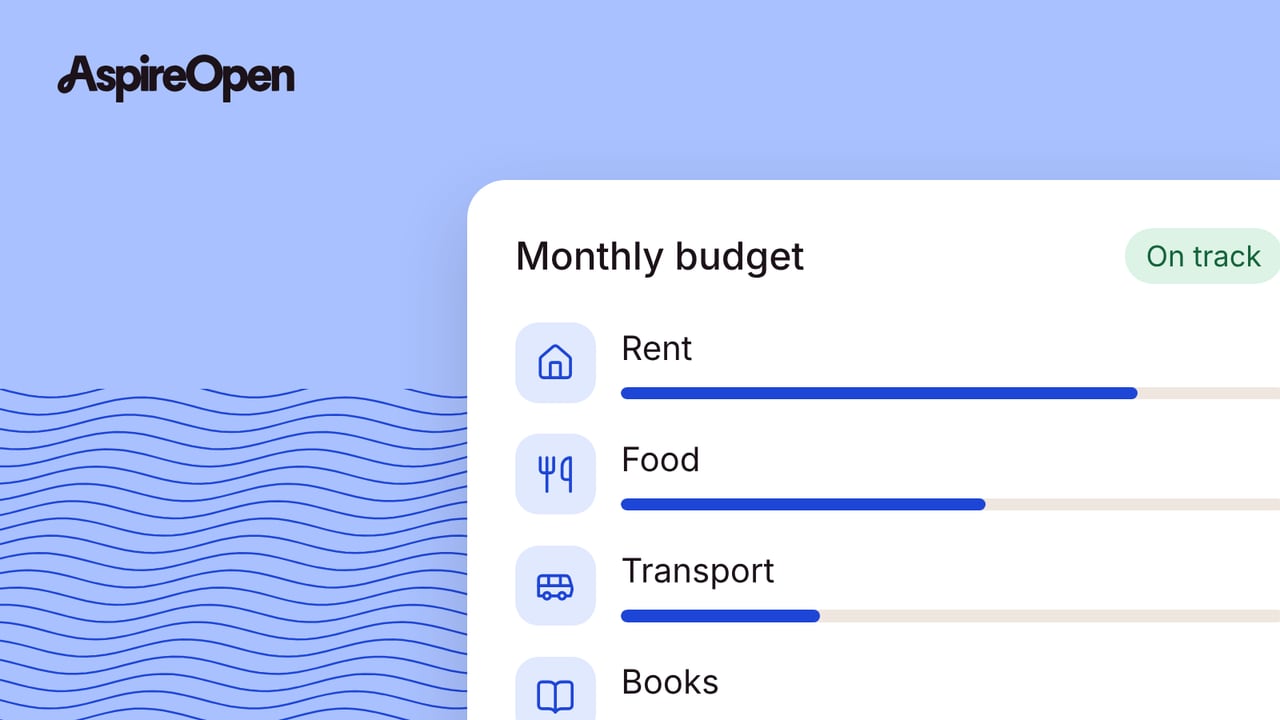
Understand the cost before choosing financing
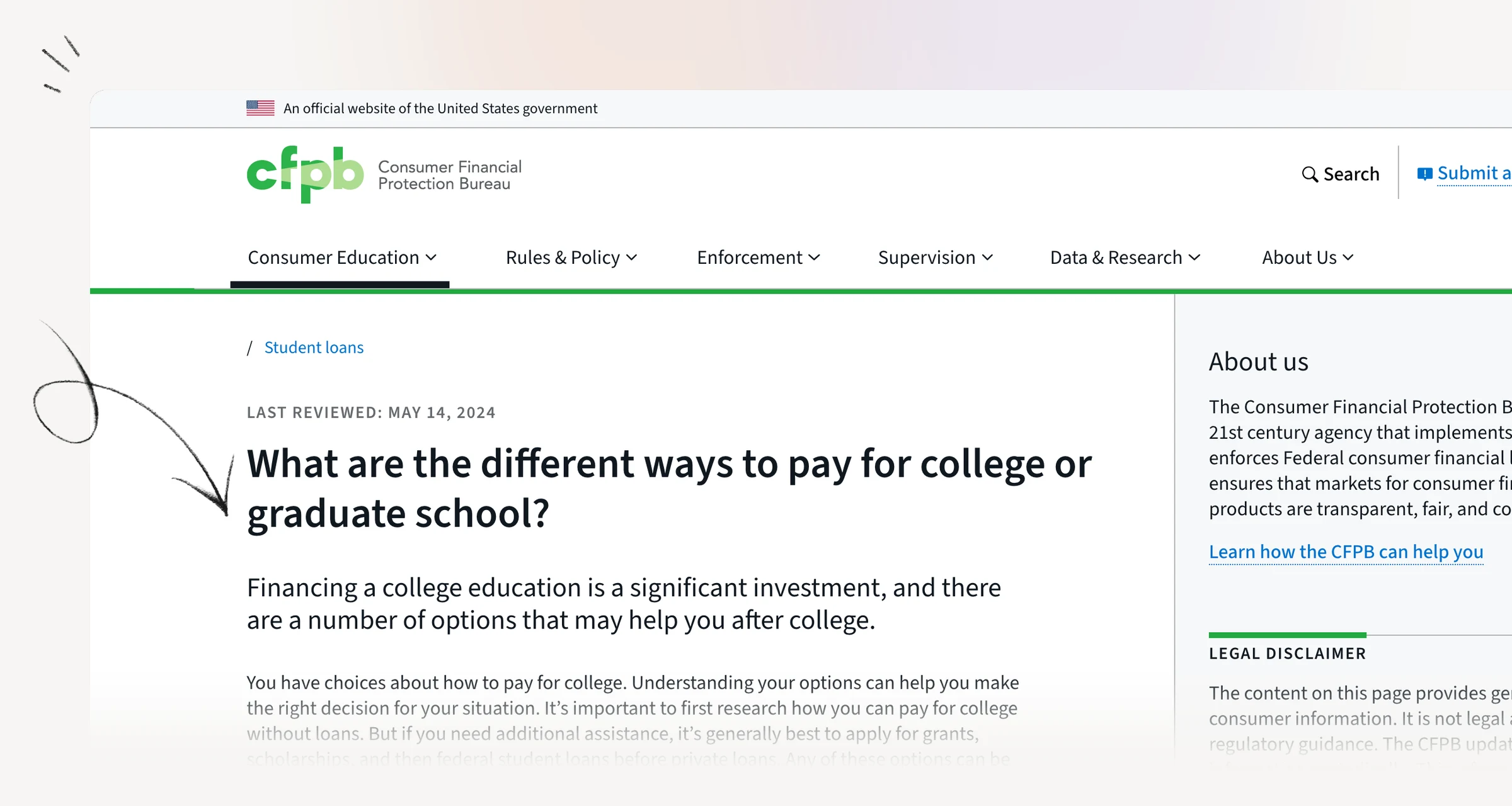
Source: college funding overview
Make two calculations. First, subtract confirmed grants and scholarships from your total educational cost. Then decide how to cover the amount left. The Consumer Financial Protection Bureau distinguishes grants, scholarships, work-study, loans, and other payment arrangements in its college funding overview.
Illustrative example: an annual cost of $28,000 minus $9,000 in grants leaves $19,000. If you are offered a $5,000 loan, the remaining price is still $19,000; $5,000 of it would be borrowed rather than paid from existing resources.
Your next action: mark each aid-offer line as gift aid, work-related earnings, or borrowing. Ask the aid office about any label you cannot classify.
Build a cash-flow calendar, not just an annual total
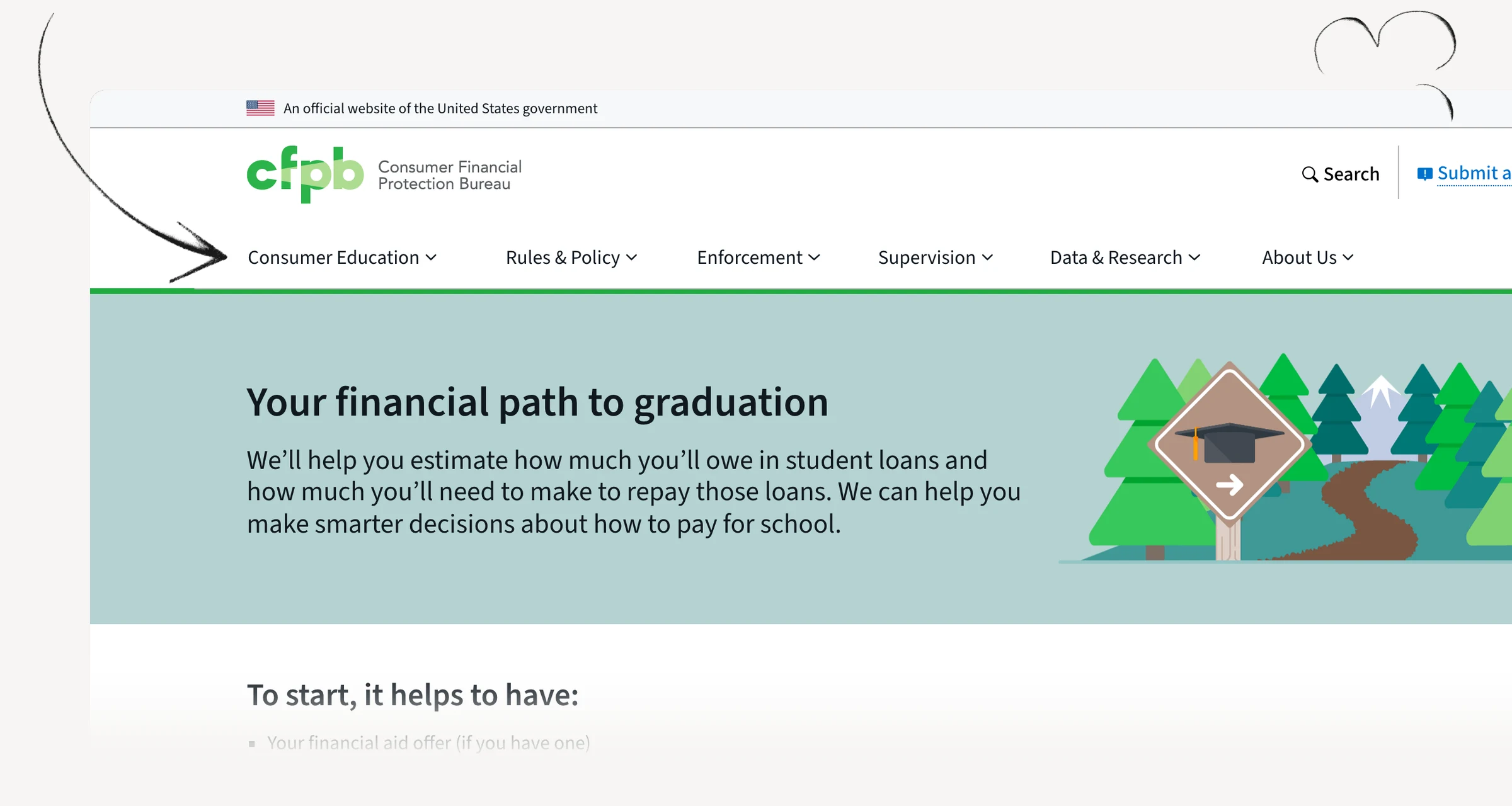
Source: financial path to graduation tool
A yearly budget can look balanced while leaving you short before an aid payment arrives. Put tuition bills, rent, supplies, transport, and expected income on a monthly calendar. Record confirmed payment dates separately from estimates.
The CFPB’s financial path to graduation tool includes aid comparison and cash-flow planning. Use it as a framework, then confirm actual disbursement and bill dates with your school.
Suggested worksheet:
- Money available at the start of each month
- Confirmed income or aid arriving that month
- Required expenses and due dates
- A buffer for irregular costs
- The remaining balance before the next payment
Do not count an unawarded scholarship application as income.
Compare aid offers using the same assumptions
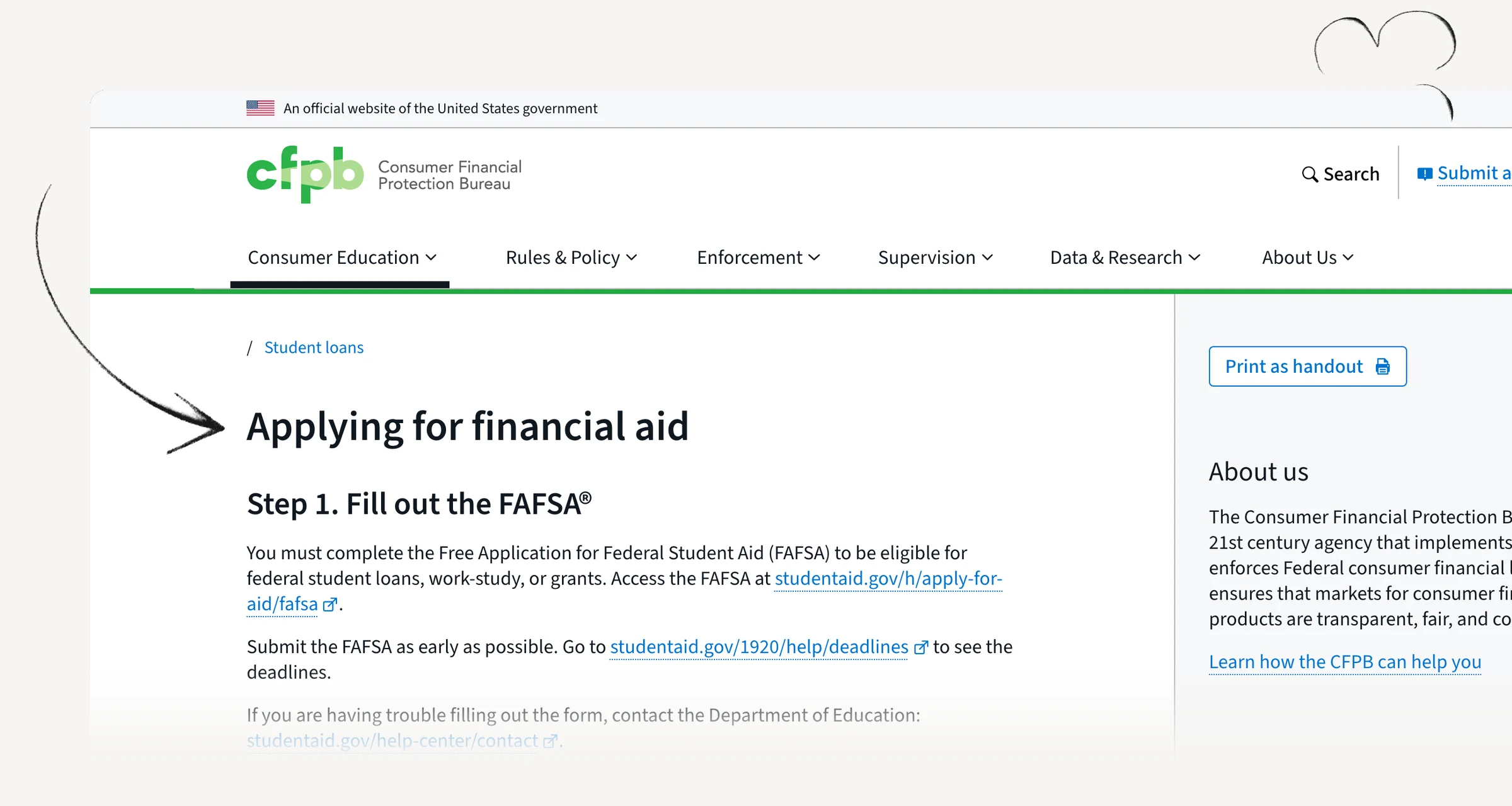
Source: financial aid application guidance
Use the same enrollment period, housing plan, and expense categories for every school. The CFPB’s financial aid application guidance recommends comparing schools’ aid and scholarship offers and contacting the financial aid office about funding gaps.
Ask whether a grant covers one term or the full year and what its renewal conditions are. A large first-year award is not evidence that the same amount continues for the degree.
When your situation changes, ask for review
If the FAFSA’s required information no longer reflects your circumstances, follow the form’s instructions rather than substituting different figures on your own. Federal Student Aid directs students to contact the college’s aid office about changed financial circumstances. FAFSA filling-out guidance
Suggested message:
My circumstances have changed since the information used on my FAFSA. What review process is available, what documentation do you require, and when could any revised decision affect my bill?
A review is not a promised increase. Ask separately about a payment deadline, because a pending request may not resolve a bill immediately.
Keep loan decisions in their own track
Before borrowing, identify the loan type, borrower, interest structure, fees, and repayment terms. Use current official instructions for your loan and enrollment year. This hub deliberately does not repeat repayment-plan claims, rates, or limits that require frequent policy checks.