Your task is to make sure the receiving school has the correct FAFSA, complete its requirements and compare the new offer before treating the transfer as financially settled. Official guidance was checked October 13, 2026.
What changes when you transfer?
| Aid or requirement | What to do |
|---|---|
| Federal Pell Grant | Ask the new school to calculate remaining eligibility; previous same-year use and lifetime use still count |
| Direct Loans | Request a review of annual/aggregate eligibility and overlapping academic-year borrowing |
| Current college scholarship | Do not budget it at the new school unless the provider confirms portability |
| New college scholarships | Check transfer-specific rules, separate forms and admission deadlines |
| FAFSA | Send the appropriate year’s information to the receiving school |
| Academic progress | Ask how accepted credits affect the new school’s aid progress review |
Federal eligibility is recalculated rather than reset. Institutional transfer scholarships follow their own rules.
A practical transfer-aid sequence
1. Match the FAFSA to the term you will attend
Use the form covering your enrollment period. If you already filed that year’s FAFSA, add the receiving school through a correction rather than assuming the admissions application sends your financial data. Federal guidance describes selecting the processed form and the add/remove-school correction option.
Action: Record your intended first term and confirm the award year with the receiving aid office, especially for summer. Add the school early enough to meet its own priority deadline. Schools can have different deadlines.
2. Coordinate with both aid offices
Ask the current school about future disbursements and the receiving school about previous aid it must review. Do not assume that changing the FAFSA school list cancels a loan already scheduled at the old school. The receiving institution reviews aid history before paying remaining Pell eligibility.
If you are withdrawing before completing a term, ask the old school about return-of-aid calculations and any resulting account balance before deciding your budget is final. A transfer plan does not eliminate withdrawal rules.
3. Complete the new school’s requirements
Check the aid portal for requested documents, verification tasks and institutional forms. Confirm that you have been accepted into an eligible degree/certificate program rather than merely permitted to take classes: ordinary federal aid requires eligible regular-student enrollment, subject to specific exceptions.
Action: Ask which remaining items prevent an offer or disbursement. An admission letter and an aid award are different milestones.
4. Request a degree-applicable credit evaluation
A credit count alone does not show how close you are to graduation. Ask which credits fulfill your new degree’s requirements and which are electives. For satisfactory academic progress, accepted credits that apply to the program are counted in attempted and completed credits under the federal framework. Schools evaluate their own academic-progress policy.
Action: Obtain an academic plan and ask the aid office how the transferred credits affect maximum timeframe and eligibility. Do not assume changing schools erases all prior aid history.
5. Review transfer-specific scholarships separately
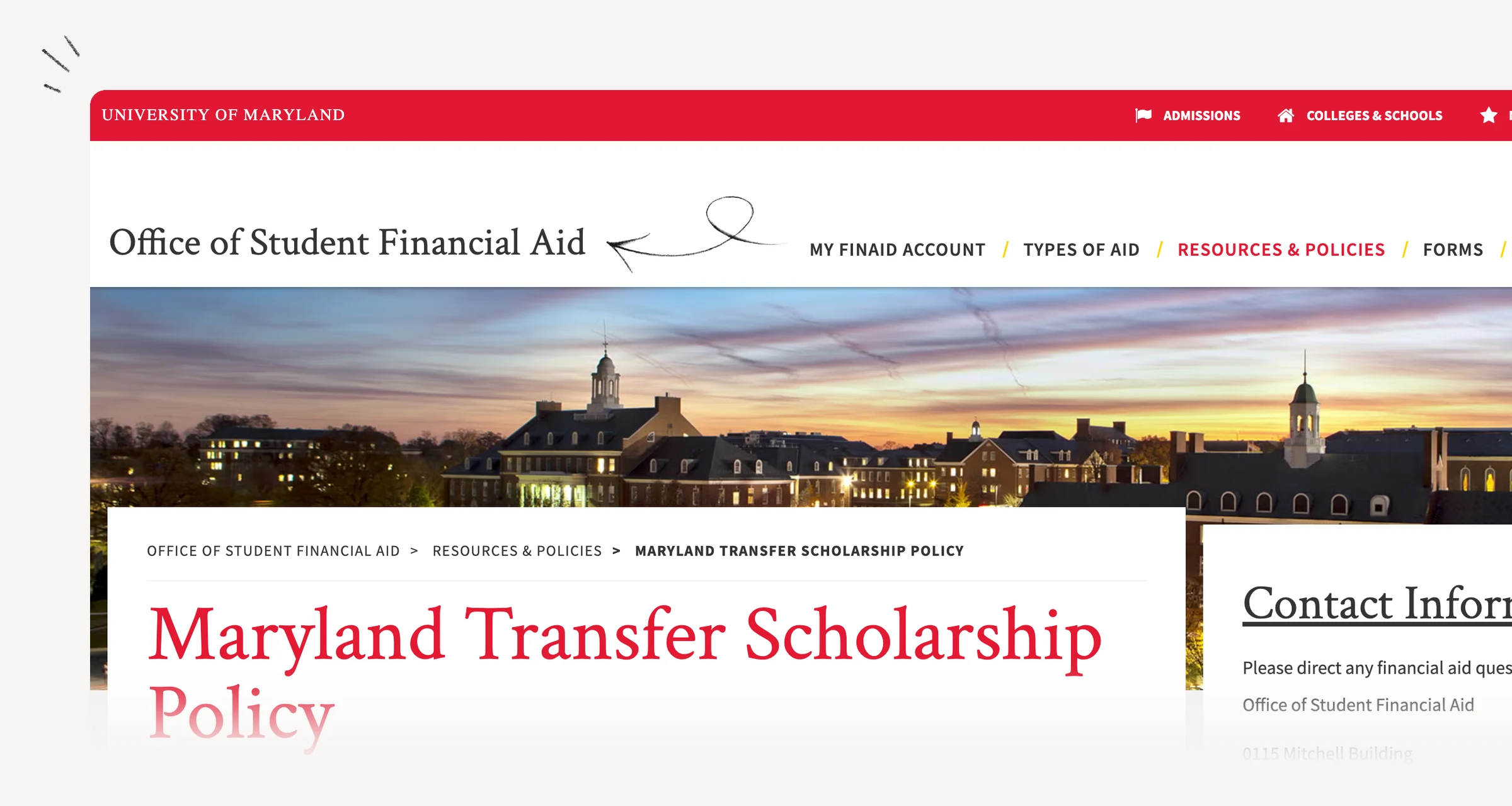
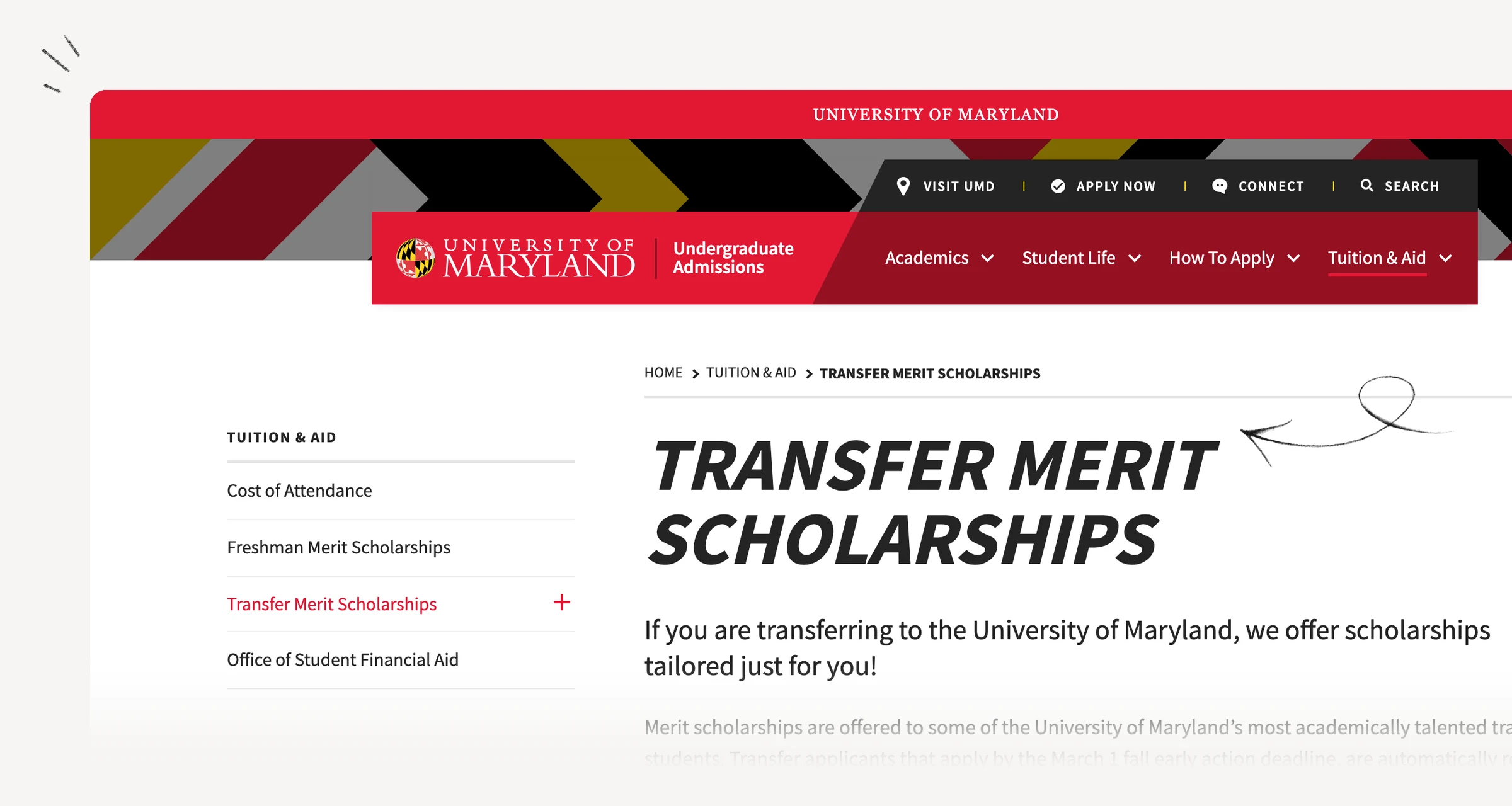
Some receiving schools offer targeted transfer awards. At the University of Maryland, the transfer-merit page distinguishes awards with automatic consideration from the Frederick Douglass Scholarship, which requires a separate application. It also specifies citizenship/permanent-residency conditions.
This is an example of a school-specific process, not a scholarship recommendation for every transfer. Its page still includes a March 1, 2026 FAFSA deadline for the 2026–27 cycle. Do not apply that past date to your next cycle without confirmation.
Why your new offer may differ
Pell use follows you
Prior same-year Pell disbursements reduce remaining award-year eligibility. The school considers the percentage already used, not merely subtracting one school’s cash award from another school’s cost. Separately, the lifetime Pell limit is generally 600% of scheduled awards, approximately six years’ equivalent. A transfer does not reset that counter. Check your Lifetime Eligibility Used in your StudentAid.gov account.
Loan limits are not a fresh allowance at each school
An academic-year overlap can limit initial borrowing at the new institution. Annual and aggregate limits still apply; a larger new-school bill does not itself establish a new borrowing allowance. Ask the receiving office to review your prior loan period and disbursements. This article does not estimate your maximum loan.
Institutional awards can have different conditions
Review the new award letter for enrollment load, GPA, covered terms and renewal requirements. UMD’s Maryland Transfer Scholarship policy, for example, requires minimum credits, a cumulative GPA and annual completion rules, and excludes winter/summer coverage. These are local conditions, not universal transfer rules.
Worked example: compare net cost, not the aid headline
These are hypothetical figures, not actual college offers:
| Item | School A | School B |
|---|---|---|
| Annual cost used for comparison | $24,000 | $30,000 |
| Confirmed grants/scholarships | $8,000 | $16,000 |
| Net cost before loans/work earnings | $16,000 | $14,000 |
School B has the higher advertised cost but the lower net cost in this illustration. Now add the degree plan: if transfer-credit placement requires extra terms, compare the entire remaining path, not just the first year.
Keep loans separate from grants; borrowing finances a cost rather than removing it. Do not count unawarded scholarships or an old institution’s grant in the new-school column.
Questions to send the receiving aid office
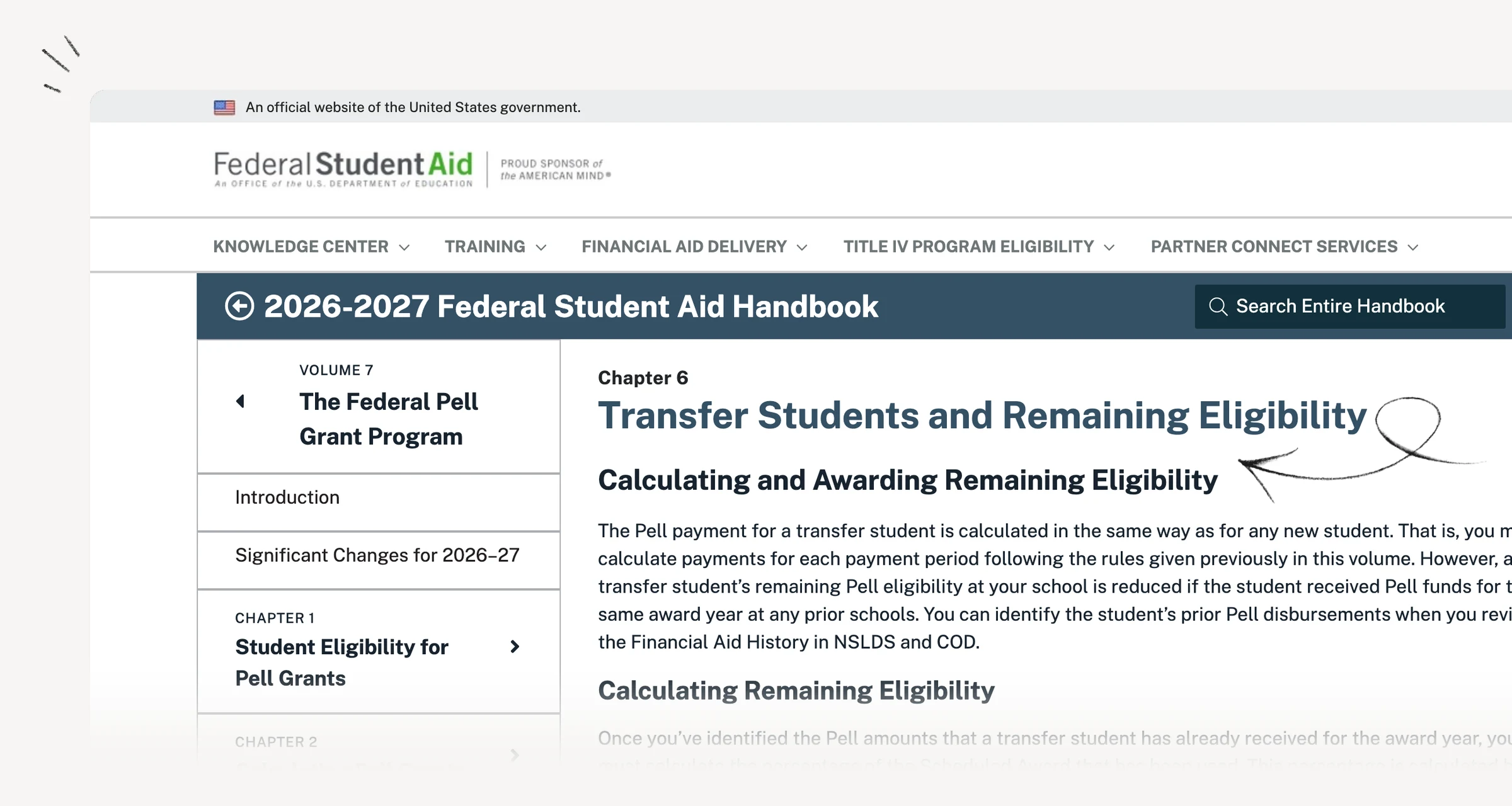
Source: 2026–27 transfer chapter
“I plan to transfer for term. My FAFSA is filed for year, and I received aid types at my current school. What documents, prior-disbursement review and credit evaluation are needed? Which transfer scholarships require a separate application, and when can I expect a complete offer?”
Can you receive aid before choosing a school? You can send FAFSA information to prospective schools; the online form accommodates multiple schools. Listing one is not a commitment to attend.
Does the new school owe you the same scholarship? No matching promise is made. UMD explicitly says it does not match other institutions’ scholarship offers; ask each school for its own policy.
Choose your transfer only after you can reconcile the new offer, remaining degree requirements and any unresolved current-school balance.