Which year do you need?
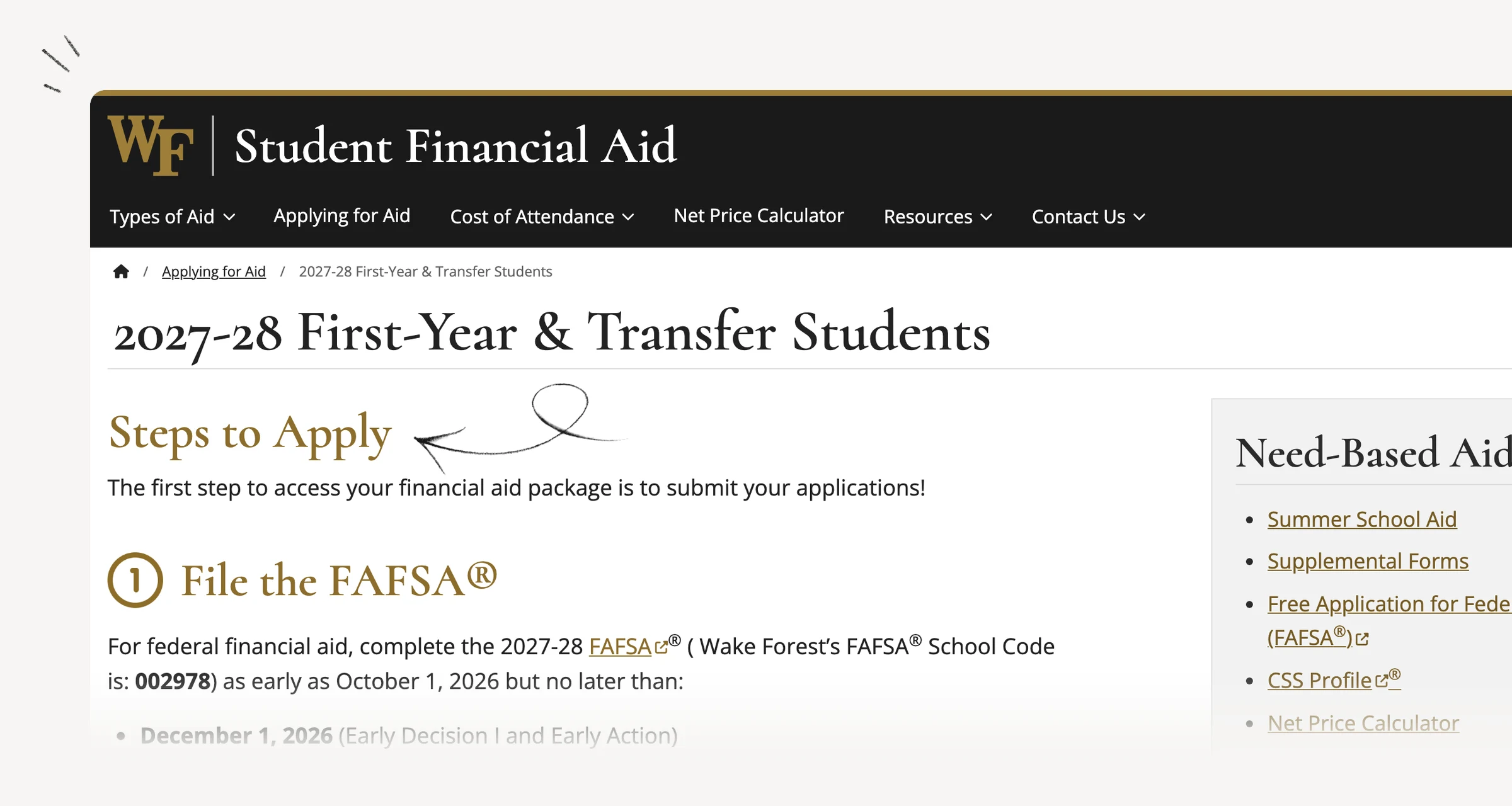
Source: Wake Forest year-specific instructions
| Attendance period | Application to examine |
|---|---|
| July 1, 2026–June 30, 2027 | 2026–27 FAFSA |
| July 1, 2027–June 30, 2028 | 2027–28 FAFSA |
| A summer term whose aid assignment is unclear | Ask the college which award year applies before submitting |
The later form is not a correction to the earlier year’s application. Wake Forest’s current 2027–28 instructions, for example, specify 2025 federal income-tax data and different school deadlines by admission round. Those deadlines apply to Wake Forest, not every institution. Wake Forest year-specific instructions.
The asset changes introduced for 2026–27
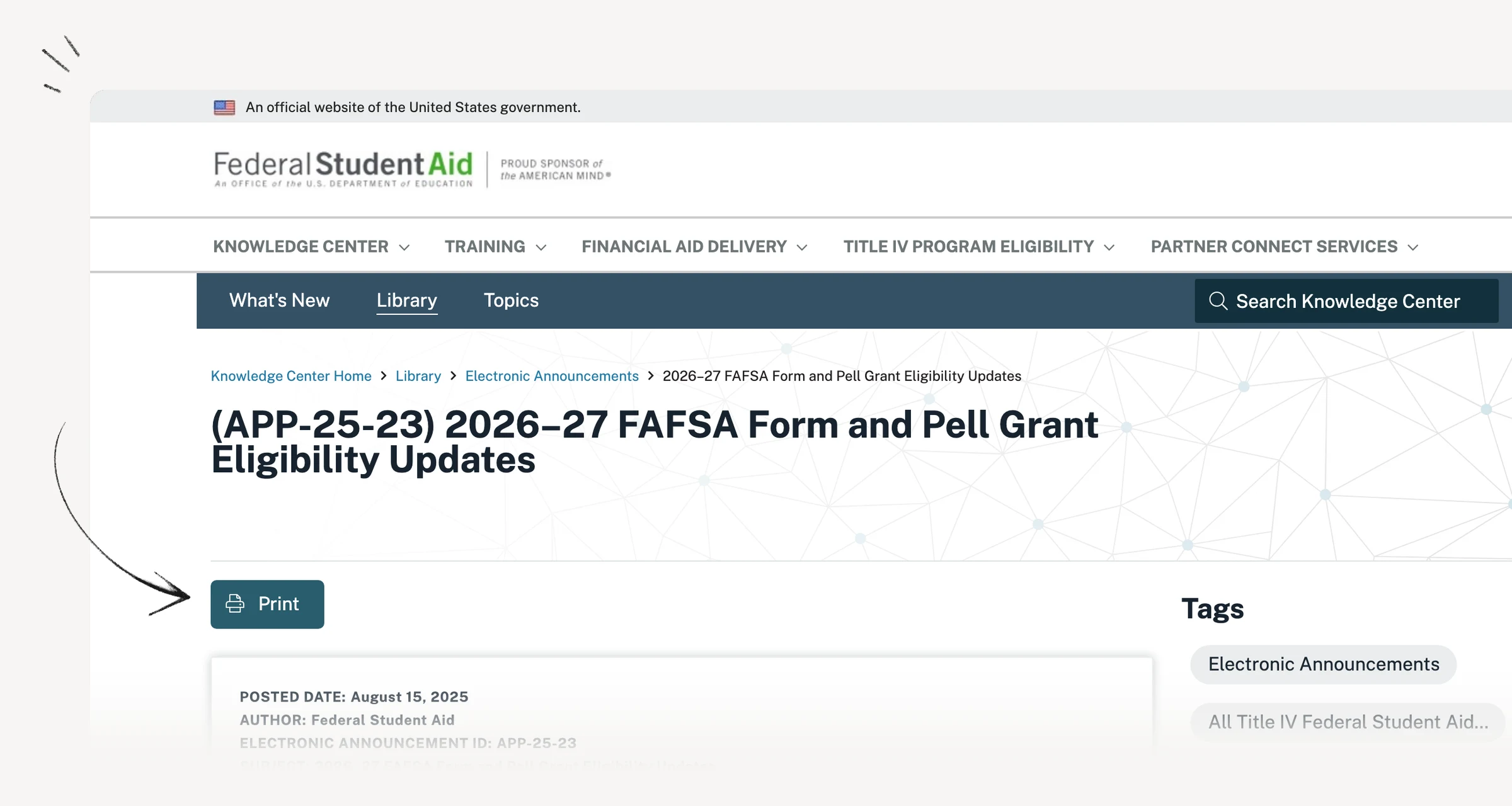
Source: Official 2026–27 changes
Federal Student Aid’s official announcement excludes three categories from the current net worth of businesses and farms reported on that form:
- A family-owned business with 100 or fewer full-time or full-time-equivalent employees.
- A farm on which the family resides.
- A family-owned and controlled commercial fishing business and related expenses.
Do not simplify these into “all business assets are exempt.” Ownership, employee count and residence are part of the stated conditions. Official 2026–27 changes.
A preparation worksheet can make an uncertain answer easier to resolve: business ownership, employee count using the requested definition, whether the family lives on the farm, and which form year you are completing. Bring that information to the aid office instead of relying on an older blog’s blanket rule.
Pell eligibility also changed
Beginning in 2026–27, excluded foreign earned income is added to adjusted gross income for Pell eligibility. An SAI equal to or greater than twice that year’s maximum Pell award also generally makes an applicant ineligible; the official 2026–27 threshold is $14,790. The announcement identifies an exception for students qualifying under the Special Rule for certain deceased servicemembers’ and public safety officers’ dependents. An SAI below the threshold does not by itself establish a particular award. Pell changes and exception.
Do not carry the dollar threshold into a later cycle without checking that year’s official figures.
A concrete year-selection example
A hypothetical high-school senior intends to start college in fall 2027. Searching for “FAFSA changes” brings up a 2026–27 article. Instead of copying its dates, the student should:
- Confirm fall 2027 belongs to the college’s 2027–28 application instructions.
- Open the 2027–28 form and follow that form’s questions.
- Gather the tax information requested for that year.
- Record each college’s actual aid deadline separately from the admission deadline.
- Check whether a college requires another aid application.
This workflow prevents a correct fact about the wrong year from becoming an application mistake.
Avoid these interpretation errors
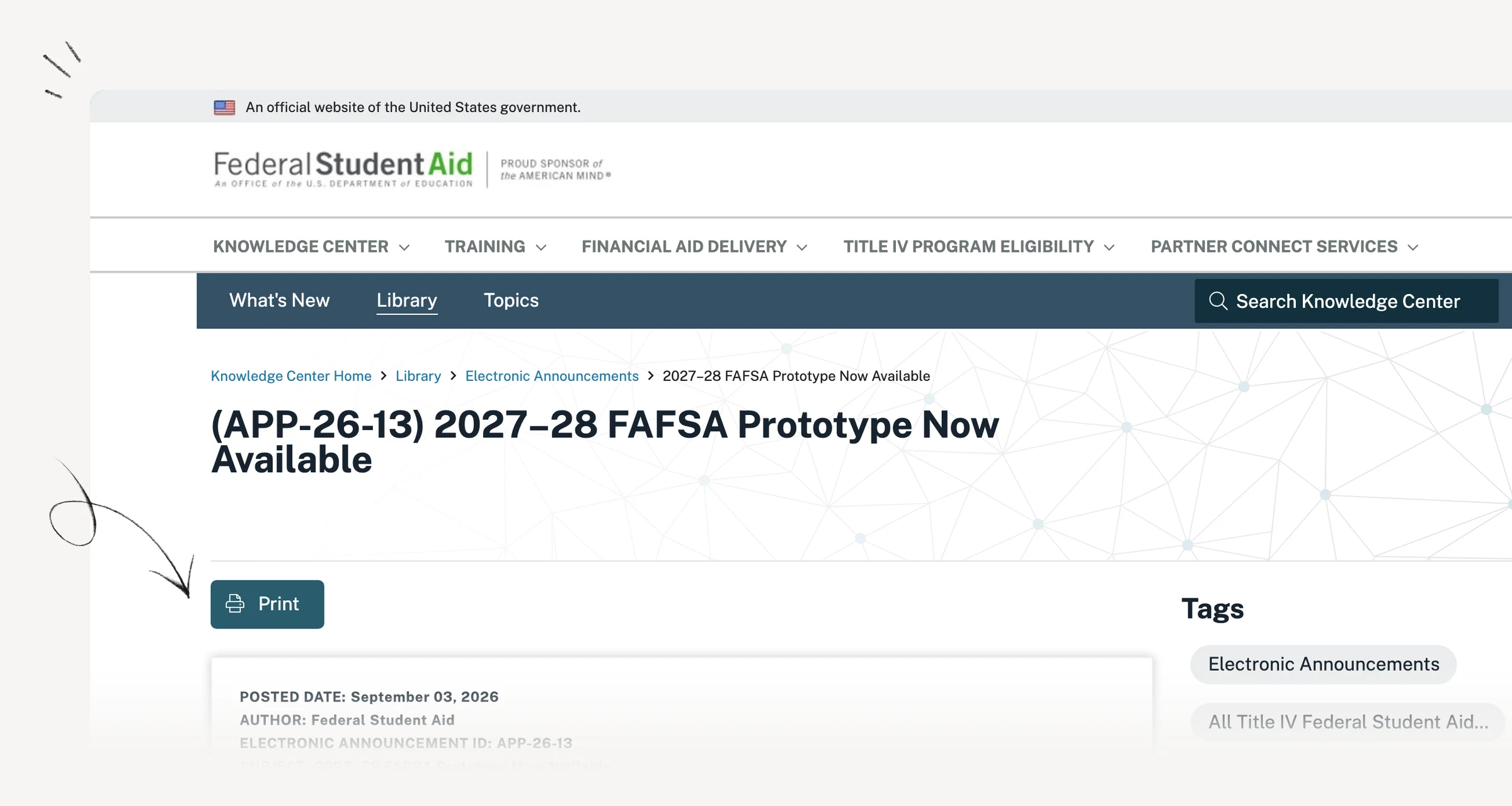
- Prototype versus live form: FSA’s September 3, 2026 announcement explicitly describes its 2027–28 prototype as partial and potentially different from the final form. Use a prototype for orientation, not as proof of a final answer requirement. Prototype notice.
- Federal rule versus school deadline: A federal eligibility change does not erase a college’s documentation deadline.
- Estimated eligibility versus confirmed offer: Save the school’s actual offer and follow-up checklist before budgeting around aid.
Before submitting, write the application year at the top of your notes. For an unclear asset or family circumstance, ask the financial aid office which official instruction applies. Accurate answers are more useful than racing through a form based on outdated assumptions.