Prepare for the digital SAT by taking an official practice test, reviewing why you missed questions, practicing the underlying skills, and testing again under realistic conditions. Use a cycle of diagnosis, targeted practice, and reassessment—not a stack of completed tests without review.
College Board’s free practice hub brings together Bluebook tests, My Practice, official questions, and Khan Academy. The resources below were checked October 13, 2026. This guide does not promise a score increase or assume a specific college requires the SAT.
Step 1: Establish a realistic baseline
Install Bluebook on a suitable device and take an available full-length digital practice test. Use the testing interface rather than treating a paper worksheet as the same experience. Reserve enough uninterrupted time and record disruptions that might make the result less useful.
Before setting a target, check the current testing policies of the colleges and scholarships you are considering. Then decide what you want to improve: your total performance, a particular section, or consistency under time pressure. Do not adopt a score goal solely because an online chart labels it competitive.
Step 2: Review decisions, not just wrong answers
My Practice displays practice scores, answer choices, and explanations. Read why incorrect options fail, including ones you did not choose. Review correct answers that were guesses as well as wrong answers.
Keep a short error log:
| What happened | What to practice next |
|---|---|
| I did not know the rule or concept | Learn it, then solve new problems without notes |
| I chose an answer before checking the text | Identify the exact evidence supporting the choice |
| I set up the equation incorrectly | Write the relationship before calculating |
| I knew the method but ran out of time | Practice a small timed set after the method is reliable |
These categories are a study tool, not College Board’s scoring categories.
Step 3: Target one skill at a time
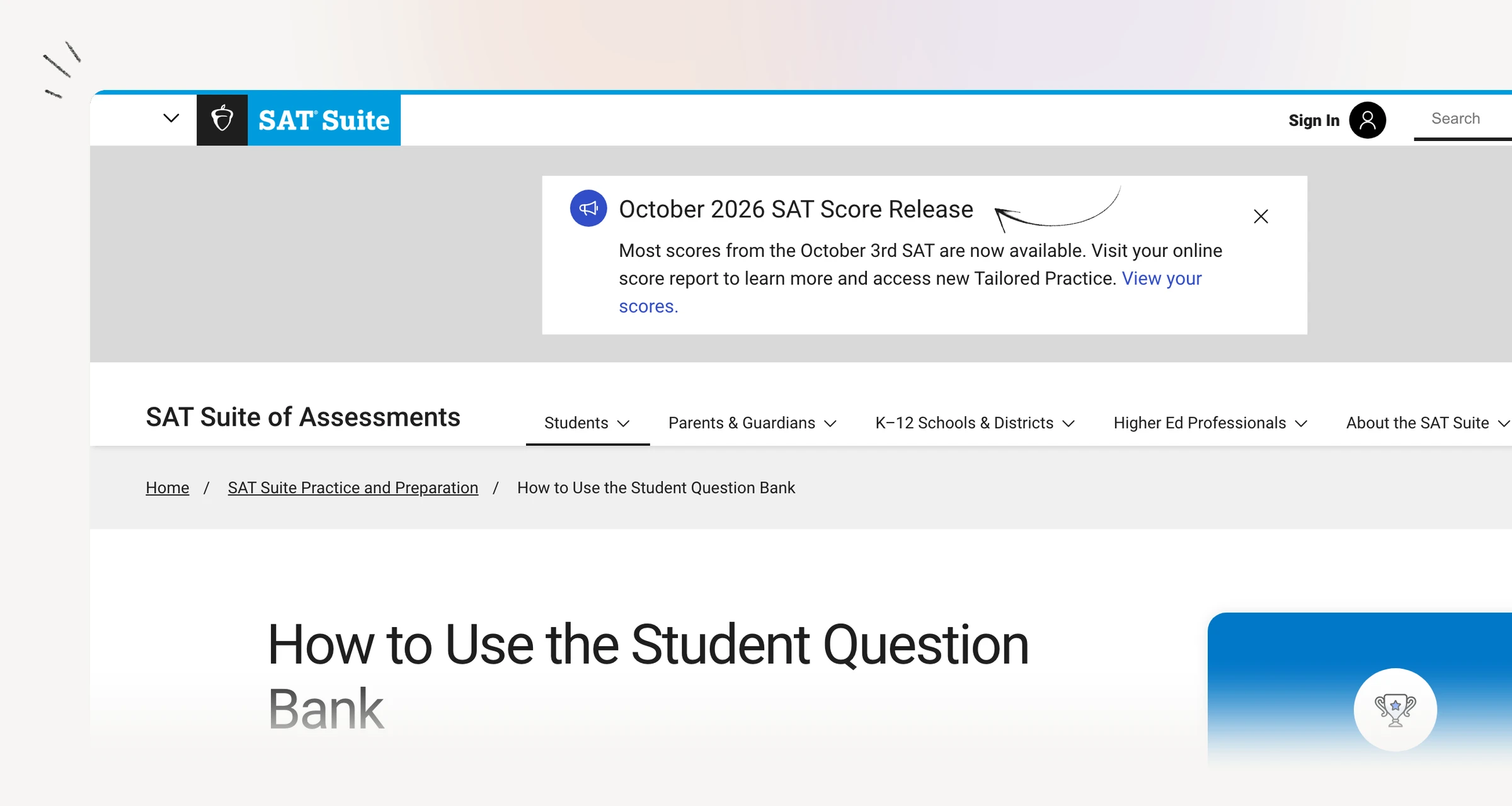
The Student Question Bank lets students filter official questions by assessment, section, domain, skill, and difficulty. Use those filters to work on the issue your review identified instead of repeatedly answering unrelated questions.
Official SAT Prep on Khan Academy pairs skill development with the official practice process. If an explanation assumes knowledge you lack, step back to the underlying lesson before attempting a harder set.
Example: a student who repeatedly misses linear-equation questions first writes out the variable relationship, checks it with an untimed problem, and then completes a short timed set. The student records whether the error came from setup or arithmetic. This is an illustrative method, not a claim that it guarantees improvement.
Step 4: Use a repeatable study cycle
A practical weekly cycle is one focused skill session, one mixed timed set, and one review session. Adjust the workload to your available time. Keep at least some practice material unfamiliar so reassessment measures more than memory of prior answers.
After several targeted sessions, take another official practice test. Compare both the result and the pattern of mistakes. A higher score on a familiar test is weaker evidence than improved reasoning on new questions.
When time is short, prioritize recurring weaknesses and familiarity with the interface. When time is available, spread review across sessions rather than relying on one long final cram.
Step 5: Prepare the device separately
A good study plan cannot substitute for test-day setup. College Board’s SAT Weekend Bluebook instructions recommend downloading the app and beginning device preparation at least 30 days before testing, then completing exam setup five days before test day.
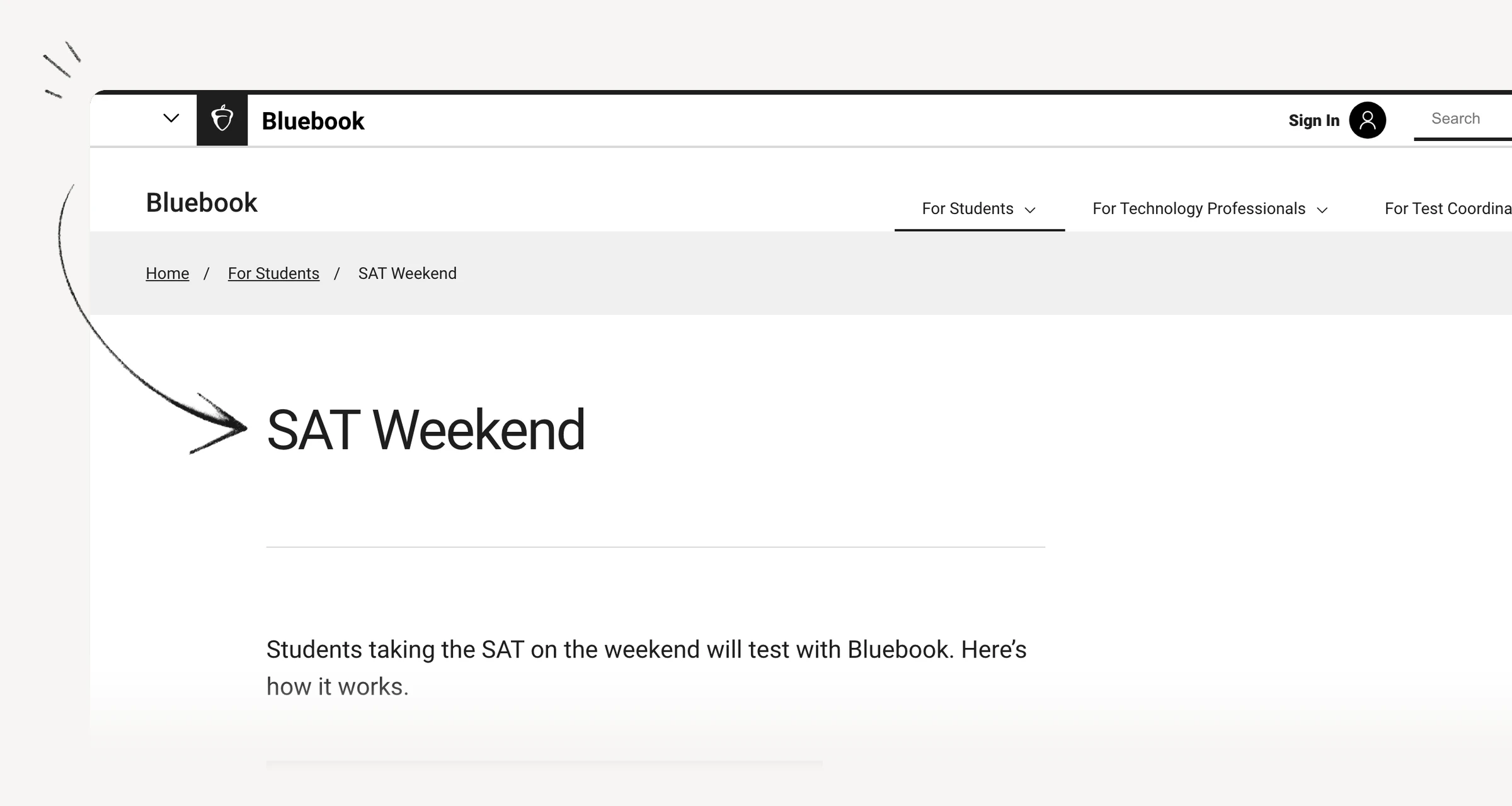
The what-to-bring page gives the current checklist and describes the 1–5-day setup window. Follow the instructions matching your administration; school-day students should use their school’s directions. Verify approved device, identification, admission-ticket, and charging requirements directly.
Your first useful action
Open the official practice hub, take one diagnostic test, and identify one recurring skill problem. Your next study session should address that problem with feedback. Progress comes from understanding what to change, not simply adding more hours to a calendar.