
There is no single conversion that turns every percentage, international grade or weighted GPA into an authoritative U.S. 4.0 result. First decide whether you need an informal estimate or an application value. For applications, follow the institution’s instructions and your transcript; do not replace an official GPA with a homemade conversion.
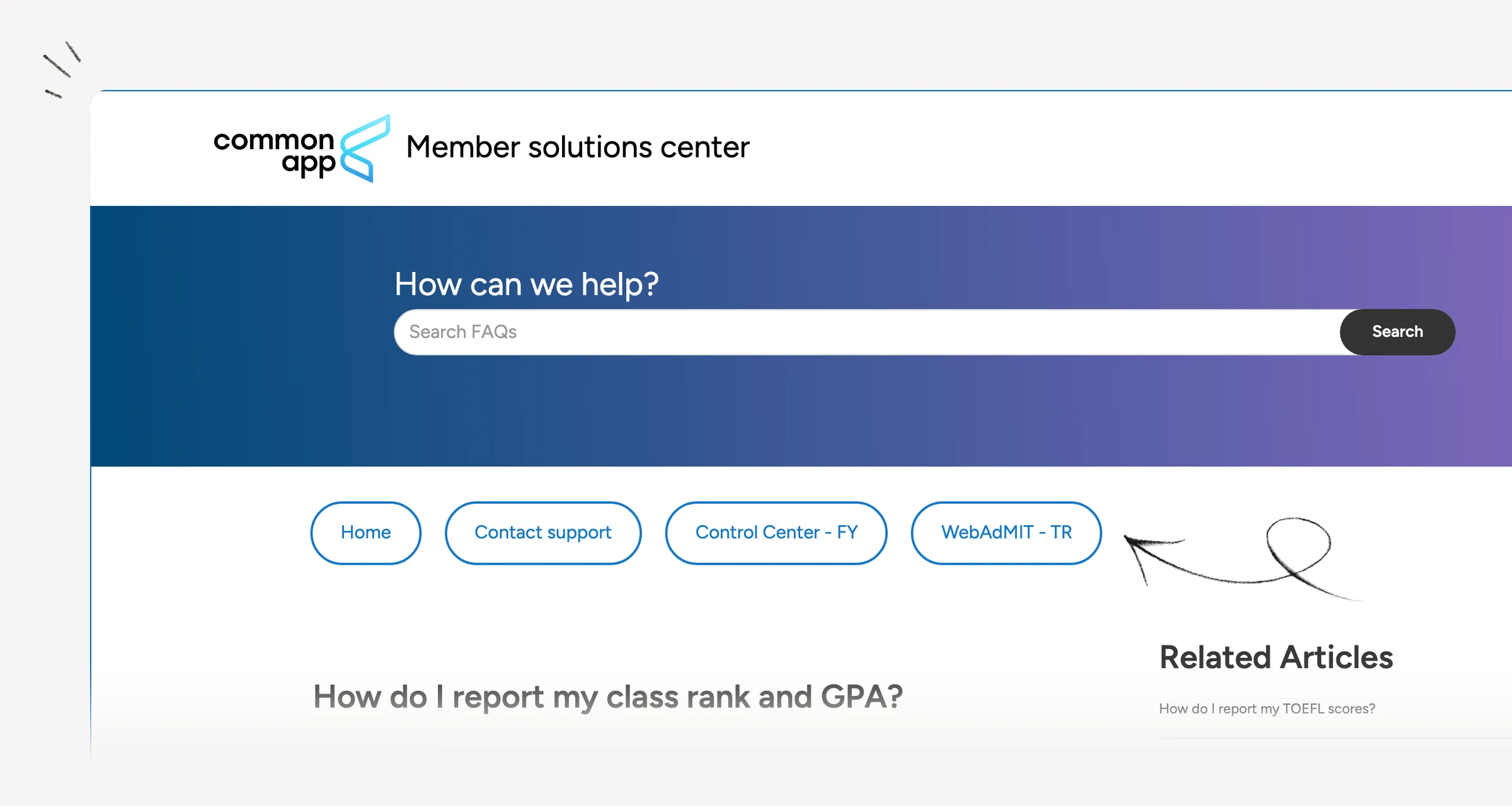
Common App’s GPA reporting guidance says to report the current GPA, use the weighted value if the school calculates both, and leave the cumulative field blank if the school does not calculate a numerical GPA or its scale is not offered. Check current form instructions before submission.
The formula for a credit-weighted estimate
Once the applicable grade-point mapping is established:
GPA = sum of (grade points × course credits) ÷ sum of included graded credits.
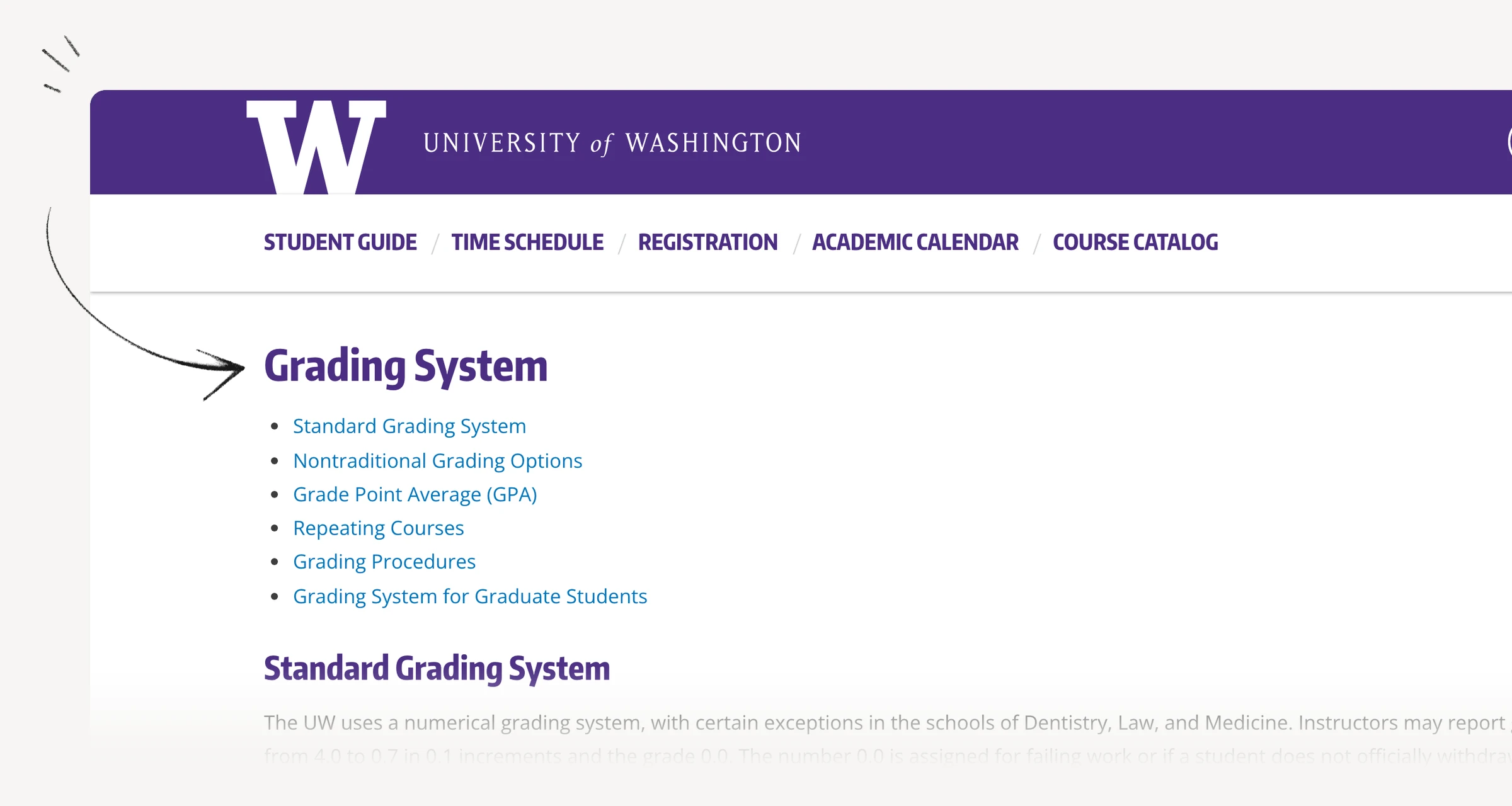
The University of Washington’s grading guide uses this grade-points/graded-credits method and also explains which courses enter its institutional GPA. The formula alone does not tell you which grades to include or how another school evaluates your transcript.
A worked example with explicit assumptions
For this illustration only, assume A = 4.0, B = 3.0 and C = 2.0; ignore plus/minus grades and honors bonuses. All four courses count, and the displayed credits are comparable.
| Course | Grade | Assumed points | Credits | Points × credits |
|---|---|---|---|---|
| English | A | 4.0 | 3 | 12 |
| Biology | B | 3.0 | 4 | 12 |
| History | A | 4.0 | 3 | 12 |
| Mathematics | C | 2.0 | 2 | 4 |
| Total | 12 | 40 |
The estimated GPA is 40 ÷ 12 = 3.33, rounded to two decimals. This is a hypothetical calculation, not an official conversion chart.
A simple average of the four grade-point values would give 3.25. That differs because the four-credit B carries more weight than the two-credit C. Use a plain average only when the included courses truly have equal weight under the relevant policy.
Why dividing by the old scale can mislead

Multiplying a percentage average by 4/100 assumes a linear relationship that a school’s grading policy may not use. Likewise, turning 4.5 on a 5.0 weighted scale into 3.6 assumes the extra point works identically across all courses. That can erase honors weighting and ignore letter-grade boundaries.
Instead, obtain the transcript legend, identify the actual course grades, and ask which conversion or recalculation the receiving institution requires. A mathematical ratio is not proof of academic equivalence.
Check these exceptions before using a calculator
- Plus/minus grades: Use the required mapping, not an assumed universal value.
- Repeated courses: Find out whether both attempts or a replacement grade count.
- Pass/fail: Do not automatically turn a pass into 4.0 or a nonletter result into zero.
- Different term systems: Confirm how the evaluator treats credits; do not mix units without instructions.
- International results: Keep the original scale and records unless the application explicitly requests another format.
These are questions to resolve, not a universal policy. For instance, UW excludes its S/NS grades from GPA calculations and limits its cumulative GPA to specified coursework, as explained in its official grading guide. Another school may differ.
Ask a precise reporting question
“ My transcript reports (your value) on a (your scale) and labels it (your weighted/unweighted). Your application asks for (your field). Should I enter the transcript value, leave it blank, or use a specified recalculation?” Attach the transcript legend only through the institution’s approved channel.
Before submitting
Keep your estimate labeled “informal,” preserve the original grades, document the mapping and included courses, and check the application instructions. A calculator is useful for understanding a calculation; it does not certify admission eligibility or override a scholarship’s stated GPA rule.