This page is a curated resource hub, not a searchable AspireOpen database. The links below lead to resources maintained by their original publishers.
Start with these official resources
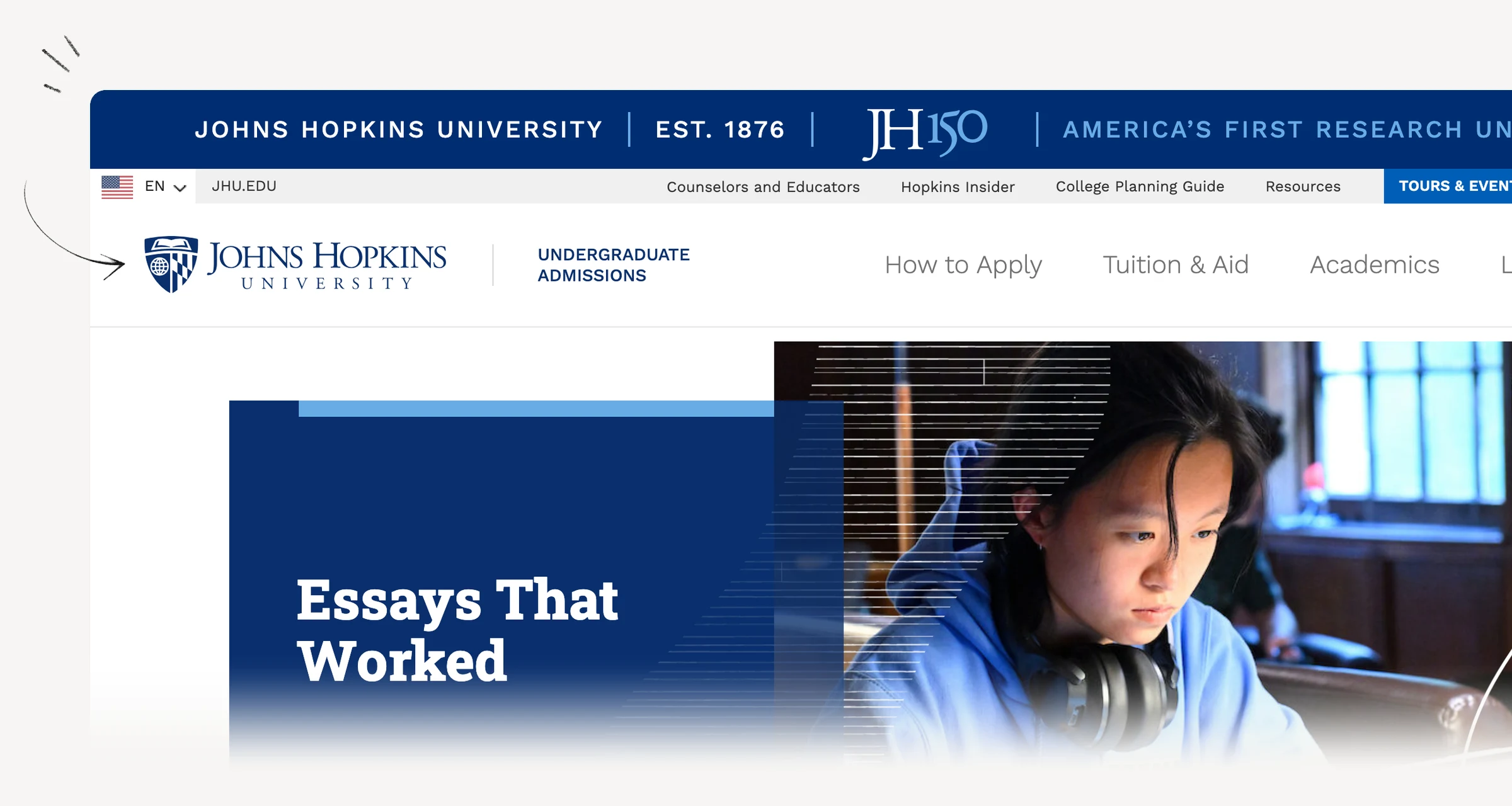
Source: Johns Hopkins Essays That Worked
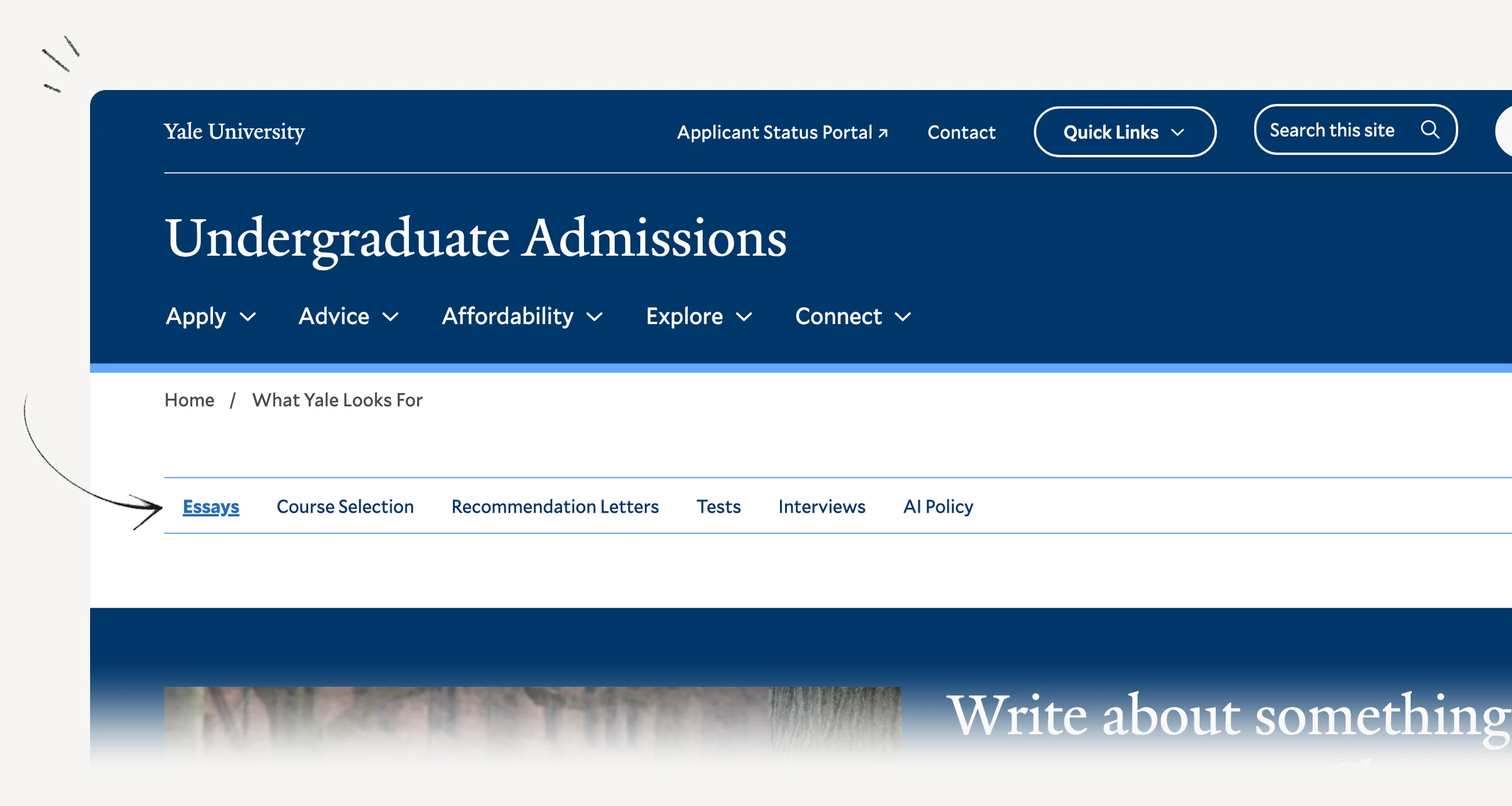
Source: Yale essay requirements
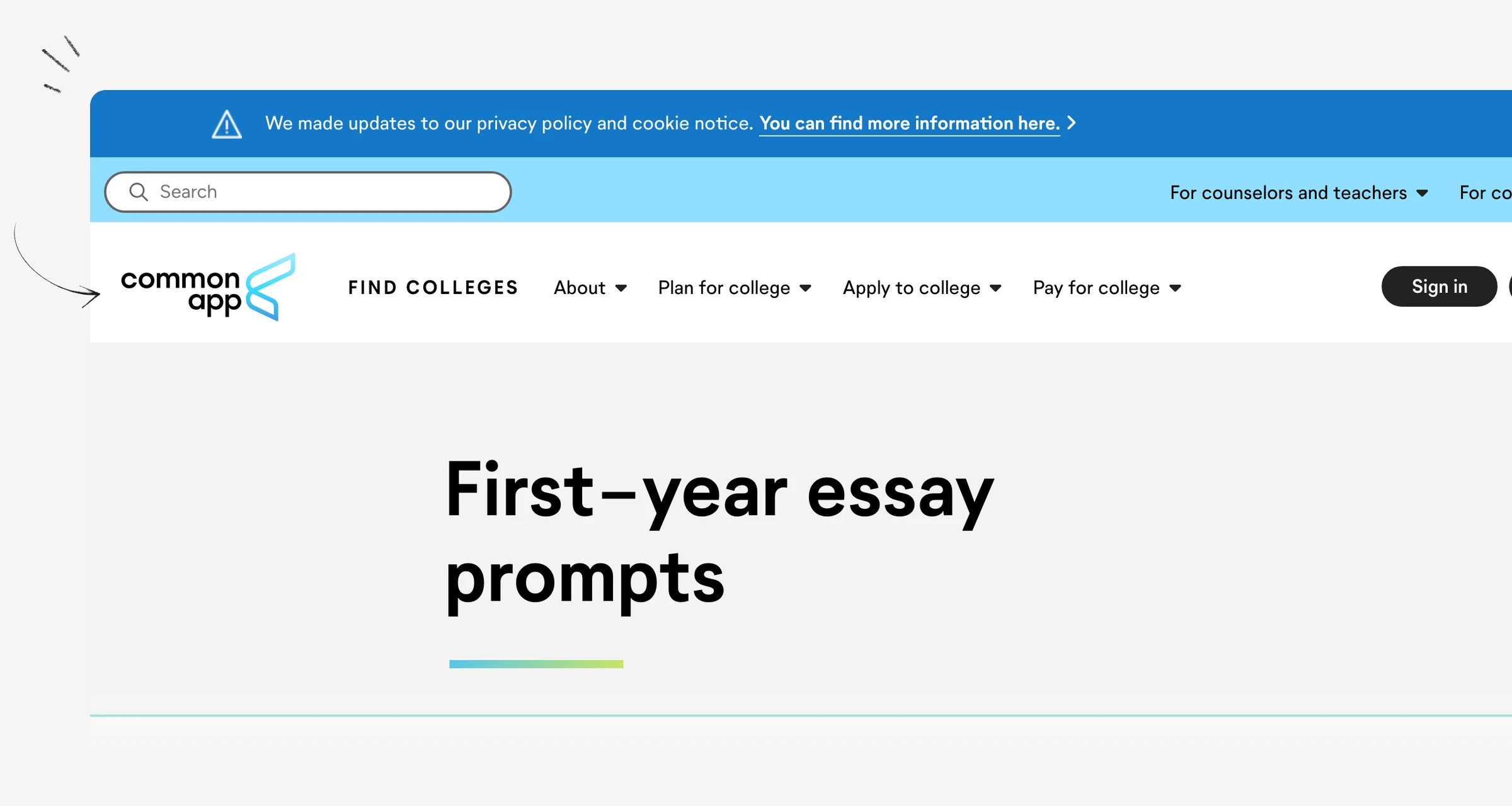
Source: Common App first-year essay prompts
| Resource | What it contains | Best use | Important limitation |
|---|---|---|---|
| Common App first-year essay prompts | The official 2026–2027 personal-essay prompt set | Confirm your main prompt and brainstorm a story | College-specific supplements still need separate checking |
| Yale essay requirements | Yale-specific 2026–27 questions and response limits | Build a requirements list if applying to Yale | Requirements vary by application platform |
| Johns Hopkins Essays That Worked | Selected student essays and admissions commentary | Study how specific experiences reveal character and values | Examples are historical selections, not next cycle’s required prompts |
Sources checked October 13, 2026. If a downloaded copy conflicts with a current application field, verify the discrepancy with the institution before submitting.
Choose the right kind of entry
An essay database can mix three distinct materials:
- Required prompts: questions you must answer for a particular institution, cycle, and application route
- Published student essays: examples shared by their authors or an official publisher
- Advice or invented demonstrations: explanations and practice examples, not actual admissions outcomes
Label each entry accordingly. A sample “Why this college?” answer may be useful for structure but misleading if its program references are outdated or it answers a question your college no longer asks.
Build an essay tracker before reading examples
Copy these fields into a document or spreadsheet:
- Institution and application cycle
- Application route
- Required, optional, or program-specific
- Prompt link and date checked
- Response limit and whether it is words or characters
- What the prompt asks you to reveal
- Your proposed story or evidence
- Draft status and reviewer
- Deadline and submission location
Yale’s official page demonstrates why these distinctions matter: it separates academic-interest questions, short takes limited by characters, and a longer essay. A character limit is not a word limit. Check the live field rather than guessing that a short paragraph fits.
How to read an example without copying it
Choose one official sample. Read once for meaning, then again for four craft decisions: the opening moment, the details selected, the shift in the writer’s thinking, and the ending. Write notes about those decisions without copying sentences into your draft.
Then close the example and answer: “What event from my own life would let me show a similar kind of reflection?” Study the technique, not the applicant’s identity, experience, vocabulary, or outcome.
Hopkins explains that its selections show everyday experiences revealing the writers’ character and values. The useful lesson is that ordinary experiences can carry meaningful reflection—not that using a particular hobby will get you admitted.
An original annotation exercise
Invented teaching example; not a submitted or admitted-student essay:
“On the third practice sheet, I erased my explanation of fractions and asked my brother to draw how he saw the problem. His picture made clear why my shortcut had not helped.”
What the passage demonstrates:
- A concrete moment rather than a claim that the writer is helpful
- An action the writer took, not just an aspiration
- A possible change from explaining to listening
What still needs writing: the consequences of that change, why it mattered to the applicant, and how it answers the selected prompt. A vivid opening alone is not a finished essay.
Reuse ideas, not mismatched answers
You may discover overlapping themes across your applications, but check each question separately. An essay about your community is not automatically an answer about how you would engage with a college community. A personal statement is not automatically a program-fit response.
Before reusing material, underline the new prompt’s required actions and revise to meet all of them. Search for leftover institution names and outdated program details. Keep the response true to your own experience.
Your next step
Open the current prompts for your first three colleges, complete the tracker, and choose one story to draft before reading more samples. The directory has done its job when it helps you begin original work—not when it gives you an endless reading list.