As of October 13, 2026, students planning fall 2027 entry should use that cycle’s instructions. Deadlines for fall 2025 or fall 2026 are historical, not a substitute for the current application calendar.
Verified examples show why the year matters
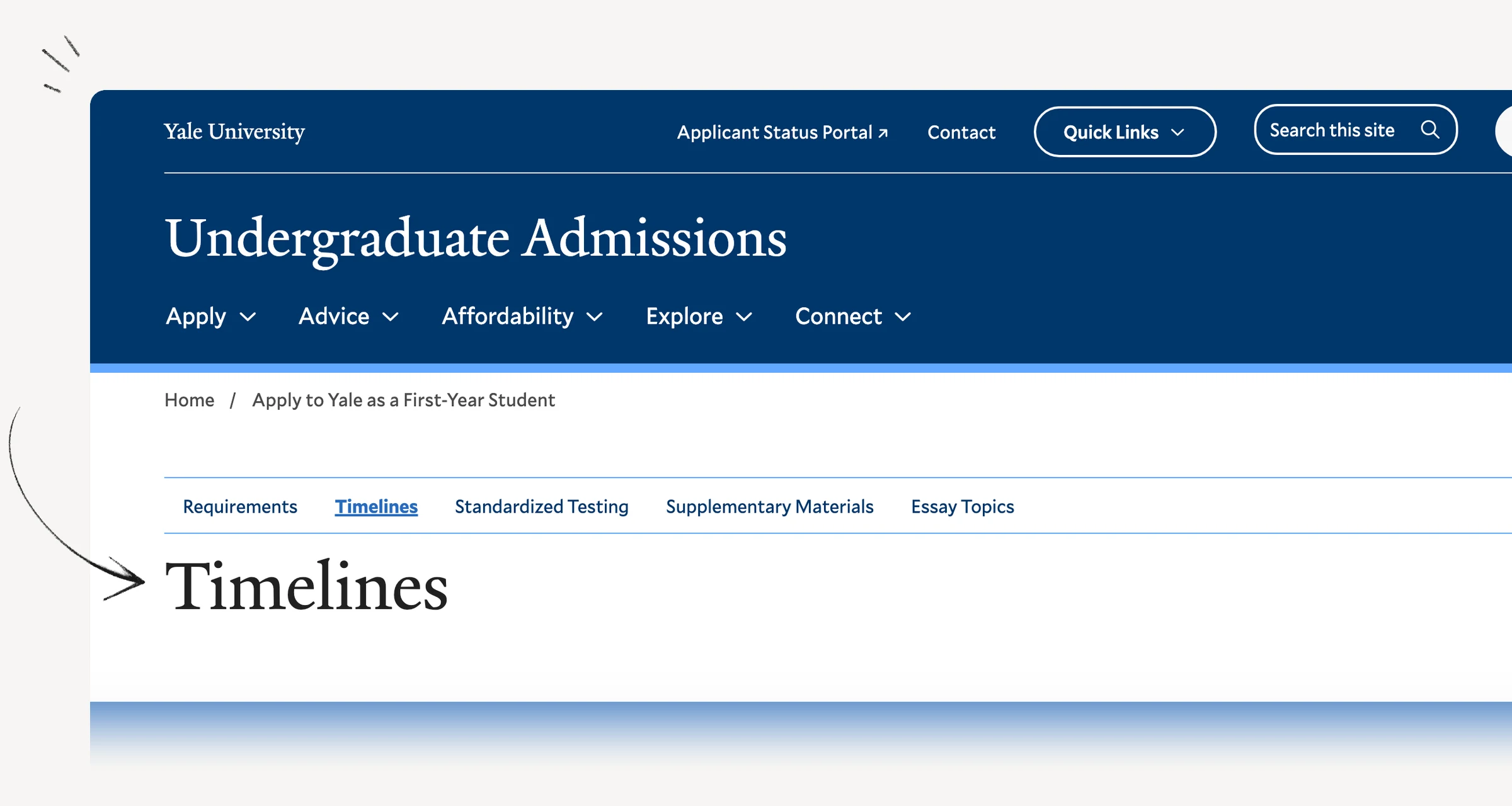
Source: Yale’s first-year timeline
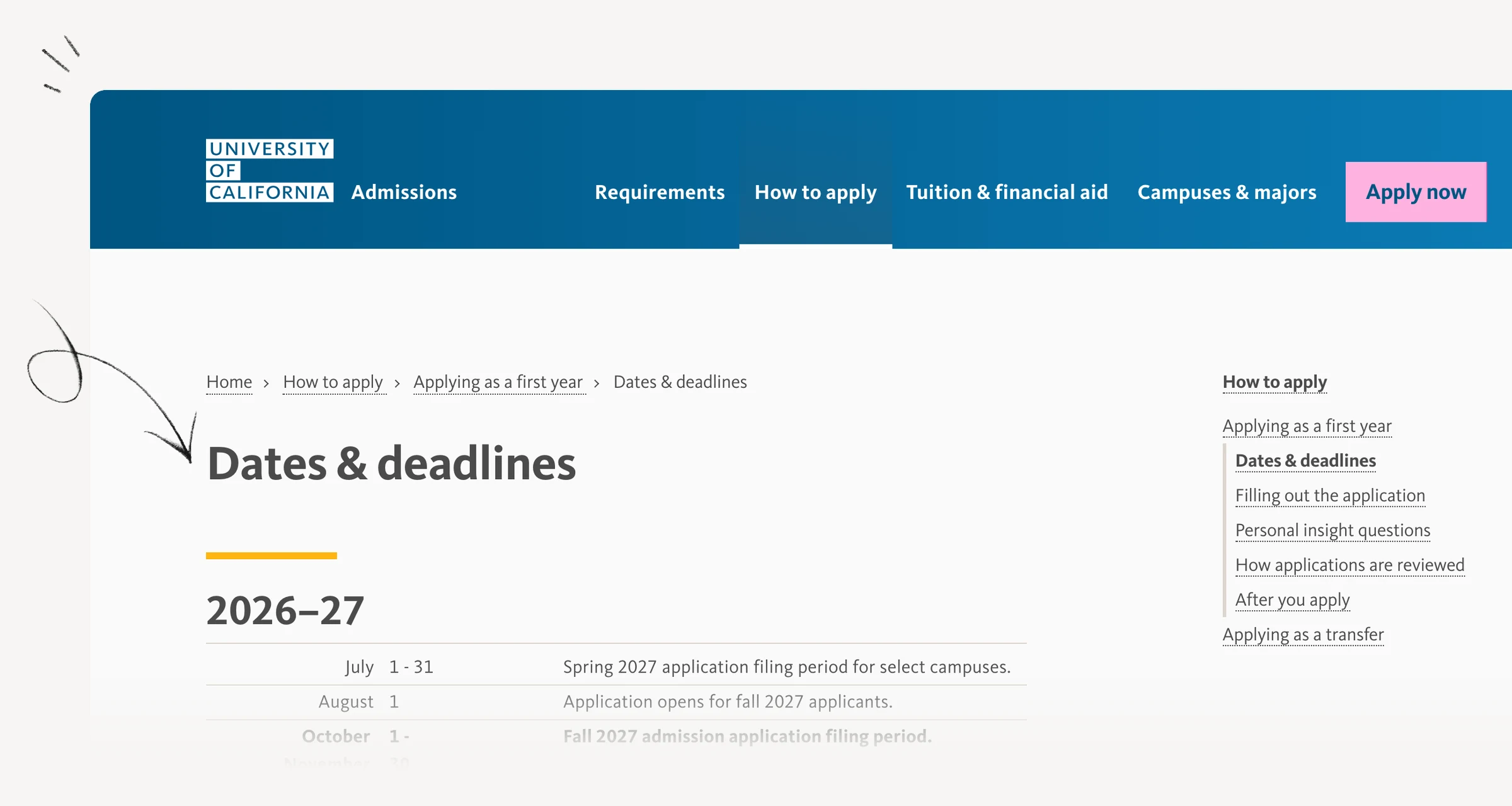
Source: UC’s explicitly labeled 2026–27 calendar
| Institution or system | Published deadline example | What it does—and does not—cover |
|---|---|---|
| University of California | Fall 2027 application filing: October 1–November 30, 2026 | First-year admission filing window; aid and final records have separate dates |
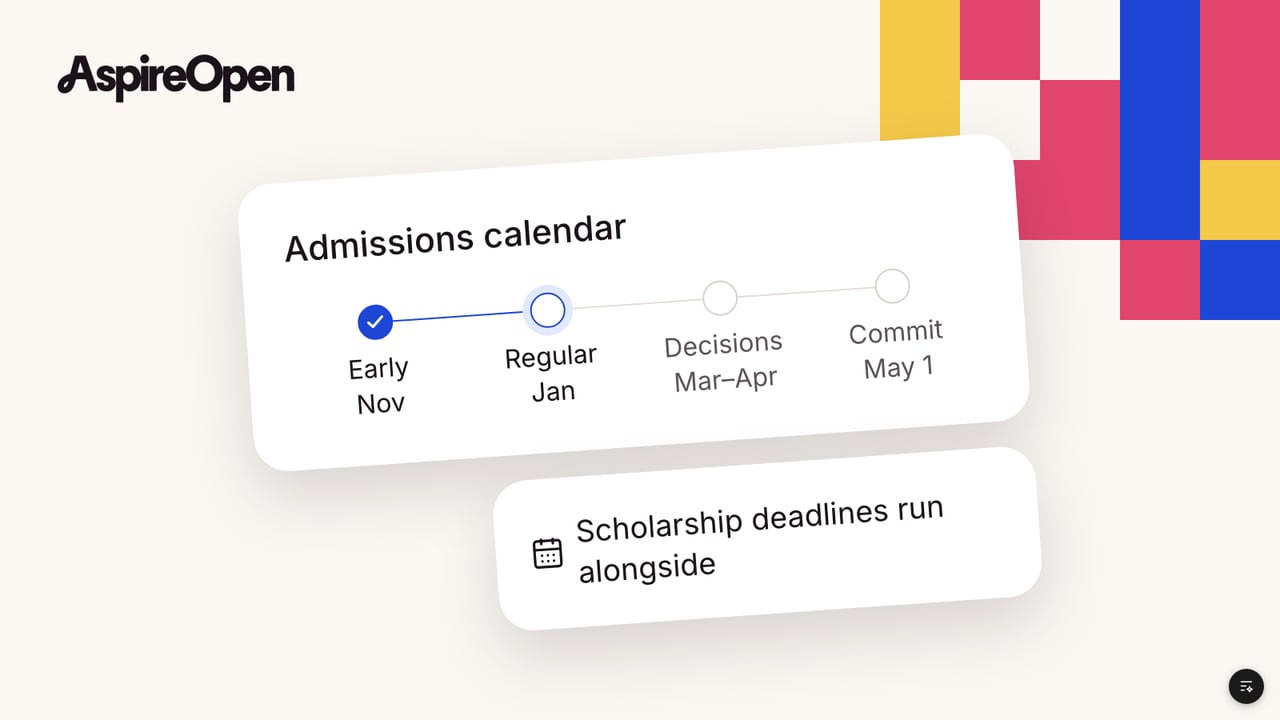
| Yale | Single-Choice Early Action: November 1; Regular Decision: January 2 | Dates on the current first-year timeline; confirm the application cycle and supporting-material rules |
Sources: UC’s explicitly labeled 2026–27 calendar and Yale’s first-year timeline. Yale’s page provides month/day deadlines without a cycle year beside each entry; do not treat this table as a independently verified year-stamped Yale calendar. UC’s former extension to December 1 applied to fall 2026 applicants only, according to its official counselor materials.
Put these separate deadlines on your calendar
An application can have several clocks running at once. Give each one its own field:
- Application submission and payment or fee-waiver request
- Required school records and recommendations
- Accepted test dates and score-report rules
- Portfolio, audition, or supplemental application
- Honors or competitive scholarship consideration
- Financial-aid forms and required supporting records
- Enrollment response and later final-document requirements
The point is not that every college requires every item. The point is to avoid marking the entire process complete when only your application has been submitted.
Copy this deadline tracker
| College / entry term | Applicant type | Decision plan | Item | Due date and time zone | Official source | Responsible person | Status |
|---|---|---|---|---|---|---|---|
| Your college / fall 2027 | First-year | Your selected round | Main application | Verify | Admissions page | Student | Not started |
| Same college | First-year | Same round | School report | Verify separately | Requirements page | Counselor | Requested |
| Same college | First-year | Same round | Aid forms | Verify separately | Financial-aid page | Student / contributor | Not started |
Use statuses that explain the next action: not started, requested, submitted, received, or needs correction. “Done” is too vague if a transcript has been requested but not received.
Set a personal submission target
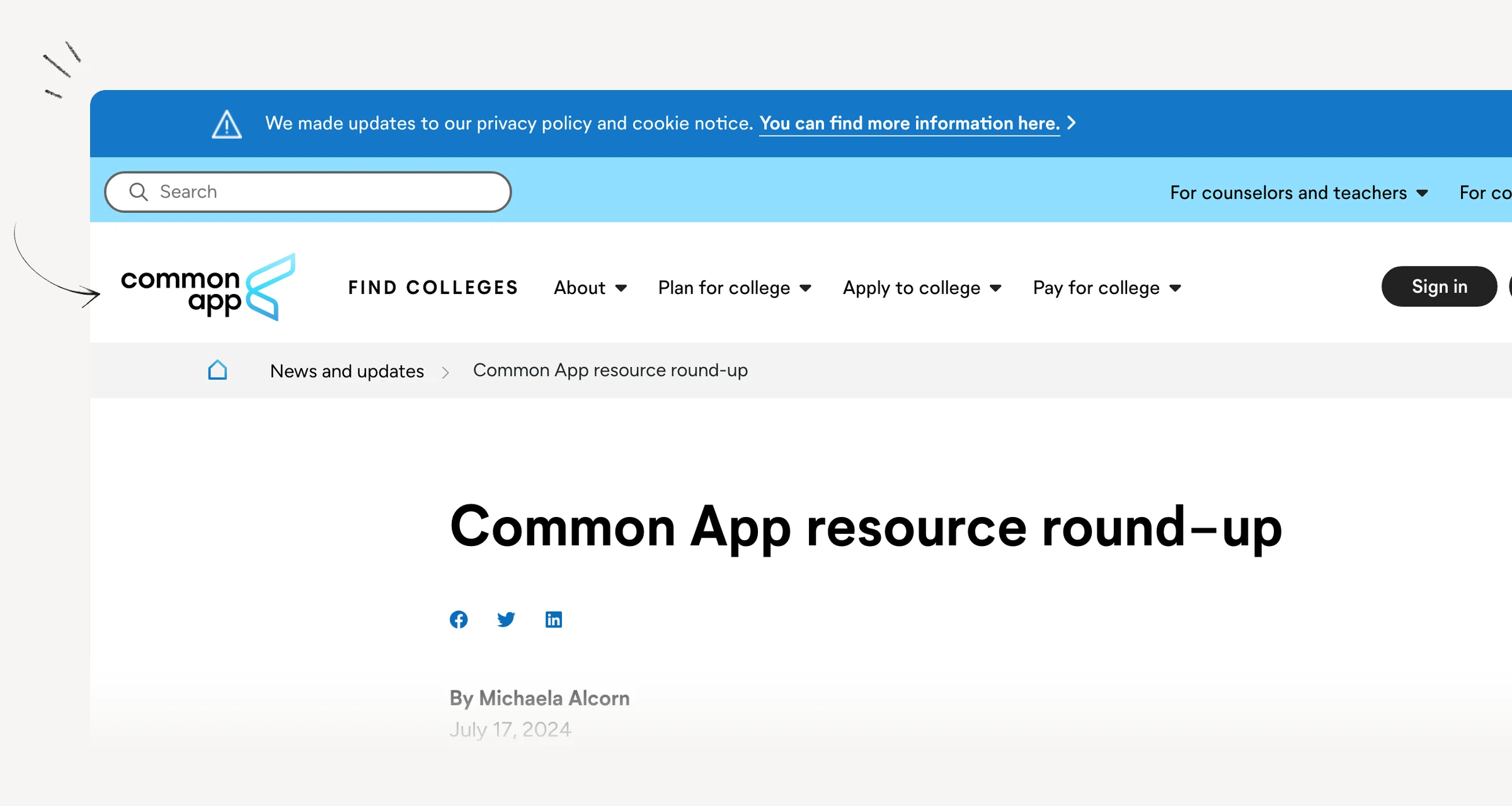
Source: official deadline explanation
Work backward from the earliest relevant deadline. Create checkpoints for a complete first draft, recommender requests, final proofreading, payment or waiver verification, and submission. Choose a buffer appropriate to your circumstances rather than assuming the last minute will go smoothly.
For Common App submissions, its official deadline explanation says the deadline is 11:59 p.m. on the deadline day in the student’s local time. That is platform-specific guidance: do not apply it automatically to a college’s separate portfolio service, financial-aid system, or proprietary application.
Example: three deadlines, not one
Hypothetical: Sam records an admission deadline, then discovers that a scholarship requires an earlier application and an arts supplement has its own submission route. The correct calendar has three tasks with three sources. Sam should not change the main admission date to the scholarship date; keeping separate rows preserves what each date means.
If a recommendation is still missing, Sam checks whether the institution allows supporting materials after the student deadline. A friend’s college allowing that does not establish Sam’s college policy.
After you submit, verify receipt
Save submission confirmations. Open the applicant portal when the institution provides access, inspect the checklist, and address missing or mismatched records. UC specifically directs applicants to check campus portals for decisions and important information.
If you miss a deadline, contact the institution with the exact item, date, and circumstances. Ask whether it will accept the item or consider a different application round. Do not assume a grace period, an extension, or rolling admission guarantees space.
Your next move
Choose your entry term and applicant type first. Then open each college’s admission and financial-aid pages, create separate deadline rows, and set reminders that identify the specific item due. A short verified calendar is safer than a long unverified national deadline list.