Choose the exact campus and program—not just a recognizable beauty-school brand. A useful comparison begins with the work you want to perform, the state where you intend to seek a license, and the current requirements for that license.
This is a comparison guide with verified examples, not a national quality ranking. No school is labeled the best based on advertising, reviews or an invented placement rate.
Three program providers to investigate
| Provider example | What the official page establishes | What remains campus-specific |
|---|---|---|
| Paul Mitchell Schools | Location search and filters for cosmetology, barbering, esthetics and other programs | Offered program, approval, price, schedule and outcomes |
| Empire Beauty School | Publishes distinct beauty-training programs and consumer-information links | Not all programs are available at all schools |
| Aveda Inspire Greatness | Cosmetology program information for its named regional campus group | Exact campus catalog, state pathway, aid and price |
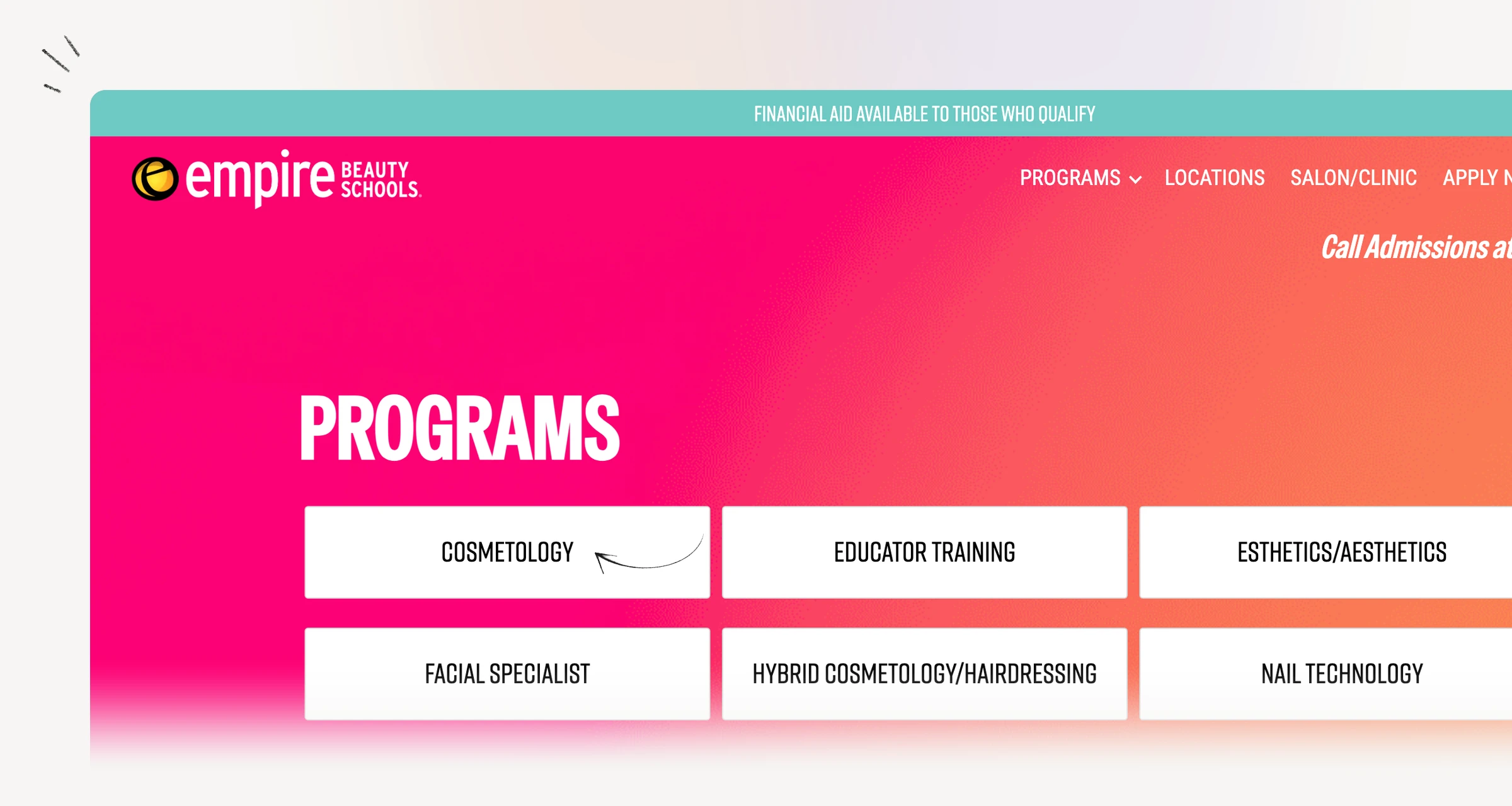
Verified October 13, 2026. These are starting points for comparison, not endorsements. Do not assume an individual campus has every program listed by a network.
1. Decide which license pathway you need
Hair services, skin services, barbering and nail services may use distinct program and license routes. The provider lists above show separate categories; the relevant licensing agency determines what applies in your state.
Ask the state regulator: “For the services I want to perform, which license is required, and is this specific school and program approved?” Keep the official answer beside the school’s catalog. Do not assume a cosmetology certificate authorizes every treatment or that online coursework alone meets a state’s practical-training requirements.
2. Verify hours with the regulator, not a national average
Training-hour requirements are state- and license-specific. As a concrete example, Texas TDLR identifies a required 1,000-hour Class A Barber or Cosmetology Operator curriculum. It states that coursework beyond that basic curriculum is voluntary and that it does not evaluate or approve extra hours beyond the required curriculum. Official Texas explanation.
That is a Texas example, not a rule for every state. Ask the school for a course outline and identify required hours versus additional instruction. The Texas regulator also distinguishes completion of required hours from the examinations and application needed for a license.
If you may move, ask the destination regulator how it treats your intended training and license. Do not rely on a recruiter’s general claim that a qualification “works everywhere.”
3. Compare the whole price
Request a written campus-specific estimate covering tuition, enrollment charges, kit and supplies, books, equipment, exam costs and any other required fees. Ask which items are included and which are paid separately. Also budget transportation, childcare and time away from paid work.
Use an original hypothetical comparison:
| Cost item | Campus A | Campus B |
|---|---|---|
| Quoted tuition | Lower | Higher |
| Required kit | Charged separately | Included |
| Commute | Longer | Shorter |
| Confirmed aid | Needs written offer | Needs written offer |
This example intentionally uses no invented actual prices. The right decision requires numbers from the campuses, not the apparent winner of a tuition-only comparison.
Separate grants and scholarships from loans using Federal Student Aid’s offer-comparison method. Do not assume federal aid eligibility for every campus or program; ask for the specific current offer.
4. Inspect practical training and support
Tour the campus during instruction when permitted. Ask how instructors supervise student services, how practice assignments progress, what happens if you need to repeat work, and how absences or interruptions affect your plan.
Paul Mitchell’s San Jose program page describes Core, Adaptive and Creative stages. That establishes a structure at the stated program; it does not establish identical instruction quality across the network. Ask your chosen campus to explain its own progression and support.
Request consumer disclosures for the exact campus and program. When comparing published outcomes, check the reporting year, cohort definition and what “placement” counts. This guide does not quote an unverified graduation or employment percentage.
Before signing
Obtain the current catalog, total-cost estimate, refund/cancellation terms, attendance policy and licensing pathway. Ask for time to review them. An application deadline or promotional discount is not a reason to skip these checks.
Your next move: compare two local approved options on one worksheet, then resolve every unanswered licensing and cost question before committing.