The best physics college for you should fit the kind of study you want and the price you can sustain. This shortlist compares documented undergraduate features at four institutions. The order is not a ranking, and it does not imply that other programs are worse.
Use it to identify questions worth asking departments, then compare your own finalists using the same criteria.
A non-ranked program comparison
| College | Documented feature | A useful fit question | Official evidence |
|---|---|---|---|
| MIT | Flexible and Focused routes lead to the same physics bachelor’s degree | How much room do I want for a second field versus a prescribed research/thesis route? | Physics major |
| UC Berkeley | Publishes undergraduate research pathways, including faculty-mentored projects | What preparation would help me join a relevant project, and how do placements work? | Undergraduate research |
| Cornell | Undergraduate physics includes classroom, laboratory and research experiences | Which undergraduate projects fit my interests, and what is required to participate? | Undergraduate program |
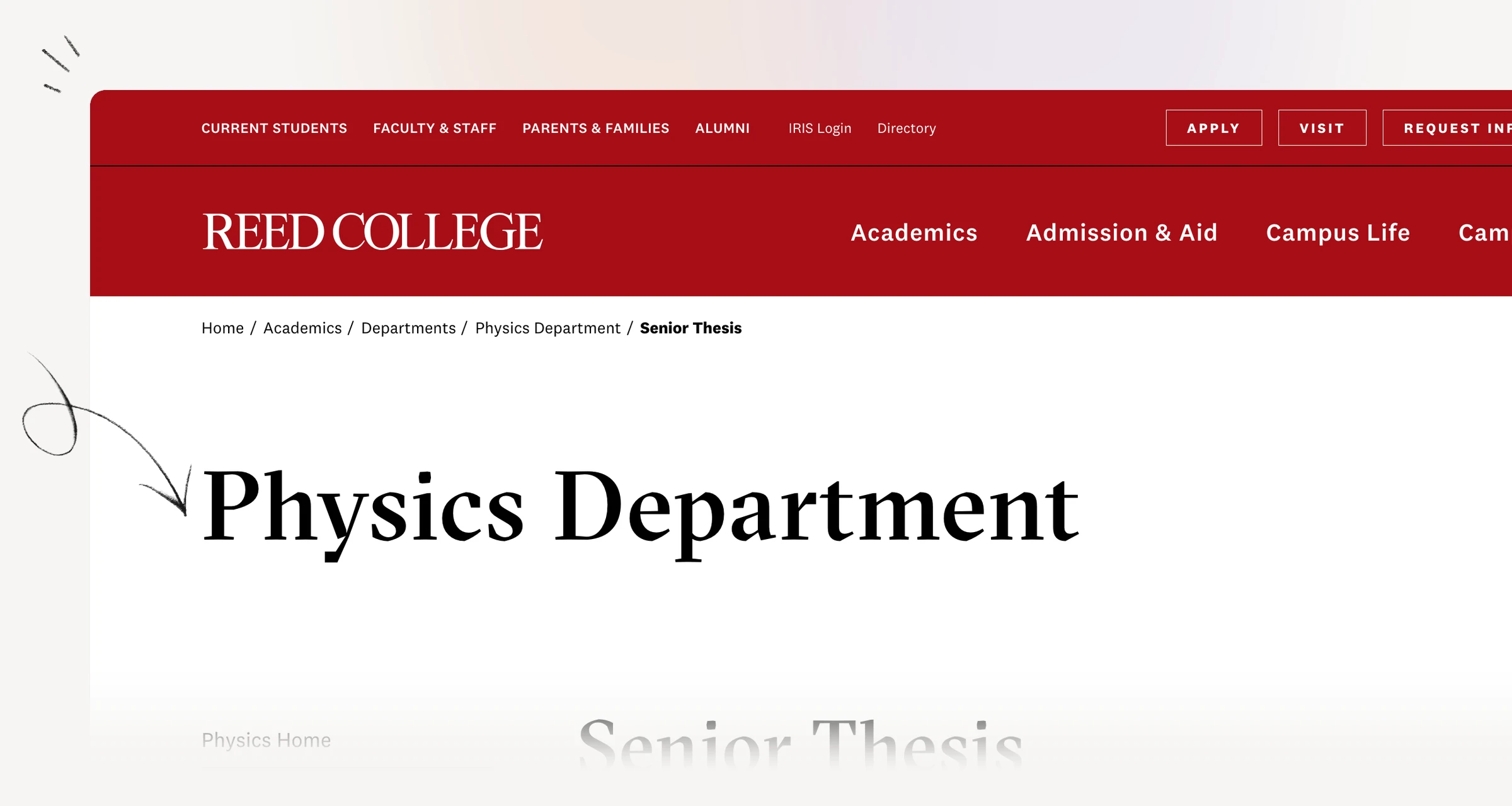
| Reed College | Physics includes senior thesis work; the department identifies a dual-degree exception | Do I want a thesis-centered culminating experience? | Physics thesis |
Features verified October 13, 2026. No acceptance rate, outcome percentage, tuition or scholarship award is inferred from these pages.
MIT: compare tracks rather than assuming one curriculum
MIT’s major guide says both tracks prepare students for physics graduate-school applications. The Flexible route includes a related-subject focus area, while the Focused route requires a research thesis. Flex students can choose a thesis but are not required to do so.
Sketch two possible plans: one centered on physics research and one combining physics with another subject. Ask the department which requirements apply to your entry year and how the plans affect scheduling. The page contains older thesis-deadline text, so use current academic instructions—not that historical date—for deadline planning.
Berkeley: investigate the pathway to research
Berkeley’s undergraduate research page is a practical starting point for exploring research programs and project opportunities. The Directed Reading Program pairs undergraduates with graduate mentors to explore topics beyond the standard curriculum.
A listed program does not guarantee you a lab position. Ask about prerequisites, application timing, faculty matching, compensation or credit, and participation for first-year or transfer students. Distinguish learning a topic through directed reading from conducting an experimental project; both can be useful, but they answer different goals.
Cornell: connect facilities to actual undergraduate work
Cornell’s undergraduate overview identifies research facilities including the Cornell High Energy Synchrotron Source and Cornell Center for Nanoscale Systems. The department also provides a research-opportunity starting point.
A facility’s presence is not proof of automatic access. Pick a research area that interests you, identify a current faculty group, and ask what an undergraduate could actually do. Request examples of responsibilities and preparation rather than an assurance that the institution has prominent researchers.
Reed: ask what a thesis involves
Reed’s physics thesis guide gives a concrete route for learning about the senior project. Its stated exception matters: physics students in the dual-degree 3/2 program do not spend their senior year at Reed and do not write a Reed thesis.
Ask about adviser selection, equipment, project scope and how students prepare before senior year. Decide whether you want that sustained project structure before treating “small college” as a shortcut for academic fit.
Compare costs with the same worksheet
Federal Student Aid recommends comparing total costs after grants and scholarships, while separating loans and work-study. Use its aid-offer comparison guide.
For every finalist, record net price, housing and travel assumptions, confirmed aid, renewal rules, and the amount still to finance. Do not use a physics department’s research reputation as a substitute for a sustainable budget.
An original hypothetical example: Ari wants experimental research and also needs an affordable option. Ari first asks each department about lab participation and checks the course sequence. Ari then compares actual aid offers; an unaffordable option does not become affordable because a ranking puts it first.
Questions to send each department
- What preparation is needed to enter the major and join research?
- Which advanced courses run regularly for undergraduates?
- Is a thesis required, optional or replaced by another capstone?
- How do transfer credits affect the course sequence?
- Where can I read current degree requirements and research application instructions?
Keep answers beside their official sources. Your next step is to choose two program features you need, then test each finalist against them.